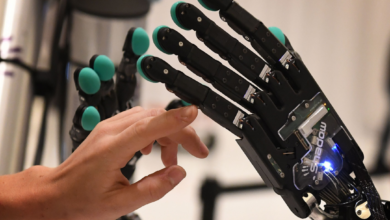

How AI Will Change Your Health Care Experience
How AI will change your health care experience? It’s a question buzzing louder than ever, and the answer is transforming healthcare faster than you might think. From AI-powered diagnostics that spot diseases earlier and more accurately to personalized medicine tailored to your unique genetic makeup, the impact is already being felt. We’re talking about virtual assistants offering 24/7 support, remote health monitoring that puts you in control, and even AI streamlining hospital operations for greater efficiency.
Get ready for a healthcare revolution!
This isn’t just about futuristic tech; it’s about real-world improvements today. Imagine faster diagnoses, treatments customized to you, and easier access to care, regardless of where you live. This post delves into the exciting possibilities – and the challenges – of AI in healthcare, exploring everything from AI’s role in drug discovery to the ethical considerations we must address as we move forward.
AI-Powered Diagnostics and Treatment: How Ai Will Change Your Health Care Experience
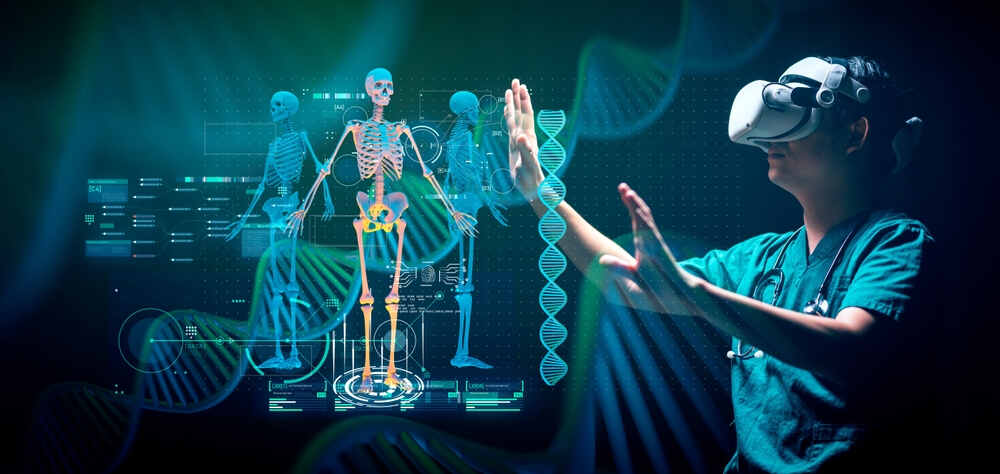
The integration of artificial intelligence (AI) into healthcare is rapidly transforming how we diagnose and treat diseases. AI algorithms, trained on massive datasets of medical images, patient records, and research papers, are proving to be powerful tools for improving accuracy, speed, and personalization in healthcare delivery. This shift promises a future where diagnoses are faster, treatments are more effective, and patient care is more efficient.AI algorithms are enhancing the accuracy and speed of disease diagnosis in several ways.
For instance, in radiology, AI-powered systems can analyze medical images (X-rays, CT scans, MRIs) to detect subtle anomalies that might be missed by the human eye. These systems can flag potential cancerous lesions, identify fractures with greater precision, and even predict the likelihood of a patient developing certain conditions based on image analysis. This leads to earlier and more accurate diagnoses, allowing for timely interventions and improved patient outcomes.
In pathology, AI assists in analyzing tissue samples to identify cancerous cells, improving the speed and accuracy of cancer diagnoses. Furthermore, AI-powered diagnostic tools are being developed for ophthalmology, cardiology, and dermatology, among other specialties.
AI is poised to revolutionize healthcare, from personalized medicine to faster diagnoses. This transformation is especially exciting considering that, as this article points out, India has a unique opportunity to lead in AI , potentially making advanced healthcare accessible to a wider population. Imagine AI-powered tools improving preventative care and making treatments more effective, leading to a healthier future for everyone.
AI’s Role in Personalized Medicine
AI is revolutionizing personalized medicine by tailoring treatments to individual patient needs based on their unique genetic profiles, lifestyle, and medical history. This approach moves away from a “one-size-fits-all” model towards a more precise and effective treatment strategy. The following table compares different AI approaches used in personalized medicine:
| AI Approach | Description | Applications | Advantages |
|---|---|---|---|
| Machine Learning (ML) | Algorithms that learn from data to identify patterns and make predictions. This includes techniques like deep learning and support vector machines. | Predicting treatment response, identifying high-risk patients, developing personalized drug regimens. | High accuracy, ability to handle large datasets, adaptability to new data. |
| Deep Learning (DL) | A subset of ML using artificial neural networks with multiple layers to analyze complex data. | Image analysis for disease detection, genomic analysis for personalized cancer therapies, predicting disease progression. | Exceptional accuracy in image analysis, ability to extract complex features from data. |
| Natural Language Processing (NLP) | Algorithms that process and understand human language, allowing for analysis of electronic health records and research literature. | Extracting relevant information from patient records, identifying potential drug interactions, supporting clinical decision-making. | Efficient extraction of information from large volumes of unstructured data. |
| Reinforcement Learning (RL) | Algorithms that learn through trial and error to optimize treatment strategies. | Optimizing treatment plans for chronic diseases, personalizing drug dosages, improving patient adherence to treatment. | Ability to adapt to dynamic environments and optimize complex treatment strategies. |
AI in Drug Discovery and Development, How ai will change your health care experience
AI is significantly accelerating and reducing the cost of drug discovery and development. Traditionally, this process is lengthy, expensive, and often unsuccessful. AI algorithms can analyze vast amounts of biological data (genomic information, protein structures, clinical trial results) to identify potential drug targets, predict drug efficacy, and optimize drug design. For example, AI is being used to identify molecules with promising therapeutic properties, predict how drugs will interact with the human body, and even simulate clinical trials to reduce the need for extensive and costly human trials.
This results in faster development of new drugs and therapies, potentially leading to breakthroughs in treating diseases that currently lack effective treatments. A notable example is Atomwise, a company that uses AI to discover new drug candidates, including a potential treatment for Ebola. Their AI significantly reduced the time and cost associated with traditional drug discovery methods.
Ethical and Societal Implications of AI in Healthcare
The integration of artificial intelligence into healthcare presents incredible opportunities for improved diagnostics, treatment, and patient care. However, this rapid advancement also necessitates a careful consideration of the ethical and societal implications that arise from its implementation. Failing to address these concerns could lead to unintended consequences, undermining the very benefits AI promises. This section explores the key ethical challenges and potential solutions.
AI’s role in healthcare raises complex ethical questions, particularly concerning data privacy and algorithmic bias. The sheer volume of patient data required to train and operate AI systems necessitates robust security measures and transparent data governance frameworks. Simultaneously, the potential for algorithmic bias – where AI systems perpetuate or amplify existing societal inequalities – demands rigorous testing and mitigation strategies.
AI is poised to revolutionize healthcare, offering personalized medicine and faster diagnoses. This technological leap isn’t confined to one nation; the global impact is huge, much like the ambitions highlighted in this article about how China wants to export education too: china wants to export education too. This educational push mirrors the global spread of AI advancements, promising a future where cutting-edge healthcare is more accessible worldwide.
Data Privacy and Security in AI-Driven Healthcare
The use of AI in healthcare relies heavily on vast amounts of sensitive patient data. This data, encompassing everything from medical images and genetic information to personal details and treatment histories, is highly vulnerable to breaches and misuse. Ensuring the confidentiality, integrity, and availability of this data is paramount. Robust encryption, anonymization techniques, and strict access control protocols are crucial to safeguarding patient privacy.
Furthermore, clear and transparent data governance policies, coupled with strong legal frameworks, are needed to regulate the collection, use, and sharing of patient data in AI applications. For example, the implementation of differential privacy techniques, which add carefully calibrated noise to datasets to protect individual privacy while preserving the utility of the data for AI training, is a promising approach.
The General Data Protection Regulation (GDPR) in Europe serves as a model for comprehensive data protection legislation, though its application in the context of AI remains an area of ongoing development and interpretation.
Algorithmic Bias and Fairness in AI Healthcare Systems
AI algorithms are trained on data, and if that data reflects existing societal biases (e.g., racial, gender, socioeconomic), the resulting AI system will likely perpetuate and even amplify those biases in its diagnoses, treatment recommendations, and resource allocation. For instance, an AI system trained primarily on data from a specific demographic group might perform poorly or inaccurately when applied to patients from other groups.
This could lead to misdiagnosis, delayed or inappropriate treatment, and exacerbate health disparities. Mitigating algorithmic bias requires careful attention to data collection, algorithm design, and ongoing monitoring of AI systems for fairness. Techniques like data augmentation (adding data to underrepresented groups), fairness-aware algorithms, and explainable AI (XAI) can help identify and address bias. Regular audits and independent evaluations are also essential to ensure ongoing fairness and accountability.
A real-world example of this issue could involve an AI system used for risk stratification that disproportionately flags patients from certain ethnic backgrounds as high-risk, even if they don’t have the same clinical indicators as high-risk patients from other groups.
AI is poised to revolutionize healthcare, from personalized medicine to robotic surgery. But access to these advancements might be impacted by generational wealth disparities, as highlighted in this fascinating article about why baby boomers are holding onto their assets: heir tight why are baby boomers clinging on to their wealth. This raises questions about equitable access to AI-driven healthcare, ensuring everyone benefits from these technological leaps.
Impact on the Healthcare Workforce and the Need for Reskilling and Upskilling
The introduction of AI in healthcare is likely to transform the healthcare workforce, impacting the roles and responsibilities of various professionals. While some tasks may be automated, AI is more likely to augment human capabilities, creating new opportunities for collaboration between humans and machines. However, this transformation requires significant investment in reskilling and upskilling initiatives to equip healthcare professionals with the knowledge and skills necessary to effectively utilize and manage AI systems.
This includes training in data science, AI ethics, and the practical application of AI tools in clinical settings. For example, radiologists may need training in interpreting AI-generated reports, while nurses may need to learn how to use AI-powered tools for patient monitoring and care coordination. Failing to address the workforce implications could lead to resistance to AI adoption, skill gaps, and ultimately, hinder the successful integration of AI into healthcare.
AI and Medical Imaging
The integration of artificial intelligence (AI) into medical imaging is revolutionizing healthcare, offering the potential for earlier and more accurate disease detection. AI algorithms are proving increasingly adept at analyzing complex medical images, such as X-rays, CT scans, and MRIs, often surpassing the capabilities of human radiologists in specific areas. This enhanced diagnostic capacity translates to improved patient outcomes and more efficient healthcare resource allocation.AI algorithms can analyze medical images by identifying patterns and anomalies that might be missed by the human eye.
These algorithms are trained on massive datasets of labeled images, learning to distinguish between healthy and diseased tissue. This allows for the detection of subtle indicators of disease, leading to earlier diagnoses and potentially life-saving interventions. For instance, AI is showing great promise in detecting early signs of lung cancer in chest X-rays, identifying subtle nodules that might be overlooked by a human radiologist.
Similarly, AI algorithms are being used to detect cancerous lesions in mammograms, often with higher accuracy than traditional methods. In cardiology, AI can analyze echocardiograms to detect subtle signs of heart disease, improving the accuracy and speed of diagnosis.
AI Model Training for Medical Image Interpretation
Training an AI model to interpret medical images requires a substantial amount of high-quality data. This data typically consists of a large number of medical images (X-rays, CT scans, MRIs, etc.), each meticulously labeled by expert radiologists to indicate the presence or absence of disease. The labeling process is crucial, as it provides the “ground truth” that the AI algorithm learns from.
The size of the dataset is critical; the more diverse and representative the data, the more robust and accurate the AI model will be.Once the dataset is prepared, various machine learning techniques are employed to train the AI model. Common techniques include convolutional neural networks (CNNs), which are particularly well-suited for analyzing images. These networks learn to extract features from the images, identifying patterns and relationships that are indicative of disease.
The training process involves iteratively adjusting the model’s parameters to minimize the difference between its predictions and the ground truth labels. This process requires significant computational resources and expertise in machine learning.
Performance Comparison: AI vs. Human Experts
The performance of AI-powered image analysis tools is constantly improving and is often comparable to, and in some cases surpasses, that of human experts. However, it’s important to remember that AI is a tool to assist, not replace, human radiologists.
| Metric | AI | Human Expert | Notes |
|---|---|---|---|
| Accuracy (e.g., detecting lung cancer nodules) | 95% (in some studies) | 85-90% (depending on experience and image quality) | AI’s accuracy can vary depending on the dataset and model used. |
| Speed | Significantly faster (seconds vs. minutes/hours) | Relatively slower, depending on image complexity and workload. | AI can analyze images much quicker, improving turnaround times. |
| Efficiency | Can analyze large volumes of images consistently | Prone to fatigue and variability in performance | AI can help reduce radiologist workload and improve overall efficiency. |
| Consistency | High consistency in performance, free from bias introduced by fatigue or workload | Performance may vary based on factors such as experience, fatigue and time pressure | AI eliminates human error related to fatigue or inconsistency. |
The Future of AI in Healthcare

The integration of artificial intelligence into healthcare is still in its nascent stages, yet its potential to revolutionize the industry is undeniable. We’ve already seen AI’s impact on diagnostics and imaging, but the future holds even more transformative possibilities, extending far beyond the current applications. The next decade will likely witness a significant acceleration in AI’s capabilities and its widespread adoption across various healthcare sectors.AI’s role in personalized medicine is poised for explosive growth.
Imagine a future where AI algorithms analyze an individual’s unique genetic makeup, lifestyle, and medical history to predict their risk of developing specific diseases, long before symptoms appear. This predictive power will enable proactive interventions, shifting the focus from treatment to prevention.
AI-Driven Drug Discovery and Development
AI is rapidly accelerating the process of drug discovery and development. Machine learning algorithms can analyze vast datasets of molecular structures, biological pathways, and clinical trial results to identify potential drug candidates and predict their efficacy and safety. This significantly reduces the time and cost associated with traditional drug development, potentially leading to faster access to life-saving medications.
For instance, Atomwise, a company utilizing AI, has significantly shortened the time required to identify potential drug candidates for various diseases, including Ebola and COVID-19. Their AI system can screen millions of molecules far more efficiently than traditional methods.
Robotic Surgery and AI-Assisted Procedures
The precision and dexterity of robotic surgery, enhanced by AI algorithms, are transforming surgical procedures. AI can assist surgeons by providing real-time guidance, improving accuracy, and minimizing invasiveness. For example, AI-powered systems can analyze surgical images to identify critical anatomical structures, reducing the risk of complications. Furthermore, AI-powered robots can perform complex procedures with greater precision and consistency than human surgeons alone, leading to faster recovery times and improved patient outcomes.
This technology is already being used in various surgical specialties, and its applications are expanding rapidly.
AI-Powered Prosthetics and Assistive Devices
The development of AI-powered prosthetics and assistive devices represents a significant advancement in improving the quality of life for individuals with disabilities. AI algorithms can analyze brain signals to control prosthetic limbs with greater precision and dexterity, allowing amputees to perform more complex tasks. Similarly, AI-powered exoskeletons can assist individuals with mobility impairments, improving their strength, balance, and independence.
The future may see the development of personalized prosthetics that adapt to the individual’s unique needs and abilities, offering unprecedented levels of functionality and comfort.
Challenges and Opportunities in Realizing AI’s Potential in Healthcare
The full realization of AI’s potential in healthcare requires addressing several key challenges and capitalizing on emerging opportunities.
The following points highlight the key challenges and opportunities:
- Data Privacy and Security: Protecting sensitive patient data is paramount. Robust security measures and ethical guidelines are crucial to ensure the responsible use of AI in healthcare.
- Algorithmic Bias and Fairness: AI algorithms can perpetuate existing biases in healthcare data, leading to disparities in access to care and treatment. Addressing algorithmic bias is essential to ensure equitable outcomes.
- Regulatory Frameworks and Standards: Clear regulatory frameworks and industry standards are needed to govern the development and deployment of AI-powered healthcare technologies.
- Integration with Existing Healthcare Systems: Seamless integration of AI systems into existing healthcare infrastructure is crucial for successful implementation.
- Workforce Development and Training: Healthcare professionals need to be trained to effectively utilize and interpret AI-powered tools.
- Cost and Accessibility: Ensuring that AI-powered healthcare technologies are affordable and accessible to all populations is critical.
- Explainability and Transparency: The decision-making processes of AI algorithms need to be transparent and explainable to build trust and accountability.
The integration of AI in healthcare is poised to revolutionize how we prevent, diagnose, and treat illness. While challenges remain, particularly concerning data privacy and algorithmic bias, the potential benefits – from improved accuracy and efficiency to increased accessibility – are undeniable. The future of healthcare is intelligent, personalized, and more accessible than ever before. Are you ready to embrace the change?