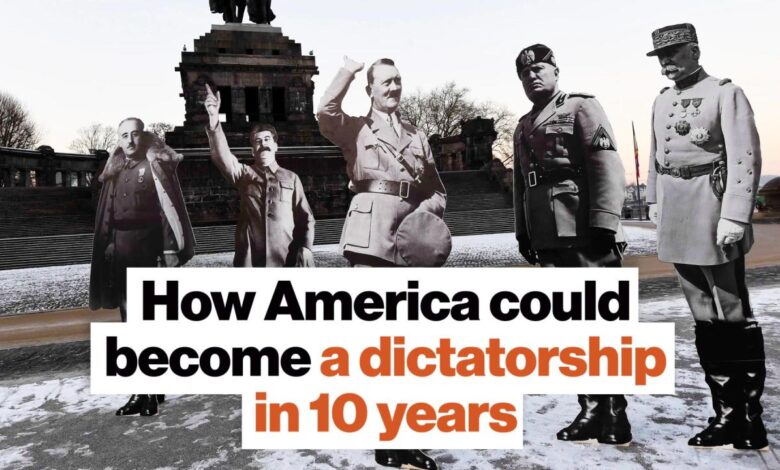
Is America Dictator Proof?
Is America dictator proof? That’s a question that’s haunted thinkers and citizens alike for generations. From the whispers of potential authoritarianism in the early days of the republic to the modern anxieties fueled by social media and political polarization, the idea of a dictatorship taking root in the United States is a chilling possibility. This exploration delves into the historical context, institutional safeguards, societal factors, and modern threats that shape the answer to this crucial question, examining whether the American system truly is immune to such a drastic shift in power.
We’ll journey through key moments in US history where democratic norms faced serious challenges, analyzing how the nation responded and the lasting impact of these events. We’ll dissect the intricate system of checks and balances, weighing its strengths and weaknesses in preventing a concentration of power. We’ll also explore the role of public opinion, the media, and social movements in safeguarding democracy, and finally, we’ll consider the ever-evolving threats posed by misinformation, technology, and potential military overreach.
It’s a complex puzzle, and piecing together the answer will require careful consideration of various perspectives and historical realities.
Societal Factors: Is America Dictator Proof

America’s susceptibility to authoritarianism isn’t solely determined by political structures; societal factors play a crucial, often underestimated, role. A robust civil society, informed public opinion, and a resilient culture of resistance are vital bulwarks against the erosion of democratic norms and the rise of autocratic power. The interplay of these elements significantly shapes a nation’s ability to withstand attempts at dictatorial rule.
The Role of a Free Press in Safeguarding Against Authoritarianism
A free and independent press acts as a cornerstone of democratic societies, serving as a watchdog against government overreach and abuses of power. Its investigative journalism exposes corruption, holds powerful figures accountable, and informs the public, fostering transparency and accountability. Without a free press, the public is left vulnerable to misinformation and propaganda, making them susceptible to authoritarian narratives and manipulations.
The ability of the press to challenge official narratives, report on dissent, and provide alternative viewpoints is critical in preventing the consolidation of authoritarian power. Historically, the suppression of the press has been a hallmark of authoritarian regimes, demonstrating its critical role in safeguarding democracy.
The Influence of Public Opinion and Civic Engagement in Preventing Dictatorships, Is america dictator proof
Public opinion and civic engagement are powerful forces that can either bolster or undermine democratic resilience. A well-informed and engaged citizenry is less likely to tolerate authoritarian actions. High levels of political participation, including voting, protesting, and engaging in civil discourse, create a culture of accountability that makes it more difficult for authoritarian leaders to seize power or consolidate their control.
Conversely, apathy, political disengagement, and polarization can create fertile ground for authoritarianism to take root. A divided and disengaged populace is more easily manipulated and controlled.
The Historical Role of Social Movements in Upholding Democracy
Throughout history, social movements have been instrumental in defending and expanding democratic rights. From the Civil Rights Movement in the United States to the anti-apartheid movement in South Africa, these movements have challenged oppressive regimes, demanded greater political participation, and ultimately contributed to significant democratic reforms. These movements often rely on non-violent resistance, civil disobedience, and sustained public pressure to achieve their goals.
Their success demonstrates the potential of collective action to resist authoritarian tendencies and safeguard democratic values.
A Hypothetical Scenario Illustrating Public Resistance Preventing a Power Grab
Imagine a scenario where a charismatic but increasingly authoritarian leader attempts to circumvent constitutional limits on presidential power. They might try to suppress dissent by controlling the media, intimidating opposition figures, and manipulating the judiciary. However, a broad coalition of citizens—journalists, activists, lawyers, and everyday people—responds with massive, sustained protests, civil disobedience, and a coordinated campaign to expose the leader’s actions.
This public outcry, amplified by a free press, generates sufficient pressure on the military and other institutions to refuse to support the leader’s power grab, ultimately preserving democratic processes. This hypothetical scenario highlights the crucial role of a mobilized and engaged citizenry in thwarting authoritarian ambitions.
Societal Factors that Strengthen or Weaken Democratic Resilience
Several societal factors can either strengthen or weaken a nation’s democratic resilience. Factors that strengthen resilience include: a strong civil society with numerous independent organizations, a well-educated and informed populace, a culture of tolerance and respect for differing viewpoints, and a robust and independent judiciary. Conversely, factors that weaken resilience include: high levels of social inequality, widespread political polarization and distrust, a decline in civic engagement, and the spread of misinformation and disinformation.
These factors, when combined, can create an environment conducive to the erosion of democratic norms and the rise of authoritarianism. The interplay of these factors is complex and dynamic, making it crucial to understand their impact on a nation’s ability to resist authoritarian tendencies.
So, is America truly dictator-proof? The answer, it turns out, isn’t a simple yes or no. While the US boasts robust institutional safeguards and a historically resilient populace, the ongoing battle to protect democratic values requires constant vigilance. The threats are real, evolving, and often insidious. Understanding the historical context, the strengths and weaknesses of our systems, and the power of public engagement is crucial in ensuring that the American experiment in democracy continues to thrive, and that the specter of dictatorship remains just that – a specter.
Is America truly dictator-proof? It’s a question that keeps me up at night, especially considering the level of public trust (or lack thereof) in institutions. Recent data suggests a worrying trend; check out this report on high percentage of covid deaths had 3rd shot more excess deaths after 4th shot , which raises serious questions about transparency and decision-making.
This kind of information fuels distrust, and unchecked distrust is fertile ground for authoritarianism. So, is America truly safe?
Is America truly dictator-proof? The question hangs heavy, especially considering the influence wielded by powerful groups. Elon Musk’s recent claim that a coalition of political groups is blocking the formation of a content moderation council, as reported here: elon musk says coalition of political groups behind lack of moderation council , raises serious concerns about unchecked power and its potential to undermine democratic processes.
This kind of behind-the-scenes maneuvering certainly makes you wonder about the fragility of our systems and whether they can truly withstand a determined assault on democratic principles.
So, is America dictator-proof? It’s a complex question, and thinking about resource crises in other parts of the world helps put things in perspective. For example, the ongoing fuel shortages in Nigeria, as highlighted in this article if nigeria cannot end fuel shortages disaster becons , show how easily societal stability can crumble under pressure. This instability, in turn, makes me question how resilient even seemingly strong democracies are against internal threats.
Ultimately, the “dictator-proof” label might be an oversimplification.