United States Federal Aviation Administration Taps Gamers to Address Critical Air Traffic Controller Shortage with Innovative Recruitment Drive

The Federal Aviation Administration (FAA) in the United States has unveiled an unprecedented recruitment campaign, explicitly targeting the nation’s vast community of video gamers to fill crucial air traffic controller (ATC) positions. This innovative approach, revealed through a new advertising blitz ahead of a recruitment window opening next week, seeks to leverage the unique cognitive skills honed in virtual worlds to address a severe and escalating staffing crisis within the nation’s air traffic control system. The move signals a significant shift in federal recruitment strategies, acknowledging the potential of a demographic often overlooked by traditional hiring methods for high-stakes professions.
The Genesis of a Novel Recruitment Strategy: Bridging Virtual Skills with Real-World Demands
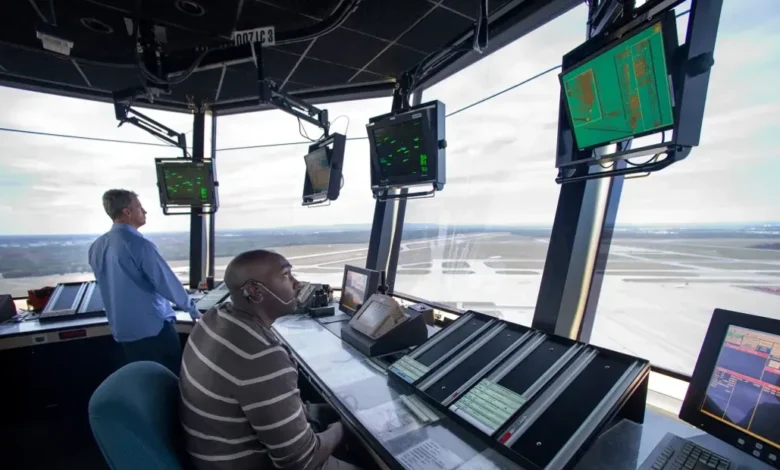
The campaign’s centerpiece is a compelling advertisement that opens with the familiar Xbox console logo, a direct nod to the target audience. The scene then transitions into a dynamic montage of gamers engrossed in various online titles, showcasing their intense focus, rapid decision-making, and collaborative prowess. This imagery smoothly segues into shots of air traffic controllers intently monitoring radar screens within the solemn confines of an ATC tower. The accompanying narration declares, "You have trained for this," drawing a powerful parallel between the immersive, high-pressure environments of advanced video games and the exacting demands of guiding aircraft through complex airspace.
This strategic pivot is not merely an attempt to cast a wider net; it is rooted in a deliberate assessment of the transferable skills cultivated through gaming. Modern video games, particularly those in genres such as real-time strategy (RTS), flight simulation, puzzle, and fast-paced action, demand a sophisticated suite of cognitive abilities. Players must exhibit exceptional multitasking capabilities, simultaneously tracking multiple data points, managing resources, and reacting to dynamic, often unpredictable, scenarios. They develop superior spatial reasoning, crucial for visualizing three-dimensional movements on a two-dimensional screen. Furthermore, gamers frequently make split-second decisions under immense pressure, process complex information rapidly, identify patterns amidst chaos, and maintain sustained focus over extended periods – all attributes that mirror the core competencies required of a successful air traffic controller. By explicitly appealing to these demonstrated proficiencies, the FAA aims to tap into a talent pool that possesses inherent aptitudes for the profession, potentially shortening the foundational training curve and increasing success rates in a notoriously challenging career path.
A Deep Dive into the Air Traffic Control Profession: Precision, Pressure, and Public Trust
The role of an air traffic controller is arguably one of the most demanding and critical in modern society. These highly trained professionals are the unseen guardians of the skies, responsible for the safe, orderly, and expeditious flow of air traffic. Their daily responsibilities encompass monitoring and directing dozens of aircraft simultaneously, ensuring adequate separation between planes in the air and on the ground, vectoring aircraft through designated flight paths, sequencing arrivals and departures, and providing pilots with crucial information ranging from weather updates to runway conditions. Controllers operate across three primary domains: airport control towers (managing ground movement and local air traffic), Terminal Radar Approach Control (TRACON) facilities (handling aircraft within a 30-50 mile radius of major airports), and En Route Air Traffic Control Centers (managing high-altitude traffic across vast sectors).
The cognitive load on an ATC is immense. They must maintain constant situational awareness, anticipate potential conflicts, and execute precise instructions with unwavering clarity. Errors, even minor ones, can have catastrophic consequences, making the profession inherently high-stress. Controllers work non-standard hours, including nights, weekends, and holidays, often in shifts that demand peak performance at all times. The job requires not only technical proficiency but also exceptional communication skills, emotional resilience, and an unwavering commitment to safety. The path to becoming a certified ATC is rigorous, involving several months at the FAA Academy in Oklahoma City, followed by an intensive one to three years of on-the-job training (OJT) under the tutelage of experienced controllers. During this OJT phase, trainees must master the complexities of a specific facility’s airspace, procedures, and equipment, all while being evaluated under real-world operational pressure. The attrition rate during this period can be significant, highlighting the inherent difficulty and specialized nature of the work.
The Mounting Crisis: A Decade of Decline and Looming Retirements
The FAA’s desperate outreach to gamers underscores a profound and persistent staffing crisis that has plagued the U.S. air traffic control system for decades. The roots of the current predicament can be traced back to the infamous 1981 PATCO (Professional Air Traffic Controllers Organization) strike, when President Ronald Reagan fired over 11,000 striking controllers. While the immediate crisis was managed by military controllers and supervisors, the long-term impact was a severe depletion of institutional knowledge and a protracted period of rebuilding the workforce. Subsequent recruitment efforts struggled to fully recover the numbers and experience levels.
In the early 2010s, a wave of retirements, driven by an aging workforce and specific retirement windows, began to accelerate, further exacerbating the shortage. The FAA, by its own admission, has struggled to keep pace with these departures, with the training pipeline often failing to produce enough qualified replacements. Last year, the FAA identified an ideal operational strength of 14,663 active controllers needed to safely and efficiently manage the nation’s airspace. However, the actual number of operational controllers stood at approximately 11,663, leaving a critical deficit of at least 3,000 personnel. Projections indicate that this shortage is set to worsen dramatically, with thousands more experienced controllers expected to retire or leave the service by 2028. The COVID-19 pandemic further complicated matters, as training classes were paused or scaled back, creating a backlog in the pipeline, while some experienced controllers opted for early retirement, unwilling to return to high-stress environments amidst health concerns. This demographic crunch, coupled with the rigorous and time-consuming training process, has created a perfect storm, pushing the FAA to explore unconventional recruitment avenues.
Financial Incentives and Career Progression: A Lucrative Path
Beyond the allure of a challenging and impactful career, the FAA is offering a highly competitive compensation package designed to attract top talent. The advertisement explicitly highlights the potential to earn up to USD 155,000 (approximately IDR 2.4 billion) annually after just three years of service. This figure represents a significant earning potential, especially considering that initial salaries for entry-level controllers, even during training, are typically in the range of USD 40,000 to USD 60,000, quickly escalating upon certification and progression through pay bands. Experienced controllers in high-traffic facilities can command salaries well exceeding USD 180,000, not including overtime pay which is often substantial due to staffing shortages.
As federal employees, ATCs also receive a comprehensive benefits package, including robust health insurance, generous retirement plans (Federal Employees Retirement System – FERS), life insurance, and paid leave. The career path offers stability, job security, and opportunities for advancement into supervisory or management roles, or specialized areas like training and system development. For many, the combination of a high-impact public service role, excellent compensation, and stable federal employment represents an exceptionally attractive proposition, particularly for young adults seeking a meaningful and financially rewarding career.
Official Endorsements and Industry Perspectives
The FAA’s innovative strategy has garnered significant support from key stakeholders, while also prompting discussions about the evolving nature of skill assessment. U.S. Transportation Secretary Sean P. Duffy emphasized the necessity for the FAA to adapt its recruitment methods to effectively reach the next generation of air traffic controllers. "Our nation’s airspace is dynamic, and so must be our approach to finding the talent required to manage it safely," Secretary Duffy stated, inferring his belief that targeting younger demographics with innate technological proficiency is a forward-thinking strategy for a technologically advanced profession. "This initiative is about recognizing potential in new places and ensuring our workforce reflects the diverse skills needed for tomorrow’s challenges."
The National Air Traffic Controllers Association (NATCA), the union representing FAA controllers, has also expressed its conditional support for the broadened recruitment efforts. While welcoming any initiative to bolster staffing levels, NATCA leadership has consistently underscored the paramount importance of maintaining the stringent standards required for such a critical profession. "We fully support the FAA’s efforts to recruit the best and brightest, wherever they may be found," commented a NATCA spokesperson, inferring a statement. "However, it is absolutely essential that all candidates, regardless of their background, successfully meet and exceed the rigorous training and certification requirements. There can be no compromise on safety, and that begins with ensuring every controller is exceptionally qualified."
Psychologists specializing in human factors and cognitive performance have weighed in on the validity of the FAA’s approach. Dr. Eleanor Vance, a cognitive psychologist, noted, "The skills developed through complex gaming – rapid information processing, pattern recognition, spatial reasoning, and decision-making under pressure – are highly relevant to air traffic control. While gaming doesn’t replace formal training, it can certainly indicate a strong aptitude. This recruitment drive is a smart move in identifying individuals with a predisposition for success in this demanding field."
The Shadow of Near Misses: Recent Incidents Underscore Urgency
The urgency behind this aggressive recruitment drive is tragically underscored by a series of concerning incidents and near-misses that have plagued the aviation sector in recent years, some of which have resulted in fatalities. These events have heightened public and industry awareness of the critical role played by air traffic controllers and the dire consequences of understaffing or human error under pressure.
In a particularly harrowing incident early in 2025, a military helicopter was involved in a mid-air collision with a passenger jet in controlled airspace near Ronald Reagan Washington National Airport, resulting in the tragic loss of 67 lives. Investigations into such incidents often scrutinize every link in the safety chain, including controller workload, communication protocols, and the availability of adequate staffing. More recently, in early 2026, an Air Canada aircraft on a taxiway at New York’s LaGuardia Airport collided with a fire truck responding to an unrelated incident, leading to the deaths of two pilots. While the full findings of these investigations by the National Transportation Safety Board (NTSB) are still awaited, such events invariably cast a spotlight on the operational environment within air traffic control, including potential stress factors due to staffing shortages, fatigue, or lapses in situational awareness. These incidents serve as stark reminders of the narrow margins for error in aviation and amplify the critical need for a fully staffed, highly proficient air traffic control workforce. The FAA’s own data indicates a concerning increase in operational errors and runway incursions, often linked to increased controller workload and decreased staffing levels at critical facilities.
Implications and Future Outlook: A New Paradigm for Recruitment?
The FAA’s gamer recruitment initiative carries profound implications for aviation safety, the future of federal hiring, and potentially for other high-pressure industries facing talent shortages. For aviation safety, ensuring an adequate supply of well-trained controllers is non-negotiable. A fully staffed system reduces workload on individual controllers, minimizes fatigue, and ultimately enhances the resilience of the entire air traffic network, directly contributing to the prevention of accidents and incidents. Conversely, continued understaffing could lead to increased delays, flight cancellations, and a heightened risk of operational errors, impacting millions of travelers and billions of dollars in economic activity.
Economically, chronic ATC shortages have already contributed to significant flight delays and cancellations across the U.S., costing airlines and passengers billions annually. A stable and efficient air traffic system is vital for economic growth and competitiveness. If successful, this innovative recruitment strategy could serve as a blueprint for other government agencies or private sectors grappling with specialized skill gaps. Industries such as cybersecurity, defense, logistics, and even healthcare, which demand similar cognitive agility, might explore unconventional pathways to identify and cultivate talent.
Challenges remain, however. Integrating a new generation of controllers, some of whom may have less traditional professional backgrounds, with experienced personnel will require careful management and mentorship. Maintaining high morale among existing, often overworked staff while new recruits are brought up to speed will also be crucial. Furthermore, the FAA will need to continuously evaluate the efficacy of its training programs to ensure that individuals with gaming aptitudes successfully transition into fully competent and confident air traffic controllers.
Looking ahead, while technology, including AI and automation, will undoubtedly play an increasingly supportive role in air traffic management, human controllers will remain indispensable for their unique ability to exercise judgment, adapt to unforeseen circumstances, and manage complex, non-standard operations. The FAA’s bold step to embrace the gaming community represents not just a response to a crisis, but a visionary acknowledgment of how diverse skill sets, honed in unexpected arenas, can be harnessed for the benefit of public service and national safety. The success of this initiative will likely shape the future landscape of federal recruitment, proving that the skills learned in virtual worlds can indeed translate into saving lives in the real skies above.