IPC TPK Achieves Solid Q1 2026 Operational Growth Amidst Idul Fitri Logistics Challenges

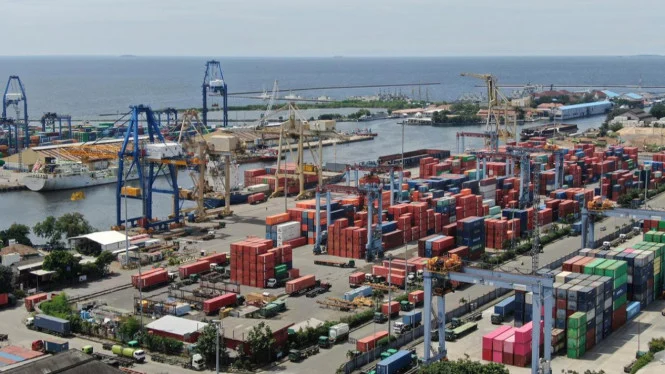
PT IPC Terminal Petikemas (IPC TPK), a key player in Indonesia’s port logistics sector and a subsidiary of the state-owned enterprise Pelindo, has reported a robust operational performance for the first quarter of 2026. Despite the inherent complexities and seasonal disruptions associated with the nationwide Idul Fitri holiday, including stringent restrictions on freight movement, the company successfully managed to maintain a solid operational footing. IPC TPK registered a total throughput of 850,768 TEUs (Twenty-foot Equivalent Units) from January to March 2026, marking a commendable 0.9 percent increase compared to the 843,187 TEUs recorded during the same period in the previous year (Year-on-Year/YoY). This achievement underscores the company’s operational resilience and strategic foresight in navigating a dynamic and often challenging logistical landscape.
Strategic Resilience in Peak Season Operations
The period leading up to and immediately following Idul Fitri, one of Indonesia’s most significant annual holidays, traditionally poses substantial challenges for the logistics and supply chain sectors. The government typically implements temporary restrictions on the movement of certain categories of goods vehicles to prioritize passenger traffic during the mass exodus (mudik) and return flows. For 2026, these restrictions were generally in effect from early April, impacting the tail end of the Q1 reporting period and the beginning of Q2. IPC TPK’s ability to not only withstand these pressures but also achieve growth is a testament to its proactive and adaptive operational strategies.
Pramestie Wulandary, Corporate Secretary of IPC TPK, highlighted the importance of anticipatory planning and meticulous operational optimization. "Our success during this demanding quarter was largely attributed to our comprehensive anticipatory measures, meticulously executed both before and after the logistical restriction period," Wulandary stated on Wednesday, April 15, 2026. "IPC TPK proactively optimized loading and unloading activities in the run-up to the restriction period, ensuring a significant volume of cargo was moved efficiently. Subsequently, we implemented accelerated cargo flow protocols immediately after the restrictions were lifted. This dual-pronged strategy was crucial in maintaining distribution continuity and effectively minimizing potential cargo backlogs and congestion across our terminal network." Such strategic agility demonstrates a deep understanding of seasonal logistical patterns and the commitment to uphold service levels under pressure.
Diving Deeper into Q1 Performance Metrics
While the overall Q1 performance showed positive growth, a closer look at the monthly data for March 2026 reveals the direct impact of the impending Idul Fitri holiday preparations and initial restrictions. The total loading and unloading traffic for March 2026 stood at 250,352 TEUs, representing a decrease of approximately 14 percent when compared to the 290,923 TEUs recorded in March 2025. This monthly dip is a typical pattern observed in the logistics sector preceding major holidays, as businesses adjust inventory levels and shipping schedules to account for reduced operational capacity and government-imposed movement controls. However, the cumulative Q1 growth indicates that the slowdown in March was effectively offset by stronger performances in January and February, alongside the strategic efforts to manage cargo flow efficiently throughout the quarter.
The robust Q1 performance of IPC TPK also reflects broader trends within the Indonesian economy, particularly the sustained demand in the domestic market. Indonesia’s economic growth, driven by strong domestic consumption, continues to underpin the demand for logistics services. As the archipelago nation relies heavily on sea transportation for inter-island trade and distribution, the efficiency of container terminals like those operated by IPC TPK is paramount to maintaining supply chain stability and supporting economic activity across the diverse regions. The government’s continued focus on infrastructure development and connectivity under initiatives like the "Tol Laut" (Sea Toll Road) program further amplifies the strategic importance of reliable port operations.
Domestic Market: A Pillar of Strength
A significant contributor to IPC TPK’s overall Q1 success was the impressive performance of its domestic segment. The volume of domestic container traffic demonstrated a positive trend, growing by a notable 3.5 percent. This translates to an increase from 623,532 TEUs in the first quarter of 2025 to 645,084 TEUs in the first quarter of 2026. This consistent growth in domestic throughput highlights the robust demand within Indonesia’s internal trade network and the critical role IPC TPK plays in facilitating inter-island commerce.
The expansion of the domestic segment underscores several key factors. Firstly, it reflects the resilience of local economies and consumer markets across Indonesia. With a population exceeding 270 million, internal consumption remains a primary driver of economic activity. Secondly, it validates the government’s ongoing efforts to improve logistics infrastructure and connectivity between islands, making it more efficient and cost-effective to transport goods domestically. IPC TPK’s strategic network of terminals, connecting major economic hubs, is ideally positioned to capitalize on these trends. The strong domestic performance also provides a crucial buffer against potential volatilities in international trade, offering a more stable and predictable revenue stream. This segment’s growth is a direct indicator of the health of Indonesia’s internal supply chains, which are vital for ensuring equitable distribution of goods and supporting regional development.

International Segment Navigates Headwinds
In contrast to the buoyant domestic market, IPC TPK’s international container traffic experienced a downturn during the first quarter of 2026. The international throughput declined by 6.4 percent, moving from 219,655 TEUs in Q1 2025 to 205,684 TEUs in Q1 2026. This decrease was primarily influenced by broader global shipping dynamics and adjustments in international trade flows. Factors such as shifts in global shipping schedules, geopolitical tensions impacting major maritime routes (e.g., lingering effects of Red Sea disruptions or other regional conflicts), and fluctuations in cross-country cargo distribution patterns all played a role.
The international shipping industry continues to grapple with various challenges, including port congestion in major global hubs, capacity imbalances, and the rising costs of fuel and freight. These external factors often necessitate carriers to revise their schedules, impacting vessel calls and container volumes at individual ports. For a major trading nation like Indonesia, which relies heavily on international trade for both imports and exports, these global shifts inevitably affect port operators. IPC TPK, as a gateway for international commerce, is directly exposed to these global headwinds. The company’s management acknowledged these influences, indicating ongoing efforts to collaborate with shipping lines and adapt its services to accommodate evolving global trade requirements. This includes optimizing berth allocations, improving vessel turnaround times, and enhancing intermodal connectivity to maintain its attractiveness as a preferred port of call for international carriers.
Regional Growth Trajectories: A Network-Wide Achievement
The growth in IPC TPK’s Q1 throughput was not concentrated in a single hub but was rather distributed across several of its operational areas, underscoring the strength of its integrated network. Notably, the Area Tanjung Priok, Indonesia’s busiest and largest container port, recorded a 1 percent growth. This is particularly significant given Tanjung Priok’s immense volume and its role as the primary international gateway for Indonesia, meaning even modest growth here contributes substantially to overall figures.
Beyond the capital’s main port, other key regional terminals also demonstrated commendable growth:
- Area Pontianak in West Kalimantan saw a 1.6 percent increase. Pontianak serves as a critical logistics hub for Kalimantan, facilitating trade for the region’s burgeoning agricultural and resource-based industries.
- Area Panjang in Lampung, Sumatra, achieved a 2 percent growth. Panjang is strategically important for connecting Sumatra’s agricultural and industrial outputs to national and international markets.
- Area Teluk Bayur in West Sumatra registered the highest growth among the regions, with a significant 5.3 percent increase. This exceptional performance at Teluk Bayur could be attributed to specific regional economic boosts, improved connectivity, or successful implementation of local operational efficiencies, signaling its growing importance in the regional logistics chain.
This diversified growth across various terminals reflects IPC TPK’s commitment to balanced regional development and its effectiveness in serving diverse economic hinterlands. It also suggests that the company’s operational strategies are adaptable and effective across different scales and geographical contexts, enabling it to capitalize on local economic strengths and mitigate regional specific challenges.
The Idul Fitri Impact and Government Regulations
Idul Fitri, or Eid al-Fitr, is a period of immense cultural and economic significance in Indonesia. It marks the end of the fasting month of Ramadan, leading to massive population movements as people return to their hometowns (mudik). To ensure the safety and smooth flow of millions of travelers, the Indonesian government, typically through a Joint Decree (SKB) involving the Ministry of Transportation, National Police, and Ministry of Public Works and Housing, implements temporary restrictions on freight vehicles. These restrictions usually target specific types of goods, such as oversized vehicles, construction materials, and certain non-perishable goods, and apply to major arterial roads and toll networks for several days before, during, and after the peak holiday period.
For 2026, these restrictions were likely in full effect during the first week of April, overlapping with the transition from Q1 to Q2. While essential goods like food, fuel, and medical supplies are typically exempted, the overall reduction in freight movement creates ripple effects throughout the supply chain. Port terminals, as critical nodes, must manage surges in cargo volumes both before the restrictions begin (as businesses rush to ship goods) and after they are lifted (to clear accumulated cargo). IPC TPK’s ability to navigate this annual logistical bottleneck, managing both the pre-holiday rush and post-holiday clearance efficiently, underscores its operational robustness and planning capabilities. "The Idul Fitri momentum serves as a crucial opportunity for us to continuously strengthen our operational systems, making them more adaptive and integrated," Pramestie further elaborated, emphasizing the continuous learning and improvement cycle at IPC TPK.
IPC TPK’s Proactive Approach and Technological Edge

IPC TPK’s consistent performance, especially during peak periods, is not solely reliant on manual efforts but is increasingly bolstered by strategic investments in technology and operational best practices. The company employs advanced terminal operating systems (TOS) that optimize every aspect of container handling, from vessel scheduling and berth allocation to yard management and gate operations. The use of real-time data analytics allows IPC TPK to anticipate demand fluctuations, identify potential bottlenecks, and make swift, data-driven decisions.
Furthermore, IPC TPK has likely invested in automation and digital platforms to streamline customer interactions, such as online booking systems for vessel calls and electronic documentation processing. This digital transformation reduces administrative burdens, enhances transparency, and improves overall service efficiency. The company’s commitment to maintaining a highly skilled workforce, trained in the latest port management technologies and safety protocols, also contributes significantly to its operational excellence. By combining advanced technology with a competent human element, IPC TPK ensures it can handle increasing volumes and complex logistical demands with precision and speed, thereby reinforcing its competitive edge in the Indonesian logistics landscape.
Broader Economic and Logistical Implications
The solid performance of IPC TPK in Q1 2026 carries significant implications for the broader Indonesian economy and its logistics sector. As a vital link in the national supply chain, efficient port operations are fundamental to:
- Economic Stability: By ensuring the smooth flow of goods, IPC TPK helps prevent supply shortages, supports manufacturing and retail sectors, and contributes to price stability by avoiding logistical bottlenecks that could drive up costs.
- Trade Facilitation: Efficient ports are crucial for enhancing Indonesia’s competitiveness in international trade, making it an attractive destination for foreign investment and a reliable partner for global commerce.
- Regional Development: The growth recorded in regional terminals like Teluk Bayur and Pontianak demonstrates the company’s role in supporting economic activity beyond Java, fostering equitable development across the archipelago.
- National Connectivity: IPC TPK’s operations are integral to the government’s maritime highway vision, which aims to improve inter-island connectivity and reduce logistics costs across Indonesia.
Industry analysts and government bodies would likely view IPC TPK’s Q1 results positively. A stable and growing port sector, particularly during challenging periods like Idul Fitri, signals the resilience of Indonesia’s infrastructure and its capacity to support sustained economic growth. For instance, the Indonesian Logistics and Forwarders Association (ALFI) would likely commend the efforts of port operators like IPC TPK for maintaining operational continuity, which directly impacts their members’ ability to deliver goods on time. The Ministry of Transportation would also see these results as a validation of the collective efforts between state-owned enterprises and regulatory bodies to enhance national logistics efficiency.
Industry Perspectives and Future Outlook
Looking ahead, IPC TPK is expected to continue focusing on strategic initiatives to enhance its operational capabilities and expand its market reach. This may include further investments in infrastructure upgrades, such as quay cranes and yard equipment, to boost handling capacity and efficiency. The company is also likely to explore new technologies, including AI-driven predictive analytics for vessel scheduling and automated guided vehicles (AGVs) for yard operations, to further optimize its terminals.
Moreover, IPC TPK’s commitment to environmental sustainability will likely feature prominently in its future plans, aligning with global standards for green ports. This could involve adopting cleaner energy sources, optimizing fuel consumption for terminal equipment, and implementing waste reduction programs. By embracing sustainable practices, IPC TPK not only contributes to environmental protection but also enhances its long-term viability and appeal to environmentally conscious shipping lines and customers.
The company’s focus on an "adaptive and integrated operational system" suggests a continuous drive towards greater synergy across its network and enhanced collaboration with stakeholders, including shipping lines, freight forwarders, and government agencies. This integrated approach will be crucial for navigating the evolving complexities of global trade, regional economic shifts, and seasonal logistical demands. With a strong Q1 performance as a foundation, IPC TPK is well-positioned to continue its trajectory as a leading and resilient force in Indonesia’s critical port logistics sector.