One in Five Indonesian Children Suffer from Stunting and Anemia, Directly Linked to Cognitive Decline, New Study Reveals


A groundbreaking study by the Indonesia Health Development Center (IHDC) has unveiled a concerning reality for Indonesian youth: one in five children in the nation are afflicted by stunting and anemia, conditions that have a direct and detrimental impact on their cognitive development, including crucial aspects like working memory. This finding underscores that the ramifications of poor nutrition extend far beyond mere physical growth, profoundly affecting a child’s ability to learn and think.
The study, presented in Jakarta on Wednesday, April 15, 2026, by the IHDC, highlighted that despite overall improvements in human development indicators, the persistent challenge of malnutrition among children remains a significant hurdle for Indonesia. Nila Djuwita Moeloek, Chairperson of the IHDC Advisory Board, emphasized that this issue represents a substantial unfinished agenda for the nation.
"Indonesia still has stunting. One in five Indonesian children are stunted, still 20 percent," Moeloek stated during the study’s presentation, underscoring the persistent prevalence of this condition.
Beyond Physical Stature: The Brain’s Vulnerability
Historically, stunting has been primarily understood as a problem of stunted physical growth. However, the IHDC study meticulously details how this condition, often exacerbated by anemia, leads to significantly diminished academic capabilities and brain development. The research indicates that children experiencing stunting and anemia are likely to exhibit lower academic performance and slower cognitive development compared to their well-nourished peers. The study’s findings are particularly stark, suggesting that the cognitive abilities of affected children can be several times lower than those of children with adequate nutritional intake.
"With stunting, the capacity for academic achievement or brain development is five times lower. This means their comprehension is not the same as that of a normal child," Moeloek explained, drawing a direct line between nutritional deficiencies and intellectual potential.
Furthermore, the study places significant emphasis on the role of anemia, or iron deficiency, in this cognitive deficit. Low hemoglobin (Hb) levels have been demonstrably linked to impairments in working memory – the brain’s vital capacity to retain and process information during learning. The IHDC’s findings quantify this correlation, with Moeloek stating, "Low Hb correlates with comprehension or working memory; the operation is almost 4, around 3.08." This implies a substantial reduction in the efficiency of the brain’s information processing mechanisms.
The IHDC’s research identified that one in five children suffer from a deficit in working memory, with this vulnerability being particularly pronounced among children who are stunted, anemic, and have inadequate protein and calorie intake. This confluence of nutritional deprivations creates a synergistic negative effect on cognitive function.
A Complex Web of Nutritional Challenges
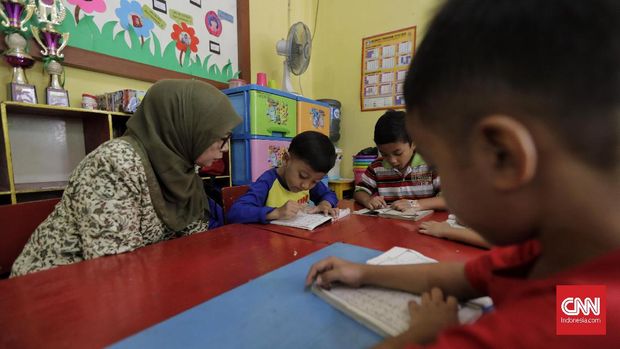
The IHDC study, conducted among primary school students in Jakarta, revealed a widespread deficiency in essential nutrients, including protein, calories, and iron. These deficiencies are critical determinants of a child’s readiness for learning. Insufficient nutrition directly impacts a child’s ability to concentrate, understand lessons, and ultimately places them at a significant risk of falling behind academically.

Moeloek stressed that this is not an isolated issue but is intricately linked to a multitude of factors. These include access to nutritious food, adequate sanitation, and effective parenting practices. The study’s findings strongly suggest that nutritional interventions cannot be delayed; they must commence early in life. The most critical period for intervention is identified as the first 1,000 days of life, spanning from conception through a child’s second birthday.
"This is needed from the early stages of life, especially within the first thousand days, meaning during pregnancy and up to two years of age," Moeloek elaborated. She further underscored the paramount importance of maternal readiness before conception, particularly concerning health and nutritional status. Interventions initiated after a child reaches two years of age are deemed significantly less effective, with improvements being minimal and not as impactful.
"We once tried giving good food to stunted children, and their IQ only increased by about 15 percent, which is not very significant," Moeloek shared, illustrating the diminishing returns of delayed interventions.
The issue of childhood malnutrition is directly correlated with the future quality of Indonesia’s human resources. Moeloek pointed out that the nation’s average IQ remains a challenge, suggesting that improvements in the Human Development Index (HDI) are insufficient if not accompanied by equitable improvements in nutritional status and health.
The IHDC advocates for comprehensive interventions that extend beyond mere dietary provisions. These interventions must encompass education, sanitation improvements, and supportive parenting initiatives.
Key Interventions for a Brighter Future
The IHDC has outlined several critical steps deemed essential for addressing this multifaceted problem:
- Ensuring Adequate Nutrient Intake: Prioritizing sufficient consumption of protein, calories, and iron is fundamental. This requires not only access to these nutrients but also education on their importance and how to incorporate them into daily diets.
- Improving Access to Clean Water and Sanitation: Poor sanitation contributes to infections that can hinder nutrient absorption and overall health, exacerbating the effects of malnutrition. Investments in clean water infrastructure and hygiene education are crucial.
- Enhancing Parenting Quality and Education: Empowering parents with knowledge about child nutrition, health, and early childhood development is vital. This includes promoting responsive parenting, stimulating environments, and understanding the critical role of the first 1,000 days.
"If our nation wants to have good, quality human resources, it starts with providing them with the right food, a good environment, and of course, quality parenting or education," Moeloek asserted.
The IHDC’s findings serve as a stark reminder that childhood malnutrition is not merely a health concern but a critical determinant of a nation’s future. Without timely and effective interventions, the repercussions can manifest as diminished learning capacities, reduced productivity, and ultimately, a compromised global competitiveness for Indonesia.
Background and Context: The Persistent Shadow of Malnutrition in Indonesia
Indonesia has long grappled with the twin burdens of stunting and anemia among its children. Stunting, defined by the World Health Organization (WHO) as the impaired growth and development that children experience from prolonged or recurrent undernutrition, usually beginning in the womb and during the first two years of life, has been a persistent public health challenge. National data has consistently shown high prevalence rates, though recent years have seen some progress.
According to the 2018 Basic Health Research (Riskesdas) conducted by the Indonesian Ministry of Health, the prevalence of stunting in children under five years old was 30.8%. While this represented a slight decrease from previous years, it remained significantly above the WHO’s threshold for severe public health problems. Similarly, anemia, particularly iron deficiency anemia, is also prevalent, affecting a substantial proportion of children and pregnant women. The 2018 Riskesdas indicated that anemia in children aged 5-11 years was 26.5%.
The IHDC study’s timing, released in April 2026, places these findings within the context of ongoing national efforts to combat malnutrition. The Indonesian government has implemented various programs, including nutritional supplements for pregnant women and young children, food fortification initiatives, and educational campaigns on healthy eating. However, the IHDC’s findings suggest that these efforts, while important, may not be reaching all segments of the population effectively or addressing the underlying complex factors contributing to the problem.
The focus on cognitive decline, particularly working memory, represents a significant evolution in understanding the long-term consequences of these nutritional deficiencies. Previously, the emphasis was largely on physical growth and susceptibility to infectious diseases. This new research highlights the profound impact on a child’s intellectual potential, which has direct implications for educational outcomes, future employment opportunities, and overall societal development.
Timeline of Understanding and Intervention
The recognition of stunting as a critical public health issue in Indonesia has evolved over decades. Early efforts focused on addressing infectious diseases and immediate nutritional needs. However, by the late 20th and early 21st centuries, a growing body of international research began to highlight the irreversible long-term consequences of malnutrition, particularly during the critical first 1,000 days.
- Pre-2000s: Focus on immediate hunger relief and infectious disease control. Stunting recognized primarily as a physical growth issue.
- 2000s: Increased awareness of the "first 1,000 days" and the irreversible damage of early malnutrition. International organizations like UNICEF and WHO begin to emphasize the developmental impacts.
- 2010s: Indonesia actively engages in national stunting reduction campaigns, with increased government commitment and multi-sectoral approaches. Data collection and monitoring become more robust.
- Late 2010s – Early 2020s: Research begins to more deeply explore the neurological and cognitive impacts of stunting and anemia. Studies like the IHDC’s emerge, providing specific quantitative data on cognitive deficits.
- 2026 (Present): The IHDC study’s findings underscore the urgency of a more comprehensive approach, integrating cognitive development into the broader understanding of malnutrition’s impact and demanding more targeted and effective interventions.
The IHDC’s study, therefore, builds upon decades of understanding and research, providing a critical update on the pervasive and insidious nature of malnutrition’s impact on the next generation of Indonesians.
Broader Implications for Human Capital and National Development
The implications of the IHDC’s findings are far-reaching and extend beyond the immediate health of individual children. A significant portion of the future workforce exhibiting diminished cognitive abilities poses a substantial challenge to Indonesia’s aspirations for economic growth and global competitiveness.
A population with lower average cognitive function may struggle with higher-skilled jobs, innovation, and adapting to rapidly evolving technological landscapes. This can translate into lower productivity, reduced earning potential, and a widening socio-economic gap. The burden on the healthcare system may also increase due to the long-term health consequences associated with chronic malnutrition.
Furthermore, the findings raise important questions about the efficacy and reach of current public health and educational policies. They signal a need for a re-evaluation of strategies, potentially shifting focus towards more intensive early childhood interventions, improved prenatal care, and more effective nutritional education programs for parents. The success of these interventions will be a critical factor in shaping Indonesia’s human capital for decades to come.
The study’s emphasis on the interconnectedness of nutrition, health, sanitation, and parenting highlights the need for a holistic and integrated approach. Siloed interventions are unlikely to yield the desired results. Instead, a coordinated effort involving government ministries, healthcare providers, educational institutions, community organizations, and families themselves is imperative. The future prosperity and development of Indonesia are intrinsically linked to its ability to ensure that every child has the opportunity to reach their full cognitive potential.