Socio Today
The drums of war beaten by the United States and Israel against Iran since late February have triggered a profound fiscal alarm, with experts warning that the conflict’s economic toll could become a significant "boomerang" for American taxpayers. Professor Linda Bilmes, a distinguished scholar of public policy at the Harvard Kennedy School and a leading authority on the financial costs of American military interventions, has released a comprehensive analysis suggesting that the total expenditure for the ongoing hostilities could easily exceed $1 trillion. This figure stands in stark contrast to the initial, more conservative estimates provided by the Department of Defense, highlighting a growing disconnect between real-time military reporting and the long-term economic reality of modern warfare.
According to Professor Bilmes, the $1 trillion projection—roughly equivalent to Rp17,155 trillion—is not merely a speculative high-end figure but a realistic assessment of the combined direct and indirect costs associated with a sustained conflict in the Middle East. "I am confident that we will reach the $1 trillion mark for the war against Iran," Bilmes stated in a recent interview with CNBC International. Her research identifies several critical factors that could exacerbate the national debt, which is already at historic highs, potentially burdening future generations with unprecedented interest payments and fiscal instability.
Chronology of Escalation and Initial Combat Expenditures
The current conflict trace its immediate roots to February 28, when a significant escalation in hostilities occurred involving U.S. forces and Israeli strategic operations directed at Iranian targets. According to reports submitted by the Pentagon to the U.S. Congress, the first six days of these joint operations were characterized by high-intensity sorties and missile exchanges, costing the American treasury approximately $11.3 billion (Rp194 trillion). This initial surge in spending set the tone for a conflict that has proven to be far more resource-intensive than previous regional skirmishes.
The intensity of the conflict remained high throughout March, leading up to a temporary ceasefire agreement announced on April 8. In the days preceding this pause in hostilities, the Bilmes study identified a pattern of daily expenditures that reached nearly $2 billion (Rp34.3 trillion). Over a 40-day window of active conflict, these daily costs accounted for amunition replenishment, troop deployment logistics, and the replacement of high-value military assets. One of the most notable losses highlighted in the report was the downing of three U.S. F-15 fighter jets. These aircraft were reportedly lost due to "friendly fire" or accidental discharge originating from Kuwait, an incident that underscored the chaotic and expensive nature of multi-national theater operations.
The Disparity in Replacement Costs and Military Accounting
A central pillar of the Harvard study is the critique of how the Department of Defense calculates its war-time spending. Bilmes argues that the Pentagon frequently utilizes "book value" or historical pricing when reporting costs to the public and Congress, rather than the "replacement cost" which reflects current market prices and manufacturing complexities. This accounting gap means that the $11.3 billion figure reported for the first week of the war is likely closer to $16 billion (Rp274 trillion) when factoring in the actual cost of purchasing new equipment and munitions at today’s rates.
The financial burden is further exacerbated by the nature of the contracts the U.S. government maintains with major defense contractors such as Lockheed Martin and Boeing. These long-term agreements often involve high overhead costs and specialized production lines. Bilmes pointed out a staggering economic asymmetry in the conflict: a single U.S. interceptor missile used to defend against aerial threats costs approximately $4 million (Rp68.5 billion). In contrast, the Iranian-made drones they are often tasked with neutralizing cost as little as $30,000 (Rp514 million) per unit. This "cost-exchange ratio" heavily favors the adversary, allowing Iran to drain U.S. financial resources at a fraction of the investment.
Legislative Battles and the Surge in Defense Budgeting
The financial implications of the Iran conflict have already begun to reshape the legislative landscape in Washington D.C. The White House recently submitted a defense budget proposal to Congress totaling $1.5 trillion (approximately Rp25.71 quadrillion). If approved, this would represent the largest single-year spike in military spending since the end of the Second World War. However, even this massive figure does not tell the whole story.
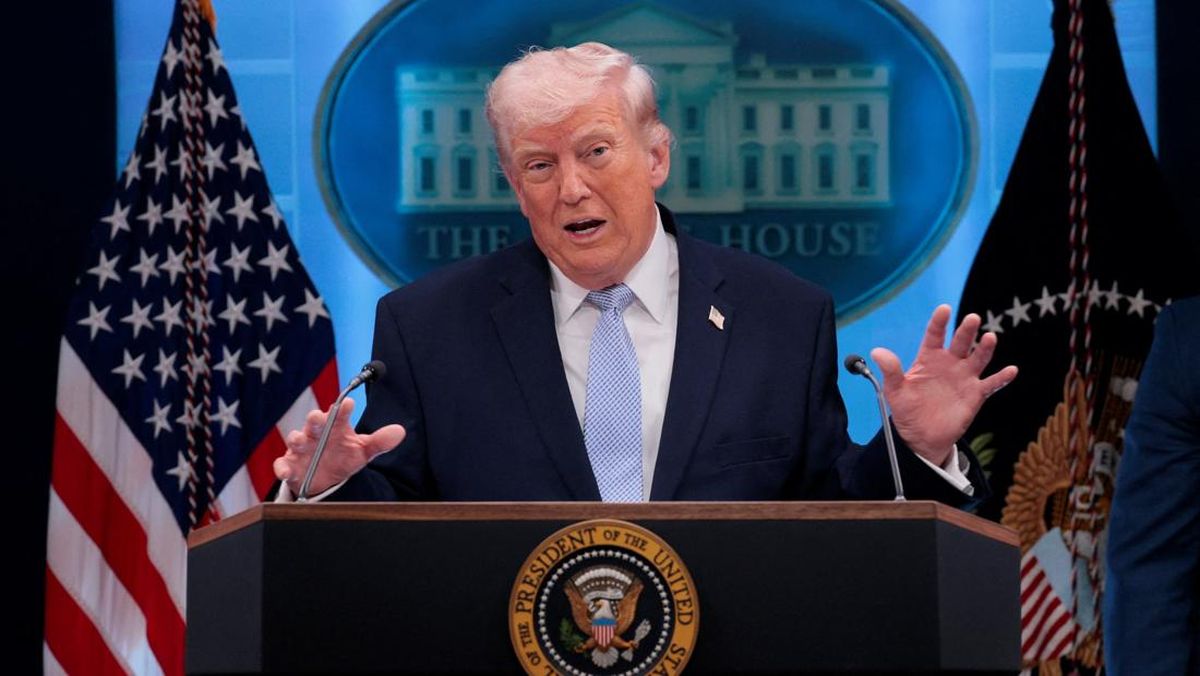
In addition to the base defense budget, the Pentagon has requested a supplemental "war chest" of $200 billion (Rp3.428 trillion) specifically to cover the operational requirements of the Iran campaign. While some members of Congress have expressed hesitation regarding the scale of this request, Bilmes warns that the momentum of war often forces the hand of the legislature. "Even if Congress does not approve the full increase, it is highly likely that at least $100 billion per year will be added to the base defense budget—funds that would never have been authorized if not for this war," she noted. This "budgetary creep" ensures that the fiscal impact of the conflict will persist long after a permanent ceasefire is signed.
Historical Comparisons: From Iraq to the Current Crisis
To provide context for the current $1 trillion projection, Bilmes compared the financial trajectory of the Iran conflict to the U.S. war in Iraq. The Iraq War eventually cost taxpayers roughly $2 trillions (Rp34,306 trillion). However, when the Iraq conflict began in 2003, the total U.S. national debt was below $4 trillion (Rp68,612 trillion). Today, the economic environment is vastly different and significantly more precarious.
The United States currently carries a national debt exceeding $31 trillion (Rp531,743 trillion), a significant portion of which is a direct legacy of the prolonged engagements in Iraq and Afghanistan. Entering a new, trillion-dollar conflict with such a high debt-to-GDP ratio presents unique risks. "We are borrowing to finance this war at a time when interest rates are higher and our debt base is much larger," Bilmes explained. The cost of simply servicing the interest on the money borrowed to fight Iran could add billions of dollars to the total price tag, creating a "debt trap" that limits the government’s ability to fund domestic priorities such as infrastructure, healthcare, and education.
Broader Economic Implications and Long-term Consequences
The "boomerang effect" mentioned by analysts refers to the way military spending can ultimately weaken the domestic economy of the intervening power. As the federal deficit expands to accommodate the costs of war, the resulting inflationary pressures and high interest rates can dampen consumer spending and private investment. Furthermore, the reliance on deficit spending for military operations shifts the financial burden onto future generations of Americans who will be responsible for repaying the principal and interest on today’s combat expenditures.
The Harvard study also suggests that the "true cost" of the war includes long-term obligations that are rarely discussed in the early stages of a conflict. This includes the lifetime medical care and disability compensation for veterans returning from the theater of operations. Based on data from the post-9/11 wars, these costs can eventually equal or even exceed the direct operational costs of the war itself. When these "hidden" costs are added to the $2 billion daily operational burn rate and the $200 billion supplemental requests, the $1 trillion estimate appears increasingly like a conservative baseline rather than a worst-case scenario.
Conclusion and Future Outlook
The findings of Professor Bilmes and the data emerging from the Pentagon paint a sobering picture of the economic reality facing the United States as it navigates its relationship with Iran and Israel. The combination of asymmetric warfare costs, outdated military accounting practices, and a historically high national debt has created a fiscal environment where military victory may come at the price of economic instability at home.
As the temporary ceasefire holds, policymakers are faced with a difficult choice: continue to fund a high-cost military strategy that depletes the national treasury, or seek a diplomatic resolution that addresses regional security concerns without further ballooning the $31 trillion debt. For the American taxpayer, the "drums of war" are not just a matter of foreign policy, but a direct threat to the long-term health of the national economy. The coming months will be critical in determining whether the $1 trillion warning serves as a catalyst for fiscal restraint or merely the opening chapter in another multi-decade financial burden for the United States.