 Socio Today
The temporary closure of all mountain climbing activities across West Java has forced outdoor enthusiasts to recalibrate their schedules, yet dedicated adventure families continue to find alternative ways to engage with nature. Despite a strict regional moratorium implemented to mitigate the escalating risk of forest and land fires during an extended dry season, a Cirebon-based family recently undertook a regulated trek to the Kebon Raja area along the Sadarehe route of Mount Ciremai, exemplifying a commitment to outdoor exploration within legal boundaries.
Regulatory Background and Context of the Closure
The mountain climbing moratorium stems from an official Circular Letter issued by the West Java Provincial Government under the administrative reference number 116/KH.02.04.03/ASDA EKBANG. Enacted on September 1, 2026, the directive applies indefinitely to all mountainous terrain and open-air natural tourism destinations throughout the province.
Provincial authorities implemented the policy as an essential safeguard against forest and land fires, locally known as karhutla, which historically surge during prolonged dry spells due to low humidity and high temperatures. Environmental agencies and disaster mitigation units have consistently emphasized that human activity, ranging from campfire embers to discarded cigarette butts, represents the primary catalyst for seasonal blazes. By restricting regular tourism and climbing expeditions, regional stakeholders aim to protect vulnerable ecosystems, endemic flora and fauna, and surrounding residential communities from environmental catastrophe.
While the regulation successfully preempts ecological hazards, it inevitably impacts local tourism economies and disapoints regular visitors. Among those affected was Evan Hrazeel Langie, a young mountaineer aspiring to match his twin brother’s record of scaling the 3,078-meter peak of Mount Ciremai—the highest elevation in West Java. Recognizing the necessity of the ban, family expeditions redirected their efforts toward lower-impact trekking routes that bypass the prohibited forest canopy zones while still offering immersive geographic education.

Chronology of the Sadarehe Excursion
On Saturday, September 12, 2026, a four-member family contingent departed from Cirebon at 07:00 Western Indonesia Time (WIB), completing a 90-minute motorcycle journey to the Sadarehe base camp situated in Payung Village, Rajagaluh District, Majalengka Regency. Upon arrival, the base camp presented a starkly contrasting atmosphere to the bustling crowds typically observed during peak tourism months.
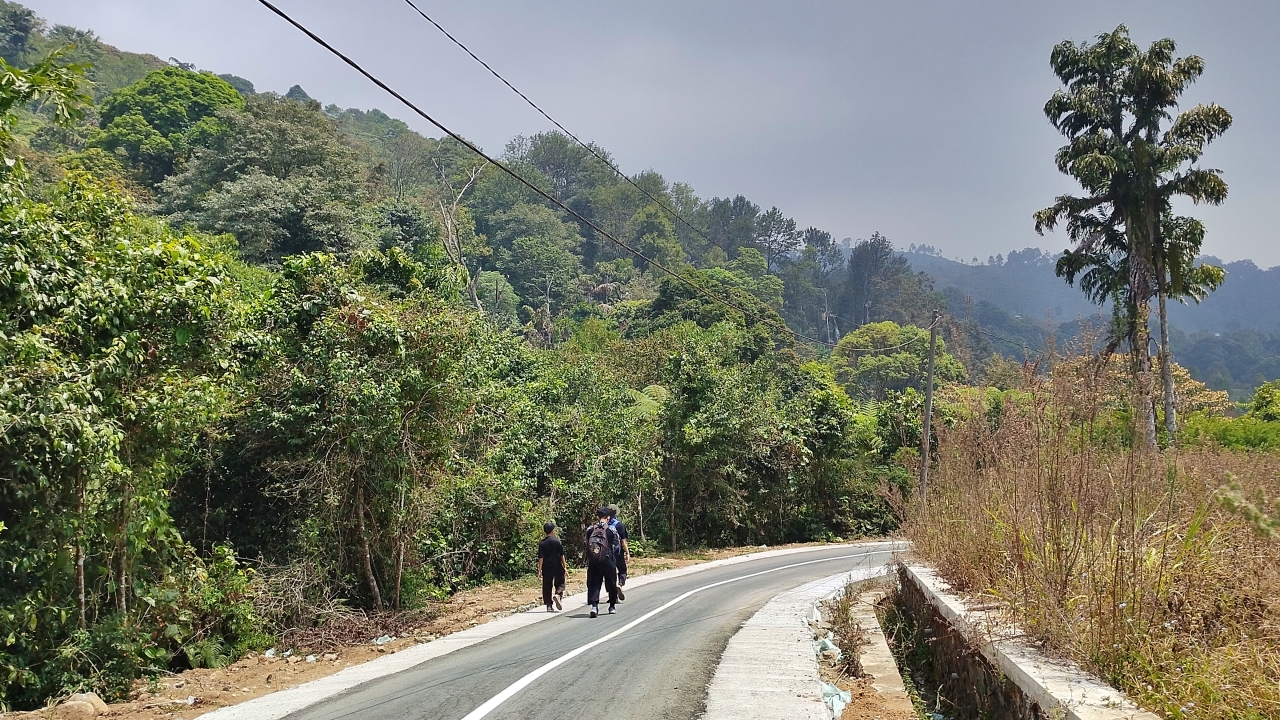
Checking in with local base camp coordinators, the group clarified their itinerary, confirming they would strictly adhere to the provincial mandate by confining their hike to non-summit exploration paths, specifically targeting the Kebon Raja agricultural and transitional zone. Setting out on foot at 08:45 WIB, the party navigated a multi-terrain route consisting of asphalt pathways, pine forests, and agricultural belts.

The initial phase of the trek traversed rolling hills dotted with local farmland producing high-altitude crops such as corn, pumpkins, cabbages, chili peppers, tomatoes, and scallions. The surrounding landscape underscored the economic reliance of local agrarian communities on the fertile volcanic soils of Mount Ciremai’s lower slopes. As the hikers progressed past the hillside settlements, they encountered infrastructure developments, including ongoing road improvements designed to enhance regional connectivity for agricultural transport and future ecotourism logistics.
Navigating Alternative Trails and Local Infrastructure
The temporary closure of main summit routes has inadvertently redirected attention toward peripheral base camps, such as Bukit Cariu and Bukit Situmpuk. Field observations on September 12 indicated steady weekend traffic, with approximately one hundred visitors utilizing secondary trails, facilitated largely by local mountain transport providers, commonly known as ojek gunung.

Despite the absence of a massive tourist influx, local operations continue to support single-day hikers, or "tektokers," who engage in day-trips without overnight camping. The transition from paved roads to rugged dirt-and-stone pathways tested the endurance of the trekking party as they navigated under intense midday solar radiation.
Passing significant geographic waypoints—including the Cidewata ridge junction and regional radio repeater stations operated by Basarnas (National Search and Rescue Agency) and Orari (Amateur Radio Organization of Indonesia)—the group maintained a steady pace. By 11:21 WIB, the expedition successfully reached Kebon Raja, recording a total trekking duration of approximately two and a half hours. The site served as a natural viewpoint offering glimpses of the cloud-obscured upper elevations of Mount Ciremai, including the distant Kawah Burung crater rim at 2,670 meters above sea level.
Socioeconomic Implications and Environmental Outlook

The strict enforcement of West Java’s climbing ban highlights the ongoing tension between regional economic activities and environmental preservation. While eco-tourism operators, base camp administrators, and mountain guides experience temporary revenue contractions during the moratorium, environmental analysts note that seasonal closures provide critical recovery periods for over-trafficked mountain trails, allowing degraded flora to regenerate and reducing municipal waste accumulation in high-altitude zones.
Furthermore, the integration of local agricultural practices with emerging ecotourism infrastructure—such as the expansion of accessible pathways and improved communication networks for emergency response units—demonstrates a balanced approach to regional development. Local communities in Majalengka Regency continue to sustain livelihoods through agricultural yields while remaining prepared for the eventual resumption of regulated mountaineering activities.
As provincial weather monitoring agencies track meteorological indicators signaling the eventual transition away from dry-season conditions, mountaineering associations anticipate an eventual review of the provincial circular letter. Until official safety thresholds are met and regional authorities lift the restriction, outdoor education and low-impact exploratory hiking remain viable alternatives for families seeking to maintain a connection with West Java’s diverse topography without compromising environmental safety protocols.