Socio Today
De Zilk, Netherlands – As the crisp spring air of April 2026 ushers in the vibrant spectacle of blooming fields, Dutch flower growers like Guus in De Zilk are meticulously upholding a centuries-old tradition blended with cutting-edge innovation. Their relentless dedication to maintaining the superior quality of tulip cultivation continues to be the bedrock of the Netherlands’ formidable dominance in the global flower market. This intricate ecosystem of traditional knowledge, scientific advancement, and unparalleled logistical prowess ensures that the Dutch flower industry, particularly its iconic tulips, remains a vital pillar of the national economy and a beacon of horticultural excellence worldwide.
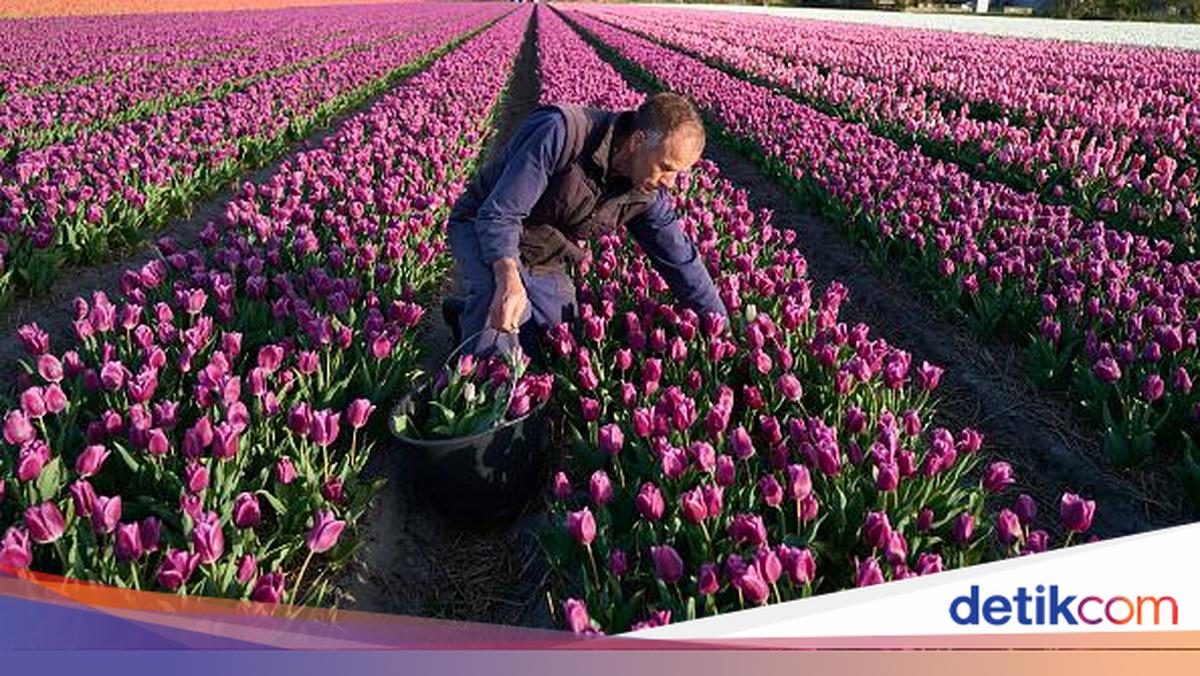
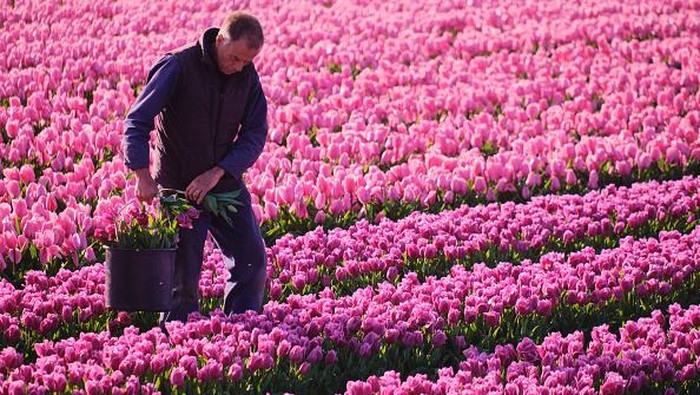
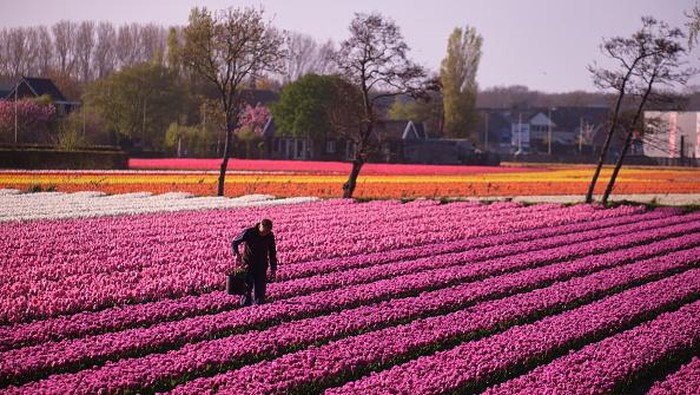
On April 16, 2026, Guus, a seasoned Dutch flower bulb grower, was observed diligently inspecting a vast expanse of tulip fields in De Zilk. His practiced eye, honed over years of experience, scans for any imperfections, signs of disease, or variations that might compromise the pristine quality for which Dutch flowers are renowned. This seemingly simple act of inspection is part of a complex, year-round cycle of cultivation that underpins the Netherlands’ staggering market share, accounting for roughly 60% of worldwide flower trade and solidifying its position as the world’s leading exporter. The scene, captured by Pierre Crom for Getty Images, is a testament to the hands-on commitment that fuels this multi-billion euro industry.
The Meticulous Art of Tulip Cultivation: A Year-Round Endeavor
The journey of a Dutch tulip from a dormant bulb to a magnificent bloom gracing homes and events across the globe is an arduous and precise one, extending far beyond the fleeting beauty of spring. The cultivation timeline begins in the autumn, typically between September and December, when tulip bulbs are carefully planted in prepared fields. Soil quality is paramount; growers meticulously amend their sandy soils, often with compost and organic matter, to ensure optimal drainage and nutrient availability. The bulbs require a period of cold dormancy to trigger their flowering mechanism, a process naturally facilitated by the Dutch winter.
As winter gives way to early spring, the first shoots emerge, signaling the beginning of rapid growth. This period, from late March to early May, is when the iconic fields burst into a riot of color. However, for most commercial tulip bulb growers, the magnificent flowers themselves are not the primary product. Instead, the focus is on developing robust, healthy bulbs for future seasons. Around late April or early May, just as the flowers reach their peak beauty, a critical process known as "de-heading" or "topping" occurs. Farmers drive specialized machinery through the fields, cutting off the flower heads. While seemingly counterintuitive, this practice directs the plant’s energy away from seed production and back into the bulb, ensuring it grows larger, stronger, and more disease-resistant, thereby enhancing its quality for subsequent planting or export.
Following the de-heading, the plants continue to photosynthesize, further nourishing the developing bulbs. By June or July, the foliage begins to yellow and wither, indicating that the bulbs are ready for harvest. Specialized machinery gently lifts the bulbs from the soil. They are then cleaned, sorted by size and quality, and meticulously inspected for any defects or signs of disease. The bulbs are then stored in climate-controlled warehouses, where temperature and humidity are precisely regulated to prevent premature sprouting or spoilage. This rigorous post-harvest handling is crucial for maintaining the bulbs’ viability and ensuring their readiness for global distribution. Many bulbs are destined for export as planting material, while others are forced into bloom in greenhouses during the off-season to provide a continuous supply of cut flowers.
A Rich Heritage: From Tulip Mania to Global Market Leader
The Netherlands’ profound connection with the tulip is not merely economic; it is deeply woven into the nation’s cultural fabric, a legacy that traces back to the infamous "Tulip Mania" of the 17th century. Originating in Central Asia and introduced to Western Europe via Turkey, tulips quickly captivated the Dutch elite. By the 1630s, the fascination escalated into a speculative economic bubble, where the prices of tulip bulbs, particularly rare varieties, soared to exorbitant levels, sometimes exceeding the annual income of skilled craftsmen or even the cost of houses. While the bubble eventually burst in 1637, leading to significant financial losses for many, it indelibly etched the tulip into the Dutch psyche and laid the groundwork for a future industry.
From these tumultuous beginnings, the Dutch horticulture sector evolved. Over centuries, growers honed their skills, moving from speculative trade to a highly organized, scientific, and commercial enterprise. The mild, maritime climate of the Netherlands, coupled with its sandy soils in regions like De Zilk, proved ideal for bulb cultivation. Early innovations in breeding, pest control, and storage techniques gradually transformed a niche commodity into a global powerhouse. The establishment of cooperative auctions, most notably FloraHolland (now Royal FloraHolland), in the early 20th century further streamlined distribution and pricing, providing a transparent and efficient marketplace for growers and buyers worldwide.
Unpacking Dutch Dominance: Data and Economic Impact
The figures speak volumes about the Netherlands’ unparalleled position in the global floriculture trade. With approximately 60% of the world’s cut flowers and plants passing through Dutch hands, the industry’s economic contribution is substantial. Annually, the Dutch floriculture sector generates billions of euros in export value. In 2023, for instance, Dutch exports of flowers and plants reached an estimated €7.2 billion, with cut flowers accounting for a significant portion. Germany, the United Kingdom, France, and the United States consistently rank among the top export destinations, demonstrating the industry’s vast international reach.
Royal FloraHolland, the world’s largest flower auction, serves as the pulsating heart of this global trade. Located in Aalsmeer, its vast warehouses and sophisticated logistics operations handle millions of flowers and plants daily, dictating global prices and facilitating rapid distribution. This central hub is not only a marketplace but also a crucial information center, gathering and disseminating market intelligence that helps growers tailor their production to meet evolving consumer demands. Beyond tulips, the Netherlands is a leading producer and exporter of a wide array of other cut flowers, including roses, lilies, chrysanthemums, and orchids, showcasing its diverse horticultural prowess. The sector also excels in ornamental plants and trees, further diversifying its economic footprint.
The Pillars of Success: Innovation, Technology, and Logistics
Dutch dominance in floriculture is not merely a product of history or favorable geography; it is sustained by an unwavering commitment to innovation, cutting-edge technology, and an exceptionally efficient logistics infrastructure.
Technological Advancement: Dutch growers are at the forefront of horticultural technology. Advanced greenhouses employ sophisticated climate control systems that precisely regulate temperature, humidity, and light exposure, allowing for year-round production regardless of external weather conditions. Hydroponics and aeroponics are increasingly utilized to optimize water and nutrient use. Automated sorting and packaging lines reduce labor costs and increase efficiency, while robotic systems are being introduced for tasks like harvesting and pest detection. Research into plant genetics and disease resistance is continuous, often spearheaded by institutions like Wageningen University & Research, ensuring the development of new, resilient varieties and sustainable growing practices.
Logistical Mastery: The ability to transport delicate, perishable products across continents with speed and care is a cornerstone of Dutch success. The Netherlands has developed an unparalleled cold chain management system, where flowers and plants are kept at optimal temperatures from the moment they are harvested until they reach their final destination. Schiphol Airport, one of Europe’s busiest cargo hubs, plays a critical role, facilitating rapid air freight to distant markets in North America, Asia, and beyond. This integrated network of roads, ports, and airports, combined with advanced inventory management and tracking systems, ensures that fresh flowers can be delivered to virtually any corner of the world within 24 to 48 hours, minimizing spoilage and maximizing market value.
Research and Development: Continuous investment in R&D is vital. Dutch breeding companies constantly introduce new varieties of tulips and other flowers, focusing on novel colors, longer vase life, and enhanced disease resistance. This innovation pipeline keeps Dutch products competitive and appealing to a global market always seeking novelty and quality. Furthermore, significant research is dedicated to sustainable cultivation methods, including biological pest control, reducing reliance on chemical pesticides, and optimizing water and energy consumption.
Broader Impact and Future Horizons
The floriculture industry’s impact on the Netherlands extends beyond direct economic contributions. It is a significant employer, creating tens of thousands of direct jobs for growers, researchers, logistics specialists, and marketers, and many more indirect jobs across related sectors. The iconic flower fields and gardens, such as Keukenhof, also serve as major tourist attractions, drawing millions of visitors annually and reinforcing the Netherlands’ identity as the "Flower of Europe." This tourism generates additional revenue and cultural exchange, further embedding the industry into the national narrative.
Despite its current strength, the Dutch floriculture sector faces several challenges and is actively adapting to future trends.
Climate Change and Sustainability: The industry is highly susceptible to climate change, which can impact growing seasons, increase the prevalence of pests and diseases, and strain water resources. In response, there is a strong push towards greater sustainability. Growers are investing in geothermal energy, solar panels, and combined heat and power (CHP) systems to reduce their carbon footprint. Water recycling systems and precision irrigation techniques are becoming standard practice to conserve water. The use of biological pest control and integrated pest management (IPM) strategies is reducing reliance on chemical pesticides.
Market Dynamics and Competition: While dominant, the Netherlands faces increasing competition from other flower-producing nations, particularly in regions with lower labor costs or more favorable climates, such as Kenya, Ecuador, and Colombia. These countries are growing their market share, especially in cut flowers. To maintain its edge, the Dutch industry focuses on high-value, niche products, advanced varieties, and unparalleled quality and reliability.
Labor Costs and Automation: High labor costs in the Netherlands drive the need for increased automation. Robotics and artificial intelligence are being explored for tasks ranging from planting and harvesting to sorting and packaging, aiming to improve efficiency and reduce dependence on manual labor.
Biosecurity and Trade Regulations: With global trade comes the constant threat of pests and diseases. Strict biosecurity measures and adherence to international phytosanitary regulations are critical to prevent the spread of pathogens and maintain market access. Evolving trade agreements and geopolitical shifts can also impact market accessibility and costs.
Digitalization and E-commerce: The industry is embracing digitalization, with online marketplaces and e-commerce platforms playing an increasingly important role in connecting growers directly with buyers, streamlining transactions, and expanding market reach beyond traditional auction houses.
In conclusion, the Dutch flower industry, epitomized by its world-famous tulips, is a testament to the power of tradition, innovation, and strategic foresight. From the meticulous care of growers like Guus in the vibrant fields of De Zilk to the sophisticated logistics networks spanning the globe, every element is geared towards maintaining an exceptional standard of quality. As the world moves deeper into the 21st century, the Netherlands continues to cultivate its legacy, adapting to new challenges with an unwavering commitment to sustainable practices and technological advancement, ensuring its enduring reign as the undisputed king of the global flower market.