Socio Today
As the global Muslim community prepares for the upcoming Hajj season, international attention has turned toward the logistical and operational marvel that is the Masjidil Haram in Mecca. Beyond its spiritual significance, the Grand Mosque has recently become a subject of economic fascination due to the staggering costs required to maintain its 24-hour operations. Recent reports indicate that the monthly electricity bill for the holy site has reached approximately 15 million Saudi Riyals, a figure equivalent to roughly 64 billion Indonesian Rupiah. This immense expenditure highlights the unprecedented scale of the mosque’s infrastructure, which serves millions of pilgrims annually under the most demanding environmental conditions.
The energy consumption of Masjidil Haram is a testament to its status as the largest mosque in the world and one of the most complex architectural structures ever managed. Daily electricity usage at the complex is reported to reach nearly 100 megavolt-amperes (MVA). This massive load is distributed across a sprawling network of lighting, climate control, transportation, and security systems that must function without interruption to ensure the safety and comfort of worshippers.
A Breakdown of the Massive Energy Infrastructure
The sheer volume of electrical equipment within Masjidil Haram explains the multi-million dollar utility costs. According to data released by El Akhbariyah TV and Gulf News, the facility’s infrastructure includes over 120,000 lighting units that illuminate the mosque’s interior, courtyards, and minarets, ensuring that the site remains bright as day throughout the night.
Climate control represents one of the most significant energy drains. Given the extreme desert heat of the Arabian Peninsula, where temperatures frequently exceed 45 degrees Celsius, the mosque relies on a cooling system with a staggering capacity of 155,000 tons of refrigeration. This system is supported by 883 specialized air conditioning units and a network of 4,323 ventilation fans. To provide additional relief in the outdoor courtyards, a sophisticated mist-spraying system is employed to lower ambient temperatures for pilgrims performing the tawaf and other rituals.
The mosque’s technological suite is equally impressive. The audio system, designed to deliver the Imam’s voice with crystal clarity to every corner of the massive complex, consists of more than 8,000 high-fidelity speakers. Security and crowd management are facilitated by over 8,000 surveillance cameras, which feed data into a centralized command center 24 hours a day. Furthermore, the mosque features 519 escalators and numerous elevators to facilitate the movement of elderly and disabled worshippers across multiple levels.
In a move toward modernizing the pilgrim experience, the authorities have also installed 100 large interactive screens. These screens provide essential information, guidance, and religious instructions in 16 different languages, catering to the diverse linguistic backgrounds of the global "Ummah."

The Impact of the Third Saudi Expansion
The current peak in operational costs coincides with the near-completion of the Third Saudi Expansion project. This project is recognized as the largest expansion in the history of the Masjidil Haram. Initiated to accommodate the growing number of pilgrims in line with Saudi Arabia’s Vision 2030, the expansion has increased the mosque’s total area to over 1.5 million square meters.
The primary objective of this expansion was to boost the mosque’s capacity to more than two million worshippers at any given time. However, such a massive increase in physical footprint has led to a linear rise in maintenance and utility requirements. The expansion includes new prayer halls, bridges, and an enlarged mataf (the area for circumambulating the Kaaba), all of which require specialized lighting and cooling solutions.
The timing of these reports is significant, as the mosque has just navigated the peak period of Ramadan. During the holy month, hundreds of thousands of Muslims from both within Saudi Arabia and abroad packed the mosque, particularly during the final ten nights. The surge in attendance during Ramadan serves as a "stress test" for the mosque’s infrastructure ahead of the Hajj season, which is expected to see even higher concentrations of people.
Economic Sustainability and Proposed Funding Models
The disclosure of the 15-million-riyal monthly electricity bill has sparked a debate regarding the long-term economic sustainability of the mosque’s operations. While the Saudi government currently subsidizes the vast majority of these costs as part of its service to the Two Holy Mosques, some economic analysts and local stakeholders have proposed alternative funding models.
One suggestion gaining traction is the implementation of a dedicated operational levy on luxury hotels and commercial enterprises operating within the immediate vicinity of the Masjidil Haram. Proponents argue that since these businesses benefit directly from the infrastructure and the massive influx of pilgrims drawn to the mosque, a small percentage of their revenue could be earmarked for the maintenance of the sanctuary. Such a model would ensure that the high quality of service and the "always-on" nature of the mosque’s facilities remain sustainable as pilgrim numbers continue to climb toward the 30-million-per-year target set by Vision 2030.
Global Strategic Interests: The Indonesian "Kampung Haji" Initiative
The operational scale of the Masjidil Haram has also prompted foreign governments to rethink their proximity to the holy site. Indonesia, as the country with the world’s largest Muslim population and the highest number of Hajj pilgrims, has taken a proactive step in securing a foothold near the mosque.
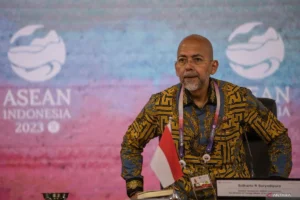
Hashim Djojohadikusumo, the Special Envoy of the Indonesian President for Energy and the Environment, recently announced that the Indonesian sovereign wealth fund entity, Danantara, is targeting the acquisition of land approximately 400 meters from the Masjidil Haram complex. The goal is to establish a "Kampung Haji" or Hajj Village.

This initiative is intended to provide a dedicated hub for Indonesian pilgrims, potentially reducing the logistical strain on the Saudi authorities while ensuring better accommodation and services for Indonesians. By owning property in such close proximity to the mosque, Indonesia aims to mitigate the rising costs of seasonal rentals and provide a permanent base for its diplomatic and Hajj management teams. This move underscores the geopolitical and economic importance of the land surrounding the mosque, where real estate values are among the highest in the world.
Technological Advancements and Environmental Considerations
While the current electricity bill is high, the General Presidency for the Affairs of the Grand Mosque and the Prophet’s Mosque has been exploring ways to integrate green energy and smart technology to optimize consumption. There are ongoing discussions regarding the installation of solar panels on the roofs of the newer expansion buildings and the use of AI-driven sensors to adjust cooling and lighting based on crowd density.
The 100 megavolt-ampere daily consumption is comparable to the energy needs of a medium-sized city or a major international airport. However, unlike a city, the Grand Mosque cannot afford a single minute of downtime. The reliability of the power grid in Mecca is bolstered by redundant backup generators and a dedicated power station that prioritizes the Holy Sites.
Analysis of Implications for the Future of Pilgrimage
The revelation of these costs provides a rare glimpse into the "hidden" side of religious tourism and pilgrimage management. For the average pilgrim, the experience is one of spiritual devotion; however, behind the scenes, it is an operation of industrial proportions.
As the world moves toward 2030, the management of Masjidil Haram will likely become a blueprint for "Smart City" integration in religious contexts. The challenge for the Saudi authorities will be balancing the need for traditional architectural aesthetics with the requirements of modern, energy-intensive technology.
Furthermore, the rising costs of electricity and maintenance may eventually influence the pricing of Hajj and Umrah packages. If the Saudi government decides to pass even a fraction of these operational costs onto service providers, the "cost of pilgrimage" could see an upward trend, making the efficiency of organizations like Indonesia’s Danantara even more critical for the affordability of the journey for millions of believers.
In conclusion, the 64-billion-rupiah monthly electricity bill of Masjidil Haram is more than just a financial statistic; it is a reflection of the extraordinary efforts required to host the world’s largest annual gathering of people. As the Third Expansion reaches full operational capacity, the Grand Mosque stands as a marvel of modern engineering, dedicated to serving the spiritual needs of the global Muslim community while navigating the complex realities of 21st-century infrastructure management.