Socio Today
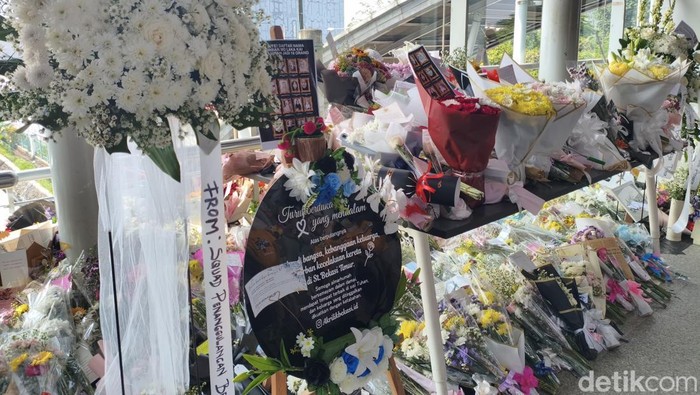
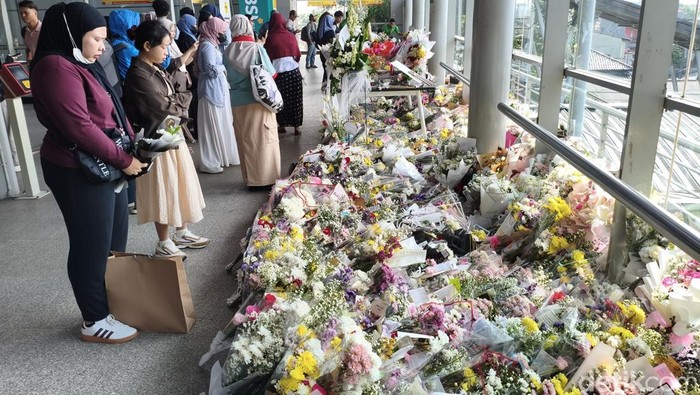
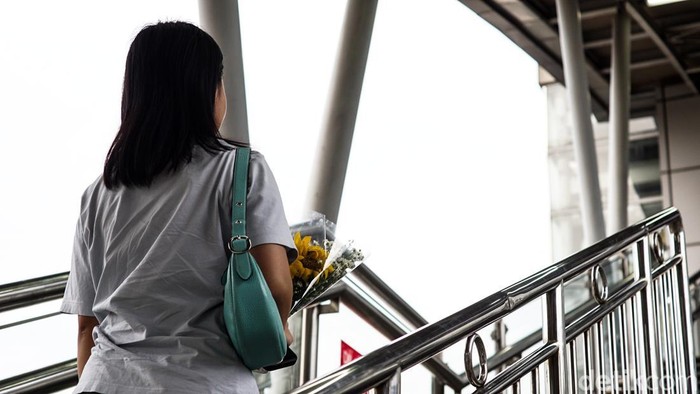
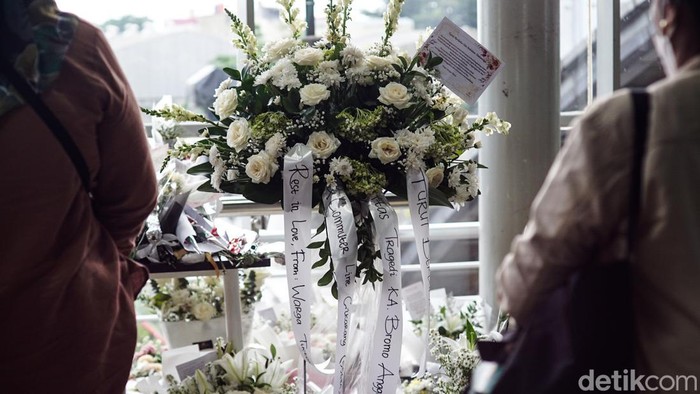
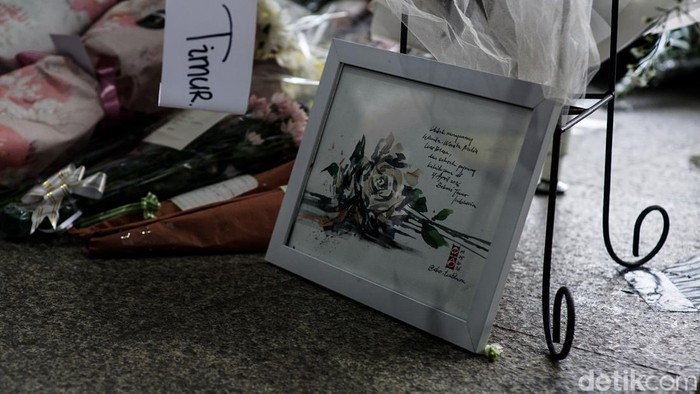
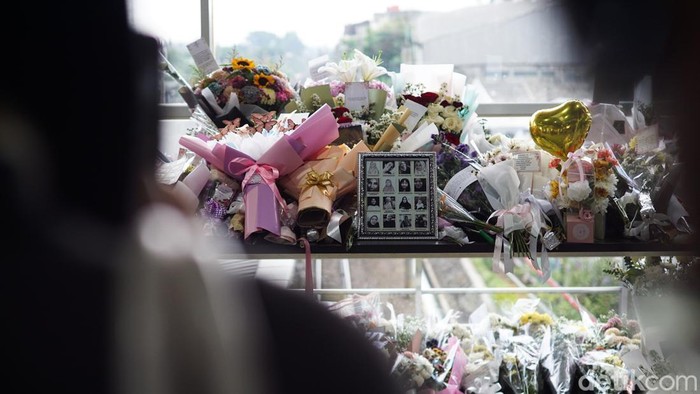
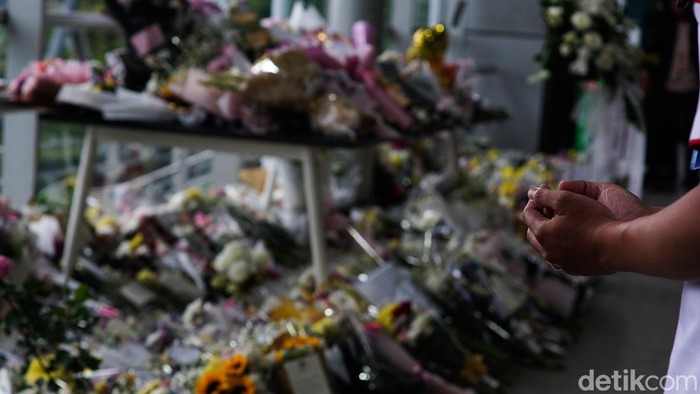
The vibrant colors of hundreds of floral bouquets now contrast sharply with the industrial gray of the Bekasi Timur Station, serving as a poignant memorial for the sixteen individuals who lost their lives in a catastrophic rail accident involving the KA Argo Bromo Anggrek and a KRL Commuter Line. This outpouring of public sympathy, which began shortly after the tragedy on April 28, 2026, has transformed the station’s entrance into a site of collective mourning and reflection. Passengers, local residents, and grieving families have lined the glass partitions near the station’s north and south entrances with wreaths, handwritten notes, and photographs, creating a somber atmosphere that underscores the deep impact this incident has had on the nation’s commuting community.
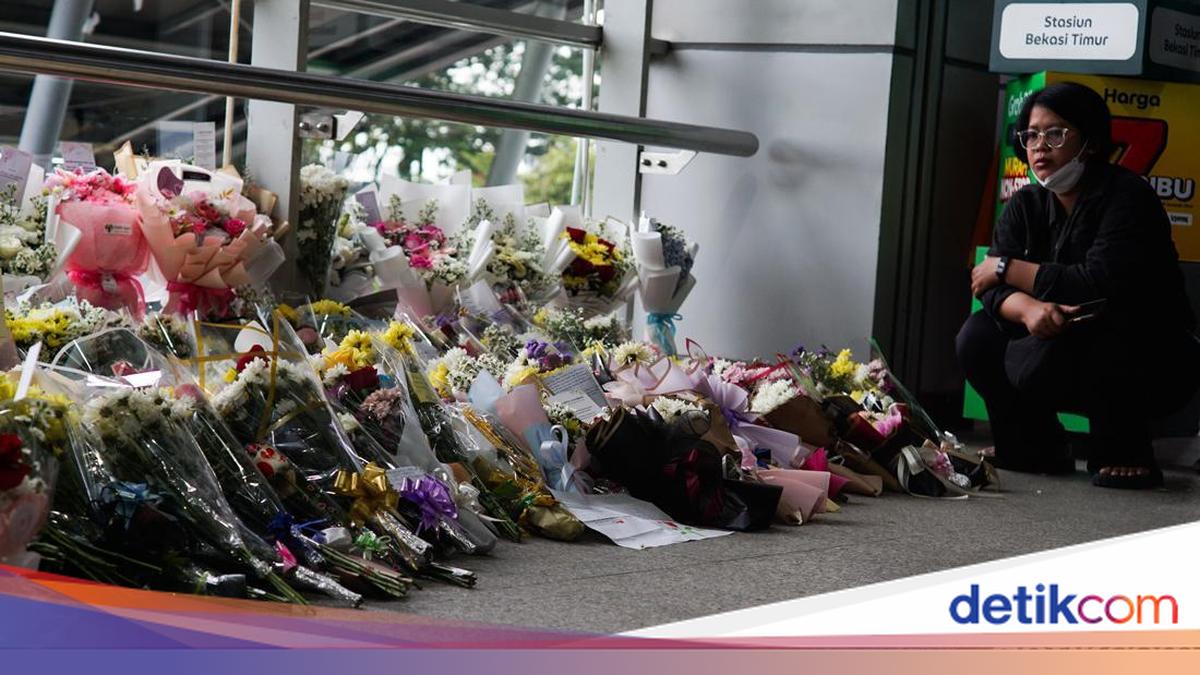
As of Sunday, May 3, 2026, the tribute continues to grow, with the scent of jasmine and roses filling the air where thousands of commuters pass daily. The incident, which occurred during a week that will be remembered as one of the darkest in the history of Indonesian rail transport, has prompted not only a massive humanitarian response but also a rigorous evaluation of railway safety protocols in the high-density Jakarta-Bekasi corridor.
A Detailed Chronology of the Tragedy
The accident occurred on the morning of Tuesday, April 28, 2026, at a critical junction near Bekasi Timur. The KA Argo Bromo Anggrek, a flagship executive-class service known for its high-speed connection between Jakarta’s Gambir Station and Surabaya Pasar Turi, was traveling on its scheduled route when it collided with a KRL Commuter Line train serving the Bekasi-Cikarang loop.

Initial reports from PT Kereta Api Indonesia (KAI) and the National Transportation Safety Committee (KNKT) suggest that the collision took place under circumstances that are currently the subject of an intensive investigation. The impact was severe, primarily affecting the KRL carriages, which are typically densely packed with daily workers and students. While all 240 passengers aboard the KA Argo Bromo Anggrek were reported safe and evacuated without major injury, the situation was tragically different for those on the Commuter Line.
In the immediate aftermath, emergency services from across the Bekasi Regency and DKI Jakarta were deployed to the scene. Rescuers worked through the night to extract passengers from the mangled wreckage of the KRL cars. By the following morning, authorities confirmed that 16 people had succumbed to their injuries, while dozens of others were rushed to nearby hospitals, including RSUD Bekasi and several private medical facilities in the vicinity.
Casualty Updates and Medical Coordination
According to the latest data released by PT KAI on Saturday, May 2, 2026, a total of 106 KRL passengers were directly impacted by the collision and required medical intervention. Of this number, 76 individuals have been treated and successfully discharged to their homes. However, 24 passengers remain hospitalized, with several still in intensive care undergoing treatment for trauma and orthopedic injuries.
The survivors, many of whom are regular commuters who use the "Blue Line" service daily, have shared harrowing accounts of the moment of impact. The government has pledged that all medical expenses for the victims will be fully covered, ensuring that families do not face financial ruin in addition to their physical and emotional trauma. PT KAI has also established a dedicated coordination team to monitor the recovery of the 24 passengers still in hospital, providing regular updates to their next of kin.
The Public Outpouring: A Sea of Flowers at Bekasi Timur
The decision by the public to place flowers at Bekasi Timur Station was a spontaneous movement that gained momentum through social media. By May 1, the "Bunga untuk Bekasi" (Flowers for Bekasi) hashtag had trended across various platforms, encouraging those who could not visit the site to send bouquets via delivery services.
Observation at the scene reveals that the tributes are placed strategically near the station’s "tap-in" machines and access stairs, ensuring that every traveler is reminded of the lives lost. The messages attached to these flowers are diverse: some are prayers for the deceased, while others are messages of strength for the survivors. One note, left by a regular commuter, read: "We travel these tracks every day to build our futures; today, we stop to remember those whose journeys were cut short."
Beyond physical tributes, the digital landscape has seen a surge of solidarity. Netizens have organized crowdfunding efforts to assist the families of the 16 deceased, many of whom were the primary breadwinners for their households. There has also been a concerted effort online to track the status of missing items, with users sharing photos of lost bags and electronics in hopes of reuniting them with their rightful owners.
Government and Institutional Response
The gravity of the Bekasi rail tragedy has drawn a high-level response from both provincial and central government officials. On April 29, 2026, the Deputy Governor of DKI Jakarta, Rano Karno, visited the families of victims who were residents of the capital, including civil servants and community cadres who were among the casualties. During his visit, he handed over initial compensation and promised long-term support for the education of the children left behind.
In West Java, Governor Dedi Mulyadi, accompanied by the Acting (Plt) Regent of Bekasi, Asep Surya Atmaja, performed "takziah" (condolence visits) directly to the homes of the victims in Bekasi. Governor Mulyadi emphasized the need for a thorough audit of the signaling systems and track management in the Bekasi area, which is one of the busiest rail segments in Southeast Asia.
At the federal level, the Ministry of Social Affairs has deployed a task force to provide comprehensive assessments and aid distribution. This is being complemented by the Ministry of Women’s Empowerment and Child Protection (PPPA), which is focusing specifically on psychosocial support. The Minister of PPPA noted that many of the survivors and witnesses, particularly women and children, are suffering from acute Post-Traumatic Stress Disorder (PTSD). "The trauma of a rail collision is deep and lasting," the Minister stated. "Our focus is to ensure that the psychological scars are addressed with the same urgency as the physical ones."
PT KAI’s Operational Recovery and Support Services
Despite the tragedy, the necessity of public transportation meant that services at Bekasi Timur Station had to resume as quickly as possible. PT KAI reported that since operations were restored on the evening of April 28, the station has seen a significant volume of users. Data indicates that 15,774 passengers have entered through the gates (Gate In), while 20,575 have exited (Gate Out), suggesting that while the mood is somber, the reliance on the rail network remains absolute.
To manage the ongoing crisis, PT KAI has extended the operation of its Information Post at Bekasi Timur Station until at least May 11, 2026. Anne Purba, a spokesperson for the railway authority, explained that this post is not merely for information but serves as a multi-service hub. It provides:
- Continued Health Services: For survivors who need follow-up consultations or dressing changes.
- Administrative Coordination: Assisting families with insurance claims through Jasa Raharja and other social security benefits.
- Trauma Healing: Professional counselors are available on-site for both passengers and station staff who were present during the accident.
- Lost and Found Management: As of the latest report, 115 personal items have been recovered from the site. Of these, 57 have been returned to owners after verification, while 58 remain in custody at the post, awaiting their owners.
Analysis of Safety and Future Implications
The collision between the KA Argo Bromo Anggrek and the KRL Commuter Line raises critical questions regarding the "Double-Double Track" (DDT) project and the integration of long-distance and local rail services. Experts suggest that as the frequency of both executive trains and commuter services increases, the margin for error in signaling and human dispatching becomes razor-thin.
The Bekasi-Cikarang segment has seen rapid infrastructure development over the last decade, yet this incident serves as a grim reminder that technological upgrades must be matched by rigorous safety culture and redundant fail-safe systems. The National Transportation Safety Committee (KNKT) is expected to release a preliminary report within the month, which will likely focus on communication logs between the train drivers and the central control room (OCC).
Furthermore, the tragedy highlights the socio-economic importance of the KRL Commuter Line. With over 20,000 people passing through Bekasi Timur daily, any disruption or safety lapse has a cascading effect on the productivity and well-being of the Greater Jakarta area. The massive public response—the flowers, the prayers, and the social media advocacy—is a testament to the fact that the "KRL community" views itself as a family, bound by the shared experience of the daily grind.
As the flowers at Bekasi Timur begin to wither, the call for justice and reform grows louder. The 16 lives lost on April 28 are being viewed not just as victims of an accident, but as a catalyst for a safer, more reliable Indonesian railway system. For now, the station remains a place of dual identity: a bustling transit hub for the living and a quiet sanctuary for the memories of those who never made it home.