Socio Today
Jakarta (ANTARA) – Her Majesty Queen Máxima of the Netherlands recently concluded a significant working visit to Indonesia, spanning from Monday, November 24, to Thursday, November 27, 2025. Her presence in the archipelago was not in her capacity as Queen of the Netherlands, but rather as the United Nations Secretary-General’s Special Advocate (UNSGSA) for Inclusive Finance for Development. This distinguished role underscores a global commitment to fostering financial health and accessibility for all, particularly in developing nations, aligning directly with several Sustainable Development Goals (SDGs), including poverty eradication, gender equality, and economic growth. Her four-day itinerary was meticulously designed to encompass a series of strategic meetings and field activities directly pertaining to financial inclusion and the enhancement of community financial well-being across diverse Indonesian locales.
The mission, focused on promoting financial resilience and prosperity, saw Queen Máxima traversing multiple regions. Her journey took her from the industrial heartlands of Sragen Regency and the cultural hub of Solo City in Central Java, to the bustling metropolis of Jakarta, and finally to the burgeoning industrial areas of Bekasi Regency in West Java. This extensive travel demonstrated a hands-on approach to understanding the multifaceted challenges and innovative solutions within Indonesia’s financial landscape. This visit marked Queen Máxima’s fifth engagement with Indonesia in her UNSGSA capacity, a testament to the nation’s pivotal role in the global financial inclusion agenda and her sustained dedication to its progress. Her previous visits as UNSGSA occurred in 2012, 2016, and 2018, each building upon preceding efforts to strengthen Indonesia’s financial ecosystem. Additionally, she accompanied King Willem-Alexander during a state visit in 2020, showcasing the depth of bilateral ties between the Netherlands and Indonesia. Born on May 17, 1971, Queen Máxima married King Willem-Alexander in Amsterdam in 2002, bringing her extensive background in international finance and development to her royal duties and her critical UN advocacy role.
The Mandate of the UNSGSA: A Global Catalyst for Financial Health
Queen Máxima’s role as UNSGSA for Inclusive Finance for Development is a crucial appointment within the United Nations framework. Established in 2009, the UNSGSA’s office serves as a global voice for financial inclusion, advocating for policies and programs that expand access to affordable, useful, and safe financial products and services for low-income populations and small businesses. This mandate aligns directly with the UN’s Sustainable Development Goals (SDGs), particularly SDG 1 (No Poverty), SDG 5 (Gender Equality), SDG 8 (Decent Work and Economic Growth), and SDG 10 (Reduced Inequalities). The UNSGSA works with governments, central banks, regulators, the private sector, and civil society organizations to foster national financial inclusion strategies, promote innovative technologies, and encourage a regulatory environment that supports inclusive growth. The choice of Indonesia for repeated visits highlights the country’s status as a dynamic emerging economy with significant progress and ongoing challenges in extending financial services to its vast and diverse population, making it an ideal case study and partner for the UNSGSA’s mission. Indonesia, with its archipelagic geography and large unbanked and underbanked population, offers unique opportunities for pioneering digital financial solutions and community-based initiatives.
Indonesia’s Evolving Financial Inclusion Landscape
Indonesia has made considerable strides in financial inclusion over the past decade, driven by robust government policies, digital innovation, and increasing mobile penetration. According to the Financial Services Authority (OJK) and Bank Indonesia (BI), the national financial inclusion index has steadily risen, reflecting greater access to banking, insurance, and investment products. However, disparities persist, particularly in rural areas, among women, and micro, small, and medium enterprises (MSMEs). The government’s National Strategy for Financial Inclusion (SNKI) aims to further reduce these gaps by promoting digital financial services, strengthening financial literacy, and facilitating access to financing for vulnerable segments. Queen Máxima’s visit serves to both acknowledge these achievements and address the remaining hurdles, bringing international attention and expertise to ongoing domestic efforts. Her engagements are designed to identify best practices, share global insights, and catalyze further innovation, especially concerning the integration of financial health with broader development objectives such as sustainable housing and waste management.
Detailed Chronology of Queen Máxima’s Engagement in Indonesia
Tuesday, November 25: Focus on Grassroots Empowerment and MSMEs
The first day of Queen Máxima’s intensive schedule commenced in Central Java, highlighting the critical role of grassroots economic activities in fostering financial well-being. Her initial stop was at a garment factory in Sragen Regency. This visit underscored the importance of providing financial literacy and access to basic financial services for factory workers, many of whom are low-income earners or migrant workers. Discussions likely revolved around payroll digitization, access to micro-savings, and basic insurance products, which are crucial for enhancing the financial resilience of this vital segment of the workforce. The factory setting also provided insights into how financial services can be integrated into supply chains, potentially offering credit or payment solutions to small suppliers.
Following this, Queen Máxima traveled to Kampung Batik Laweyan in Solo, a renowned traditional batik village. Here, the focus shifted to the unique financial health needs of micro, small, and medium enterprises (MSMEs) and artisans. Batik producers often face challenges in accessing formal credit, managing cash flow, and adopting digital payment systems. The discussions likely explored how digital financial tools could help these entrepreneurs expand their market reach, manage inventory more efficiently, and secure better pricing for their products. The visit also highlighted the cultural preservation aspect, demonstrating how financial inclusion can support traditional crafts and livelihoods, ensuring their sustainability in the modern economy.
Later that day, Queen Máxima participated in a pivotal event hosted by Women’s World Banking at Pura Mangkunegaran, Solo. Women’s World Banking is a global non-profit dedicated to designing and providing financial services, information, and support to low-income women entrepreneurs. At this forum, Queen Máxima engaged in candid conversations with young people, university students, and local entrepreneurs. The dialogue centered on their personal experiences in utilizing financial products and services, exploring both the benefits and the barriers encountered. This direct interaction provided invaluable firsthand perspectives on the efficacy of existing financial inclusion initiatives and identified areas for improvement, particularly concerning gender-responsive financial services and youth entrepreneurship. Insights from these discussions are crucial for shaping policies that are truly impactful and user-centric.
Wednesday, November 26: Strategic Dialogues and Innovative Solutions
The second day saw Queen Máxima delving into strategic partnerships and groundbreaking initiatives across Jakarta and Bekasi. The morning began with a visit to the local United Nations office in Jakarta, where she participated in a roundtable discussion with various development organizations. This high-level dialogue likely focused on coordinating efforts to advance financial inclusion, sharing best practices, and identifying synergies among UN agencies, international NGOs, and local partners. Topics would have included leveraging digital public infrastructure, strengthening regulatory frameworks for financial technology (fintech), and ensuring consumer protection in an increasingly digital financial landscape.
Subsequently, Queen Máxima met with representatives from the International Finance Corporation (IFC), a member of the World Bank Group. The discussions with IFC centered on the development of lending initiatives that contribute to economic growth and financial health. The IFC plays a critical role in catalyzing private sector investment in emerging markets, often supporting financial institutions that cater to MSMEs and underserved populations. The conversation likely explored innovative financing mechanisms, such as green finance for sustainable projects and supply chain finance, which can significantly impact job creation and economic resilience. The collaboration between the UNSGSA and the IFC is vital for mobilizing private capital towards financial inclusion objectives.
A particularly innovative stop on Wednesday was at the Gran Harmoni Cibitung subsidized housing complex in Bekasi Regency, West Java. This complex provides low-emission housing solutions for low- and middle-income communities, addressing a critical need for affordable and sustainable shelter. Queen Máxima visited a resident’s home and interacted with representatives of first-time homebuyers, gaining insights into their journeys towards homeownership. A highlight of this visit was the review of a pioneering "waste bank" program, which allows residents to pay a portion of their mortgage installments using sorted recyclable waste. This ingenious model, often facilitated by local banks like BTN, not only makes housing more accessible but also promotes environmental sustainability and community engagement. Queen Máxima observed the process of waste collection and its conversion into financial value, and later witnessed the signing of sale and purchase agreements for dozens of prospective homeowners, symbolizing the tangible impact of such integrated development initiatives. This model has garnered significant international attention as a replicable solution for developing countries struggling with both housing affordability and waste management.
In the afternoon, Queen Máxima visited Deloitte Indonesia to engage with employers on their role in contributing to the financial health of their employees and clients. This session likely explored corporate wellness programs that include financial literacy training, access to employee benefits, and innovative solutions for managing personal finances. Financially healthy employees are generally more productive and resilient, underscoring the business case for employers to invest in their workforce’s financial well-being. The discussion also touched upon how professional services firms can advise clients on integrating financial inclusion principles into their business strategies, leveraging technology for broader outreach and impact.
Thursday, November 27: High-Level Dialogue and Policy Alignment
The final day of Queen Máxima’s visit culminated in high-level policy discussions and a significant meeting with the Indonesian President. The day began with her participation in a crucial agenda focused on financial literacy, involving key Indonesian financial authorities: the Otoritas Jasa Keuangan (OJK – Financial Services Authority), Bank Indonesia (BI – Central Bank), and the Ministry of Finance (Kemenkeu). This collaborative session highlighted the coordinated efforts of Indonesia’s regulatory and monetary authorities to enhance financial literacy and inclusion nationwide. Discussions likely covered the national strategy for financial literacy, the role of digital financial services in expanding access, consumer protection frameworks, and strategies to address emerging challenges in the fintech sector. The involvement of these three critical institutions underscores Indonesia’s comprehensive approach to building a robust and inclusive financial ecosystem.
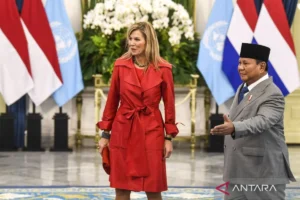
The visit concluded with a pivotal meeting with President Prabowo Subianto at the Istana Merdeka (Merdeka Palace) in Jakarta. During this audience, Queen Máxima conveyed her findings and impressions from her extensive engagements across the country. This included insights gathered from her field visits and private meetings with various stakeholders. The one-on-one meeting and subsequent luncheon provided a crucial platform for a strategic dialogue on Indonesia’s national priorities concerning financial inclusion and its broader development agenda. This high-level interaction served to reinforce the commitment of both the UN and the Indonesian government to advancing financial health for all citizens, potentially paving the way for further collaborative initiatives and knowledge exchange. The meeting underscored the importance of political will and leadership in driving systemic change in financial access and resilience.
Broader Implications and Future Outlook
Queen Máxima’s repeated visits to Indonesia as UNSGSA are not merely ceremonial; they represent a sustained commitment to advancing a critical global agenda. Her engagements serve multiple purposes:
- Policy Advocacy: Her presence lends significant weight to the importance of financial inclusion, encouraging policymakers to prioritize and implement effective national strategies.
- Knowledge Exchange: By observing local innovations and challenges, she facilitates the sharing of best practices between Indonesia and other nations grappling with similar issues.
- Catalyst for Innovation: Her spotlight on initiatives like the "waste bank" for housing payments can inspire further innovation and attract investment into impactful, sustainable solutions.
- Private Sector Engagement: Her meetings with entities like IFC and Deloitte encourage the private sector to play a more active role in developing inclusive financial products and services.
- Public Awareness: The media coverage surrounding her visit raises public awareness about the benefits of financial literacy and access, empowering individuals to take control of their financial futures.
The enduring partnership between Queen Máxima in her UNSGSA capacity and Indonesia underscores a shared vision for a future where financial services are accessible to everyone, regardless of their socio-economic status or geographic location. As Indonesia continues its journey towards becoming a high-income nation, ensuring comprehensive financial inclusion will be paramount to fostering equitable growth, reducing poverty, and building a resilient economy for all its citizens. Her visit undoubtedly leaves a lasting impression, reinforcing the strategic importance of financial health as a cornerstone of sustainable development.