Socio Today
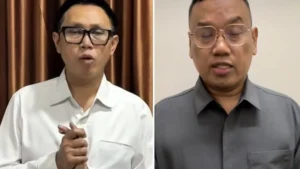
Jakarta, VIVA – The political landscape in Indonesia continues to observe the prolonged "non-active" status of two prominent celebrity-turned-politicians, Eko Hendro Purnomo, widely known as Eko Patrio, and Surya Utama, famously recognized as Uya Kuya, from their roles as members of the House of Representatives (DPR RI). Both individuals, who represent the National Mandate Party (Partai Amanat Nasional – PAN), have largely remained out of the public political discourse since their initial non-activation. A recent statement from PAN’s Deputy Chairman, Eddy Soeparno, on Wednesday, October 22, 2025, confirmed that their status remains unchanged, emphasizing that the ultimate decision regarding their future within the legislative body rests with the party’s Chairman, Zulkifli Hasan.
The announcement by Eddy Soeparno serves as a crucial update to a situation that has garnered considerable attention, particularly given the public profiles of Eko Patrio and Uya Kuya. Their transition from the entertainment industry to the political arena, followed by this unprecedented period of legislative inactivity, has raised questions about party discipline, internal governance, and the broader implications for celebrity representation in Indonesian politics. Soeparno articulated that the Central Executive Board (DPP) of PAN continues to uphold their non-active status, stating, "Sejauh ini DPP PAN masih tetap statusnya menonaktifkan para anggota kita," to reporters on October 22, 2025. He further elaborated that any developments concerning their situation would await directives from the party chairman and subsequent communication with the PAN faction leadership in the DPR RI.
Background: From Stardom to Senayan’s Halls
Eko Hendro Purnomo, or Eko Patrio, first rose to national prominence as a comedian and television presenter, becoming a household name through various comedy groups and variety shows. His foray into politics began years ago, demonstrating a sustained commitment to public service through legislative roles. Eko has served multiple terms in the DPR RI, representing various electoral districts, and has been a vocal member of PAN’s faction, often leveraging his public appeal to connect with constituents. His experience in the DPR has typically seen him involved in commissions related to creative industries, education, or social affairs, areas where his background provided a unique perspective.
Surya Utama, or Uya Kuya, similarly built a successful career in entertainment as a magician, television personality, and presenter known for his charismatic and often controversial style. His entry into active politics is more recent compared to Eko Patrio, yet he quickly gained traction, particularly with younger voters and those engaged through social media. Uya Kuya’s campaigns often focused on issues of youth engagement, anti-hoax initiatives, and public welfare, resonating with a segment of the electorate seeking fresh faces and perspectives in government. Both individuals represent a growing trend in Indonesian politics where popular figures from non-political backgrounds seek to translate their public influence into legislative power, often bringing unique campaign styles and voter engagement strategies.
The National Mandate Party (PAN), founded in 1998 during the reformasi era, positions itself as a nationalist-religious party. Over the years, PAN has been a significant player in Indonesian coalition politics, often aligning with various ruling or opposition blocs. Its ideology typically encompasses elements of nationalism, democracy, and social justice, often appealing to a diverse voter base that includes both secular and religious demographics. Under the leadership of Zulkifli Hasan, PAN has navigated complex political currents, maintaining its influence within the country’s legislative and executive branches. The party’s strategic decisions, especially concerning high-profile members, are often scrutinized for their broader implications on party unity and public perception.
Chronology of Events Leading to Non-Activation
The sequence of events concerning Eko Patrio and Uya Kuya’s non-active status unfolded with distinct clarity, beginning in late August 2025. Both politicians were presumably re-elected or newly elected to the DPR RI following the 2024 general elections, positioning them for the 2024-2029 legislative term. Their election success underscored their continued popularity and ability to mobilize voter support.
The first public indication of their altered status emerged on Sunday, August 31, 2025. On this date, the Central Executive Board (DPP) of PAN issued a formal press release. This official communiqué, which was disseminated to various media outlets including tvOnenews.com, explicitly stated the party’s decision to non-activate Eko Hendro Purnomo and Surya Utama from their roles as members of the DPR RI. The press release specified that this decision would be effective starting the very next day.

Consequently, as of Monday, September 1, 2025, Eko Patrio and Uya Kuya officially ceased to be active members of the PAN faction in the DPR RI. This effectively meant a suspension of their legislative duties, although the precise nature and duration of this non-active status were not immediately clarified in detail. The press release itself was a significant document, bearing the signatures of two of PAN’s most influential figures: Chairman Zulkifli Hasan and Deputy Chairman Viva Yoga Mauladi, underscoring the weight and official nature of the party’s decision.
Interestingly, the press release also contained a broader message, urging the public to remain calm and patient, and to maintain trust in the government of President Prabowo Subianto. It further affirmed PAN’s unwavering commitment to prioritizing the interests of the people and working in conjunction with the government. This inclusion suggests a context where political stability or public confidence might have been a concern, or it could simply be a standard political statement of allegiance, particularly given PAN’s position within the ruling coalition.
The most recent development, as reported on October 22, 2025, involved the confirmation by Eddy Soeparno. His statement reiterated that the non-active status for both Eko Patrio and Uya Kuya remained in effect. This update, nearly two months after the initial announcement, indicated that the situation was not a temporary oversight or a quickly resolved matter, but rather an ongoing internal process within PAN. Soeparno’s emphasis on the Chairman’s authority for future decisions highlights the centralized nature of significant party governance and disciplinary actions.
Understanding "Non-Active" Status in Indonesian Politics
The term "non-active" (nonaktif) as applied to DPR members in Indonesia is distinct from a full recall (Pergantian Antar Waktu – PAW) but typically signals an interim phase of suspension or removal from active duties. When a party declares a member "non-active," it usually means that the individual is temporarily stripped of their rights and responsibilities as a legislator within the party faction, and sometimes within the legislative body itself. This could involve exclusion from faction meetings, committee assignments, and the ability to participate in plenary sessions and decision-making processes.
Unlike a PAW, which involves the formal replacement of a legislator by another candidate from the same party list, a non-active status might not immediately trigger the replacement process. It often serves as a period for internal investigation, disciplinary action, or strategic repositioning by the party. The party maintains flexibility during this period, allowing for a potential reinstatement or, conversely, a more formal and permanent recall if the underlying issues are not resolved or if the party decides on a different course of action.
The legal framework for DPR members’ status is primarily governed by Law No. 17 of 2014 concerning the People’s Consultative Assembly, the House of Representatives, the Regional Representatives Council, and the Regional House of Representatives (MD3 Law), as well as internal party regulations. Parties have considerable autonomy in disciplining their members, including the power to recall them. A recall can be initiated for various reasons, such as violating party rules, engaging in criminal acts, or failing to fulfill their duties as representatives. However, the process for a full PAW is more formal and requires specific procedures, including notification to the General Elections Commission (KPU) and presidential decrees.
In this instance, the "non-active" designation suggests that while Eko Patrio and Uya Kuya are not currently performing their legislative duties, their seats have not yet been formally vacated and assigned to a replacement. This leaves room for various possibilities, from eventual reinstatement to a permanent recall. The ambiguity allows the party to manage the situation internally without immediately triggering the complex and often politically charged process of a formal replacement.
Potential Implications and Broader Context
The decision by PAN to non-activate two of its high-profile members, while not fully explained, carries several potential implications and is indicative of broader trends in Indonesian politics.

Firstly, it underscores the significant power held by party chairmen (Ketua Umum) in Indonesian political parties. Zulkifli Hasan’s ultimate authority in this matter, as highlighted by Eddy Soeparno, reinforces the centralized decision-making structure common in many Indonesian parties. This power allows chairmen to maintain party discipline, enforce strategic directions, and manage the party’s image effectively, even if it means sidelining popular figures.
Secondly, the incident could be a manifestation of internal party dynamics or strategic realignments. Political parties often undertake such actions to consolidate power, address internal dissent, or adjust their public image in response to evolving political landscapes. Given the mention of the "Prabowo Subianto government" in the original press release, it’s plausible that PAN, as part of the ruling coalition, is undergoing internal adjustments to align with the government’s agenda or to prepare for future political contests. The non-activation could be a move to ensure complete loyalty and adherence to party lines during a critical period of governance.
Thirdly, it brings to the fore the unique challenges and expectations placed upon celebrity politicians. While their fame and charisma can be powerful assets in winning elections, they are also subject to intense scrutiny and must navigate the strictures of party discipline, which may sometimes clash with their individual public personas or personal endeavors. The reasons for their non-activation, though undisclosed, could range from policy disagreements, breaches of party ethics, or even a strategic decision by the party to allow them to focus on other roles, or simply to make way for new talent within the faction. Without official statements, any specific reasons remain speculative, but the general categories for such party actions include disciplinary issues, failure to adhere to party directives, or a shift in party priorities.
Fourthly, this situation might influence how other celebrity politicians and the public perceive the role of entertainers in legislative bodies. While their presence can invigorate political discourse and bring diverse perspectives, it also highlights the need for them to fully integrate into the rigorous demands and disciplinary frameworks of political parties. It serves as a reminder that political office is not merely an extension of public popularity but entails significant responsibilities and adherence to party mandates.
Lack of Public Statements from Eko Patrio and Uya Kuya
A notable aspect of this ongoing situation is the apparent silence from Eko Patrio and Uya Kuya themselves. As of the latest reports, neither politician has publicly commented on their non-active status. This lack of public reaction could be interpreted in several ways: it might indicate an adherence to party directives to handle the matter internally, a strategic decision to avoid further public speculation, or perhaps a period of reflection as they await the party’s final decision. In Indonesian politics, it is not uncommon for party members, especially those in disciplinary situations, to refrain from public statements until the party leadership provides official guidance or resolution. Their silence, while understandable in a party-centric political system, leaves a void in the public narrative, allowing for continued speculation regarding the specifics of their non-activation.
Official Responses and Forward Path
The official responses, thus far, have been primarily from PAN’s leadership. Eddy Soeparno’s confirmation serves as the most recent authoritative statement, reaffirming the party’s current stance. His emphasis on Zulkifli Hasan’s role signals that the decision is being handled at the highest level of the party’s executive. This implies a careful and considered approach, recognizing the public profiles of the individuals involved and the potential impact on the party’s image.
The pathway forward remains somewhat opaque, contingent on the internal deliberations of PAN. The options include:
- Reinstatement: If the issues leading to the non-activation are resolved to the party’s satisfaction, or if the period was merely a temporary measure, Eko Patrio and Uya Kuya could be reinstated to their active roles in the DPR RI.
- Permanent Recall (PAW): Should the party decide that the issues warrant a more severe and permanent action, it could proceed with a formal recall, replacing them with the next eligible candidate from PAN’s electoral list. This would definitively end their current legislative tenure.
- Continued Non-Active Status: The party might choose to prolong their non-active status for an extended period, effectively sidelining them without immediately triggering a full replacement, allowing for continued flexibility.
The decision will undoubtedly be influenced by various factors, including the undisclosed reasons for the initial non-activation, the internal political dynamics within PAN, and the broader political landscape as the Prabowo Subianto government settles into its term. The outcome will not only determine the political careers of Eko Patrio and Uya Kuya but also offer insights into the evolving nature of party discipline and the management of high-profile members within Indonesian political parties. The coming months will be crucial in observing how PAN resolves this high-profile internal matter, and what message it ultimately sends to its members and the wider public.