Socio Today
Jakarta, CNN Indonesia – The ominous signs of an accelerating and potentially catastrophic climate crisis are emerging with alarming clarity in the North Atlantic. A distinctive "cold blob" of unusually cool water, located south of Greenland and Iceland, has been identified by scientists as a critical indicator of a weakening Atlantic Meridional Overturning Circulation (AMOC)—a vast ocean current system vital for regulating global climate patterns. This anomaly, observed amidst a backdrop of rising global ocean temperatures, points to a future fraught with severe and far-reaching environmental and societal consequences.
The Enigmatic "Cold Blob": A Paradox in a Warming World
While the average surface temperature of the world’s oceans has been steadily climbing due to anthropogenic climate change, a specific region in the subpolar North Atlantic presents a stark contrast: its waters are cooling. This phenomenon, dubbed the "cold blob" or "warming hole," has seen temperatures drop by nearly 1 degree Celsius (1.8 Fahrenheit) since 1900. This localized cooling stands as a perplexing paradox, demanding urgent scientific investigation into its underlying causes and implications.
Initially, scientists debated whether this anomalous cooling was a result of localized atmospheric changes, such as shifts in wind patterns or cloud cover affecting heat loss from the ocean surface. However, a groundbreaking new study, drawing on a sophisticated combination of real-world ocean heat data from instruments and satellites alongside advanced climate models, has provided a more definitive and concerning answer. The research concludes that the cooling is not merely a surface phenomenon but extends deep into the ocean, where atmospheric influences are significantly diminished. This critical finding strongly implicates the weakening of the AMOC as the primary driver behind the "cold blob."
Understanding the Atlantic Meridional Overturning Circulation (AMOC)
The AMOC is a colossal system of ocean currents, often likened to a vast oceanic conveyor belt, playing an indispensable role in distributing heat across the globe. It functions by drawing warm, salty surface waters from the tropics northward into the North Atlantic. As these waters move towards higher latitudes, they gradually cool and become denser. Near Greenland and Iceland, where the "cold blob" is situated, the water becomes sufficiently cold and saline to sink to great depths. This deep, cold water then flows southward, eventually re-emerging in other parts of the world’s oceans, completing the circulation.
This intricate process is fundamental to the climate of the Northern Hemisphere, particularly Europe. The AMOC transports a substantial amount of heat from the equator towards the poles, effectively moderating temperatures in regions like Western Europe, which would otherwise experience much harsher, colder winters. Without the AMOC’s heat-distributing mechanism, these areas would face drastically different climatic conditions, impacting everything from agriculture to human habitation.
Scientific Evidence of AMOC Weakening and the "Cold Blob" Link
Multiple independent studies, including the recent research, converge on the conclusion that the AMOC is indeed weakening, and its current state is unprecedented in recent history. Evidence suggests that the AMOC is at its weakest point in approximately 1,000 years, a decline largely attributed to human-induced global warming.
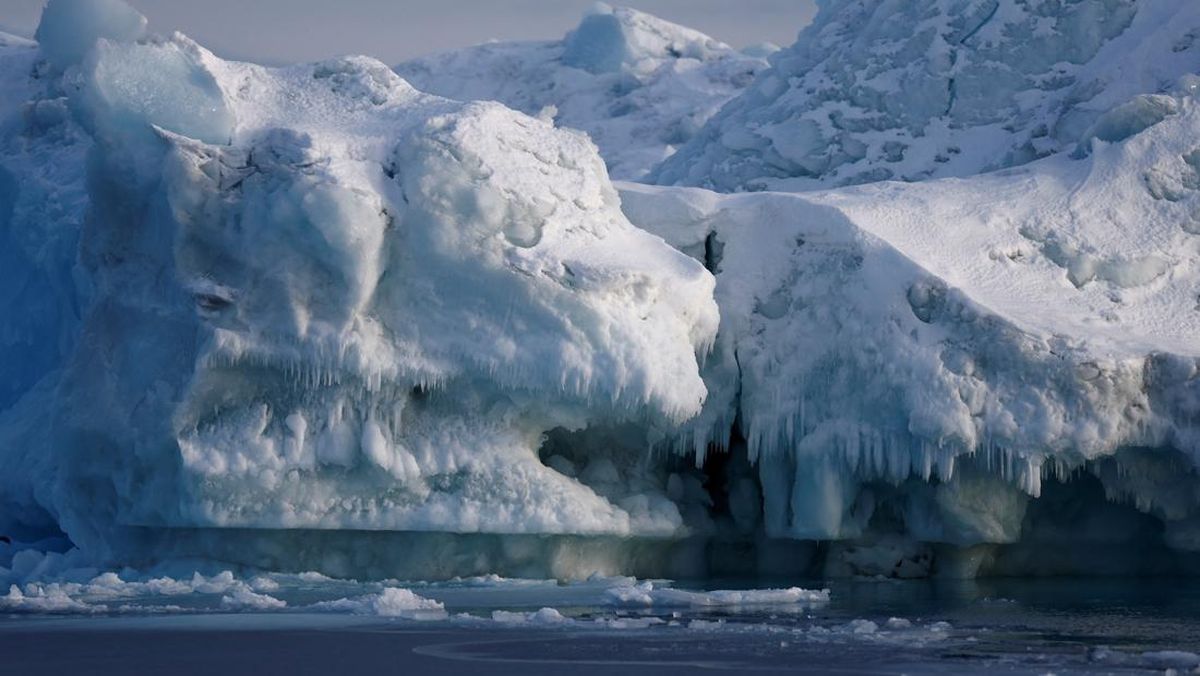
The primary mechanism for this weakening is the influx of freshwater into the North Atlantic, primarily from melting glaciers and ice sheets in Greenland and the Arctic. As these massive ice formations melt at an accelerated rate, they release vast quantities of freshwater into the ocean. This freshwater is less dense than the salty ocean water, and when it mixes with the surface currents, it reduces their overall salinity and, consequently, their density. This decrease in density inhibits the crucial sinking process that drives the AMOC. If the water at the northern end of the conveyor belt doesn’t sink as efficiently, the entire circulation slows down.
The "cold blob" itself serves as a direct footprint of this AMOC change. It is precisely in this region that the AMOC typically releases a significant portion of its heat to the atmosphere before the water sinks. A weaker AMOC means less warm water is transported northward, resulting in less heat being released in this specific area, hence the observed cooling. Stefan Rahmstorf, a co-author of the study and a professor of physics and oceanography at the University of Potsdam, Germany, emphasized that this phenomenon "changes the ocean heat transport" which is the direct cause of the "cold blob’s" cooling. His work, alongside that of other leading climate scientists, provides robust evidence linking the observed cooling to a fundamental shift in the AMOC’s dynamics.
Chronology of Concern: A Growing Scientific Consensus
The scientific community has been monitoring changes in Atlantic ocean currents for decades. Early observations of the "cold blob" emerged in the mid-20th century, prompting initial theories about localized atmospheric drivers. However, as global warming intensified through the late 20th and early 21st centuries, and satellite data became more sophisticated, the focus shifted towards the AMOC.
- 1980s-1990s: Growing awareness of climate change led to increased interest in ocean heat transport. Initial models began to hint at potential AMOC vulnerabilities.
- Early 2000s: Direct measurements and proxy data started to suggest a slowdown in the AMOC. The term "cold blob" gained traction as a visible manifestation of these changes.
- 2004: A landmark study by Rahmstorf and others, published in Nature, warned of a potential "collapse" of the AMOC under strong warming scenarios, sparking widespread concern.
- 2015: Several high-profile studies provided further evidence of AMOC weakening, solidifying the scientific consensus that the current was indeed slowing down. These studies often highlighted the "cold blob" as a key diagnostic.
- Present Day: The latest research, combining extensive observational data with advanced climate modeling, offers the most compelling evidence yet that the "cold blob" is a direct consequence of a faltering AMOC, dispelling previous ambiguities about its cause.
This cumulative body of evidence has led to a near-unanimous scientific consensus that the AMOC is not only weakening but potentially nearing a critical "tipping point." Some scientists warn that this tipping point could be reached as early as this century, meaning a future collapse is not merely a hypothetical scenario but a distinct possibility within our lifetimes.
Implications of an AMOC Collapse: A Global Catastrophe
The potential shutdown or significant weakening of the AMOC would unleash a cascade of catastrophic global consequences, far exceeding localized climate shifts. The interconnectedness of Earth’s climate systems means that a disruption of this magnitude would reverberate across continents:
-
Accelerated Sea Level Rise on the U.S. East Coast: One of the most immediate and profound impacts would be a dramatic increase in sea levels along the eastern seaboard of the United States. The AMOC currently creates a dynamic depression in the ocean surface in this region. If the current weakens, this "pull" would diminish, allowing water to pile up, leading to an additional rise of 15 to 20 centimeters (6 to 8 inches) on top of existing sea level rise projections. This would exacerbate coastal flooding, erosion, and storm surge risks for densely populated areas.
-
Freezing Winters in Europe: Without the AMOC’s heat-carrying capacity, Europe would experience significantly colder winters, potentially plunging the continent into conditions akin to a mini ice age. This would severely impact agriculture, energy demands, and infrastructure, leading to widespread societal disruption and economic hardship. Crop failures due to prolonged freezes would threaten food security across the continent.
-
Shifting Monsoons and Widespread Droughts in Africa: The AMOC plays a crucial role in influencing the intertropical convergence zone (ITCZ), a band of low pressure near the equator where winds converge and drive monsoon systems. A weakened AMOC would shift the ITCZ southward, altering rainfall patterns across large parts of Africa. This could lead to prolonged and severe droughts in regions that rely on seasonal rains for agriculture and water supply, exacerbating humanitarian crises, food insecurity, and potential conflicts over dwindling resources.
-
Disruption of Global Weather Patterns: The AMOC’s influence extends beyond regional climates. Its collapse would trigger complex feedback loops within the global climate system, potentially altering atmospheric circulation patterns, jet streams, and storm tracks worldwide. This could lead to more frequent and intense extreme weather events in various regions, including heatwaves, heavy rainfall, and prolonged dry spells, in ways that are currently difficult to fully predict.
-
Impact on Marine Ecosystems and Fisheries: Changes in ocean currents, temperature, and salinity would profoundly affect marine life. Fish stocks, which are sensitive to ocean conditions, could collapse, devastating fishing industries and impacting global food supplies. The altered distribution of nutrients and plankton, the base of the marine food web, would have cascading effects throughout ecosystems.
-
Ocean Acidification and Oxygen Depletion: While not directly caused by AMOC collapse, these existing stressors on ocean health would be compounded. A weakened AMOC might alter the transport of oxygen-rich waters to the deep ocean, potentially exacerbating oxygen minimum zones, further stressing marine life.
The Broader Climate Crisis Context: Urgency for Action
The "cold blob" and the weakening AMOC are not isolated phenomena but critical symptoms of the larger, interconnected climate crisis driven by greenhouse gas emissions from human activities. The melting of polar ice, the warming of global oceans, and the disruption of vital Earth systems are all consequences of a rapidly changing climate.
The findings underscore the urgency of aggressive and immediate action to mitigate climate change. Reducing greenhouse gas emissions through a global transition to renewable energy, improving energy efficiency, and adopting sustainable land-use practices are paramount. Furthermore, investing in climate adaptation strategies is crucial to build resilience against the impacts that are already unavoidable. The scientific warnings are clear: the planet is approaching critical tipping points, and the window for effective action is rapidly closing. The fate of the AMOC, and with it, the stability of global climate patterns, hinges on humanity’s collective response to this existential challenge.