Socio Today
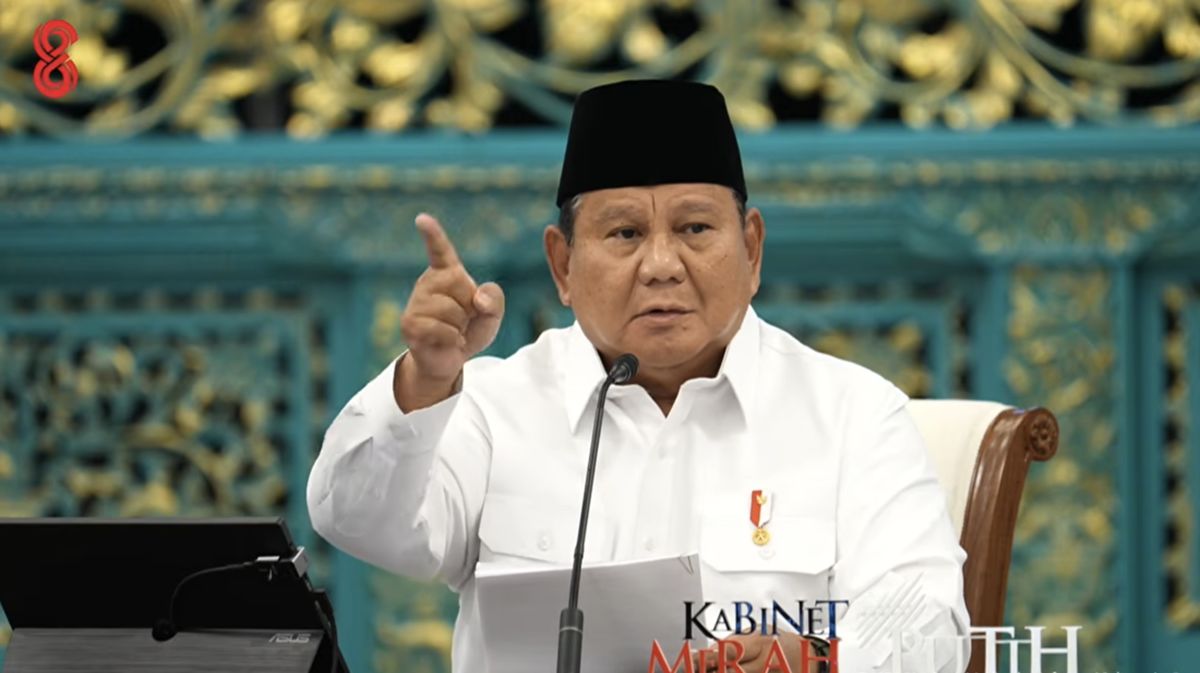
Indonesian President Prabowo Subianto has issued a decisive directive, signaling a new era of accountability for businesses and project developers. During a Cabinet Plenary Session held at the State Palace in Central Jakarta on Monday, July 20, President Subianto emphatically stated that the government would revoke various business permits, including Rights to Cultivate (Hak Guna Usaha – HGU), Rights to Build (Hak Guna Bangunan – HGB), and Trading Business Licenses (Surat Izin Usaha Perdagangan – SIUP), if the associated activities remain dormant for two consecutive years. This policy, he stressed, aims to eliminate tolerance for permits that have been granted but are not being utilized, underscoring a commitment to optimize national resources and accelerate economic development.
A New Era of Accountability for Permits
President Subianto’s pronouncement marks a significant shift towards greater scrutiny of business operations and land utilization across Indonesia. The "use it or lose it" policy is designed to combat the pervasive issue of land and permit hoarding, which has long stifled productive investment and contributed to economic inefficiencies. By setting a clear two-year inactivity threshold, the government intends to free up valuable resources – particularly land and business opportunities – that are currently locked in speculative holdings or bureaucratic inertia.
This directive is not merely a bureaucratic adjustment but reflects a broader strategy to enhance government efficiency and foster a more dynamic investment climate. The President’s firm stance aligns with his administration’s stated goals of boosting economic growth, attracting genuine investment, and ensuring that national assets contribute tangibly to the welfare of the Indonesian people. The policy is expected to impact a wide range of sectors, from large-scale agriculture and plantation businesses holding vast HGU lands to urban developers with HGB permits for commercial and residential projects, and even smaller enterprises with SIUPs.
Unpacking the Permit Revocation Policy
To fully grasp the implications of President Subianto’s directive, it is essential to understand the nature of the permits in question and the historical context surrounding their utilization in Indonesia.
The Types of Permits in Focus:
-
Hak Guna Usaha (HGU) – Right to Cultivate: This is a crucial permit for large-scale agricultural, plantation, and fishery businesses. An HGU grants the right to use state land or land owned by others for agricultural purposes for a specified period, typically between 25 and 35 years, with the possibility of extension. Historically, HGUs have been at the center of land conflicts and debates over resource distribution. Many large tracts of land under HGU have been left unproductive, leading to issues of land speculation, environmental degradation, and social unrest among local communities. The non-utilization of HGU lands often deprives the state of potential revenue and prevents the land from being allocated to more productive or equitable uses.
-
Hak Guna Bangunan (HGB) – Right to Build: The HGB permits individuals or entities to construct and own buildings on land that is not theirs, for a period of up to 30 years, extendable for another 20 years. This right is commonly associated with urban development, commercial centers, industrial parks, and residential complexes. Similar to HGUs, instances of HGBs being acquired and then left undeveloped are common, particularly in rapidly urbanizing areas. This practice contributes to land speculation, artificial scarcity, and can hinder planned urban expansion or the provision of affordable housing and infrastructure.
-
Surat Izin Usaha Perdagangan (SIUP) – Trading Business License: This is a fundamental license required for any trading business in Indonesia. While less complex than land-based permits, an inactive SIUP can indicate a dormant business that is not contributing to the economy, potentially holding a slot that could be used by an active enterprise. The revocation of SIUPs for inactivity aims to streamline the business registry and ensure that only genuinely operating businesses are officially recognized.
The Rationale Behind the Two-Year Rule:
The primary motivation behind the two-year dormancy rule is multifaceted. Firstly, it seeks to combat land and permit hoarding. For decades, individuals and corporations have acquired vast tracts of land or numerous business permits without any immediate intention of development, often holding them for speculative purposes, anticipating future price appreciation. This practice ties up valuable national assets that could otherwise be used for productive investments, job creation, or even redistributed for smallholder agriculture or public infrastructure.
Secondly, the policy is designed to encourage productive economic activity. By imposing a strict deadline, the government aims to pressure permit holders to either commence their activities or relinquish their rights, thereby allowing others who are ready to invest and operate to step in. This is expected to inject dynamism into various sectors, particularly those related to land-intensive industries and urban development.
Thirdly, it addresses issues of resource scarcity and equitable distribution. Indonesia is rich in natural resources, but access to these resources and opportunities is often concentrated. Freeing up dormant permits can open avenues for new players, including local communities and small and medium-sized enterprises (SMEs), to participate in economic activities.
Finally, the government’s commitment to cutting red tape for active businesses is implicit in this policy. By identifying and removing inactive permits, the bureaucracy can focus its resources on facilitating genuinely productive ventures, thereby improving the overall ease of doing business in Indonesia.
Legal and Operational Framework:
While President Subianto’s statement is a clear political directive, its implementation will require careful navigation of existing legal frameworks and operational challenges. Indonesia’s agrarian law, investment law, and various presidential and ministerial regulations already contain provisions for the evaluation and potential revocation of permits under certain conditions, such as non-compliance or failure to meet development targets. The new policy is likely to leverage and strengthen these existing mechanisms.
The Ministry of Agrarian Affairs and Spatial Planning/National Land Agency (ATR/BPN) will play a pivotal role in identifying dormant HGUs and HGBs, while the Ministry of Investment/Investment Coordinating Board (BKPM) will oversee the broader investment landscape and potentially coordinate with sectoral ministries for SIUPs and other business licenses. Local governments will also be crucial in monitoring compliance at the regional level. The process will need to ensure due process, including clear notifications, opportunities for permit holders to present their case, and avenues for appeal, to prevent arbitrary revocations and maintain investor confidence. Transparency in the enforcement process will be key to its success and legitimacy.
Accelerating National Strategic Projects (PSN)
President Subianto’s commitment to efficiency and accelerated development extends beyond dormant permits to the realm of National Strategic Projects (PSN). He explicitly stated that the new policy framework would also be applied to expedite the progress of critical PSNs, specifically citing the Abadi Masela Gas Block as a prime example of a project that has languished for far too long.
The PSN Framework: A Catalyst for Growth:
National Strategic Projects are a cornerstone of Indonesia’s long-term development strategy. Initiated under previous administrations and continuously prioritized, PSNs encompass a vast array of infrastructure, energy, industrial, and social projects deemed vital for national progress. Their primary goals include stimulating economic growth, creating jobs, promoting regional development, enhancing connectivity, and improving the quality of life for citizens. These projects often involve substantial investment, complex technical requirements, and coordination across multiple government agencies and private sector partners.
Despite their strategic importance, PSNs frequently encounter significant challenges, including protracted land acquisition processes, difficulties in securing financing, bureaucratic hurdles, and, increasingly, environmental and social impact concerns. The President’s current directive aims to cut through these bottlenecks with a renewed sense of urgency.
The Case of the Abadi Masela Gas Block:
The Abadi Masela Gas Block, located in the Arafura Sea off the coast of Maluku province, epitomizes the challenges and frustrations associated with delayed strategic projects in Indonesia.
1. A Project Decades in Limbo:
The Masela field was first discovered in 1998, holding significant reserves of natural gas. Its development has been fraught with delays, earning it the infamous reputation of being "28 years" in limbo, as highlighted by President Subianto. The initial development plan centered on a Floating Liquefied Natural Gas (FLNG) facility. However, under President Joko Widodo’s administration, there was a strategic pivot towards an Onshore LNG (OLNG) plant, driven by considerations of local content development, greater economic benefits for the region, and national energy security. This shift, while strategically sound, necessitated new feasibility studies and plan revisions, further extending the project timeline.
The project’s primary operator is Japan’s Inpex Corporation, which holds a substantial participating interest. Shell, a global energy giant, was initially a key partner but exited the project in 2023, citing strategic portfolio adjustments, and was subsequently replaced by Malaysia’s Petronas and Indonesia’s Pertamina Hulu Energi (PHE). The prolonged delays have been attributed to a complex interplay of factors: technical challenges in developing a deep-water gas field, economic viability debates (especially regarding the FLNG vs. OLNG options), changes in government policy and regulatory frameworks, and geopolitical considerations. Environmental impact assessments and concerns from local communities regarding the project’s footprint have also contributed to the protracted development phase.
2. Strategic Importance:
The Abadi Masela project is of immense strategic importance to Indonesia. Firstly, it is crucial for enhancing the nation’s energy security, particularly for the eastern regions which often face energy deficits. The gas produced from Masela is intended to meet domestic industrial and power generation needs, reducing reliance on other energy sources. Secondly, the project is expected to generate significant foreign exchange earnings through LNG exports, bolstering Indonesia’s trade balance and national coffers. Thirdly, its development promises substantial local content creation, technology transfer, and job opportunities for the people of Maluku, potentially transforming the regional economy. The multiplier effect on supporting industries and infrastructure development in the remote eastern part of the archipelago is also a key consideration.
3. Prabowo’s Diplomatic Push:
Recognizing the critical nature of Masela, President Subianto took direct action during his visit to Tokyo. He personally engaged with the leadership of Inpex Corporation, the project’s main operator, to ascertain their commitment and expedite progress. His approach, as he described, was "polite but firm." He conveyed Indonesia’s urgent need for the project to support its energy resilience and boost foreign exchange reserves. "Are you still interested, noble sir? If you are not interested, I will allocate it, I will appoint another company," Prabowo recounted telling the Japanese executives, emphasizing that while the tone was respectful, the message was unequivocal. He clarified that this was an "appeal," not an "ultimatum," highlighting Indonesia’s characteristic hospitality while simultaneously demonstrating a new level of assertiveness in protecting national interests. This diplomatic push reflects a strategic effort to ensure that foreign investment aligns with Indonesia’s development agenda and timelines.
Broader Implications and Stakeholder Reactions
President Subianto’s twin directives – revoking dormant permits and accelerating PSNs – carry significant implications across various sectors and are likely to elicit diverse reactions from stakeholders.
Economic Impact:
The immediate economic impact is anticipated to be positive, as dormant assets are either activated or reallocated to productive uses. This could lead to increased investment, job creation, and higher economic output. Analysts suggest that freeing up vast tracts of unused land could spur agricultural expansion, industrial development, and urban growth, thereby contributing to GDP. The acceleration of PSNs like Masela will unlock significant capital expenditure and operational spending, generating substantial economic multipliers. However, some business observers might express concerns about the potential for policy instability if the implementation lacks clarity or due process, which could, in the short term, create uncertainty for investors.
Investment Climate and Legal Certainty:
The government’s commitment to a more transparent and efficient business environment is a key message embedded in this policy. By cracking down on dormant permits, the administration aims to signal that Indonesia is serious about attracting genuine, productive investment rather than speculative holdings. This could improve legal certainty for active investors who face unfair competition from those who merely sit on permits. Conversely, the policy’s success hinges on consistent and fair implementation. Any perception of arbitrary revocation or lack of clear guidelines could deter potential investors who prioritize predictability and protection of their assets. Therefore, establishing a robust, transparent, and legally sound process for identification, notification, and revocation will be paramount.
Land Reform and Environmental Considerations:
The permit revocation policy could have profound implications for land reform. Freeing up unused HGU and HGB lands could make them available for redistribution to small farmers, local communities, or for public infrastructure projects, potentially addressing long-standing issues of land inequality and conflict. Land rights advocates have historically called for such measures to ensure more equitable access to resources.
However, large-scale projects like Masela, while economically vital, always raise environmental concerns. Robust Environmental Impact Assessments (EIAs) and ongoing monitoring will be crucial to mitigate potential negative impacts on marine ecosystems, biodiversity, and local communities. Civil society groups often highlight the need for sustainable development practices and meaningful stakeholder engagement in such projects.
Energy Security and Geopolitical Context:
Indonesia’s rapidly growing population and industrialization mean its energy demand is constantly increasing. The Masela project, as a significant source of natural gas, plays a critical role in bolstering national energy security and diversifying the energy mix. Natural gas is also seen as a crucial transition fuel in the global shift towards cleaner energy. The acceleration of Masela, therefore, has broader geopolitical implications, strengthening Indonesia’s position as a regional energy player and potentially attracting further international investment in its energy sector.
Challenges and Outlook
Implementing President Subianto’s directives will not be without challenges. Data accuracy regarding dormant permits, potential bureaucratic resistance within various agencies, and legal challenges from permit holders whose rights are revoked are all plausible hurdles. Ensuring consistency and fairness across different regions and sectors will also be critical. The administration will need to invest in robust monitoring and evaluation mechanisms to assess the policy’s effectiveness and make necessary adjustments.
Despite these challenges, the President’s firm stance signals a strong commitment from his administration to rapid execution and comprehensive reform. It underscores a desire to move past bureaucratic inefficiencies and unlock Indonesia’s full economic potential.
Conclusion: A Call for Productive Engagement
President Prabowo Subianto’s declaration marks a decisive moment for Indonesia’s economic landscape. His "use it or lose it" message is a clear signal to both domestic and foreign investors: the era of holding permits and land for speculative purposes is drawing to a close. The government expects productive engagement and timely execution from all stakeholders. By simultaneously clearing bureaucratic deadwood and aggressively pushing forward strategic national projects like the Abadi Masela Gas Block, the administration is laying the groundwork for a more dynamic, efficient, and ultimately more prosperous Indonesian economy. This policy shift reflects a vision for a nation where resources are optimally utilized, investment flourishes, and national development proceeds with renewed vigor and accountability.