Socio Today
Jakarta, Indonesia – Rosan Roeslani, Chief Executive Officer (CEO) of Danantara Indonesia, has confirmed that Danantara Sumberdaya Indonesia (DSI) has successfully tracked and facilitated the management of US$10.5 billion in foreign exchange from export activities within just over a month of its operational commencement. This significant achievement, initially highlighted by President Prabowo Subianto, underscores a pivotal shift in Indonesia’s approach to monitoring and optimizing its vast commodity exports. The breakthrough comes as the nation implements a sophisticated, integrated data system designed to consolidate export information from myriad government agencies, thereby enhancing transparency, mitigating discrepancies, and ultimately fortifying state revenues.
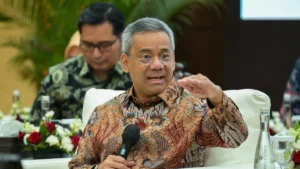
The US$10.5 billion figure, a testament to the system’s rapid impact, originates from the comprehensive integration of export data that officially began on June 1, 2026. This ambitious initiative now allows the Indonesian government to centralize and analyze information previously fragmented across various ministries and institutions. Speaking from the Presidential Palace Complex in Central Jakarta on Monday, July 20, 2026, Rosan Roeslani detailed how this new architecture provides an unprecedented holistic view of the nation’s export landscape. "We started from June 1 until July, precisely as of last week, we have been able to pull data from all agencies or ministries. From Customs, the Ministry of Trade, the Ministry of Industry, the Ministry of Energy and Mineral Resources (ESDM), and several other institutions," Rosan explained, emphasizing the collaborative backbone of the new system.
The Genesis of Danantara Sumberdaya Indonesia and its Strategic Mandate
Danantara Sumberdaya Indonesia (DSI) emerges as a critical instrument in President Prabowo Subianto’s broader economic agenda, which prioritizes resource nationalism, value-added processing, and robust state revenue generation. While specific details of DSI’s founding and structure are still emerging, its very name, "Sumberdaya Indonesia" (Indonesia’s Resources), strongly suggests a mandate focused on maximizing the national benefit from the country’s rich natural endowments. The establishment of DSI, or its empowerment with such a critical role, reflects a strategic decision to address long-standing challenges in export governance, particularly those related to data fragmentation, under-invoicing, and illicit financial flows.
Historically, Indonesia, a global powerhouse in commodity exports ranging from palm oil and coal to nickel and rubber, has grappled with inefficiencies arising from disconnected data systems. Each ministry or agency, while performing its individual regulatory and monitoring functions, often operated in silos. This meant that the Directorate General of Customs and Excise might have one set of export volume and value data, while the Ministry of Trade might have another, and the Ministry of Energy and Mineral Resources yet another for specific commodities. Such discrepancies not only complicated accurate economic planning but also created significant loopholes for revenue leakage through practices like under-declaration of prices or volumes, and even illegal exports.
DSI’s mission, therefore, is to act as the central nervous system for Indonesia’s export economy, integrating these disparate data streams into a single, cohesive platform. This strategic move aligns with a growing global trend among resource-rich nations to assert greater control over their extractive and agricultural sectors, ensuring that the full economic benefits accrue to the state and its citizens. President Prabowo’s administration has consistently articulated a vision of an economically sovereign Indonesia, where national resources are leveraged optimally for sustainable development, and DSI is poised to be a key enabler of this vision.
A New Era of Export Monitoring: The Integrated Data System in Action
The core innovation driving DSI’s early success is its advanced integrated data system. This platform is designed to consolidate a wealth of information related to every export transaction. Prior to this, Rosan noted, export data resided in individual agencies, making comprehensive, real-time oversight impossible. Now, the system can track multiple critical data points, including the precise volume of goods exported, the specific port of departure, the exact amount of customs duties and taxes paid, and crucially, the prices reported by exporters.
The technical architecture of such a system likely involves a combination of big data analytics, secure cloud infrastructure, and potentially artificial intelligence or machine learning algorithms to detect anomalies. Data feeds are seamlessly integrated from key government entities:
- Directorate General of Customs and Excise: Providing data on export declarations, customs valuations, and duties collected.
- Ministry of Trade: Supplying information on export licenses, trade agreements, and market prices.
- Ministry of Industry: Offering insights into industrial production, value-added exports, and compliance with local content requirements.
- Ministry of Energy and Mineral Resources (ESDM): Crucial for commodities like coal, nickel, and other minerals, providing data on production quotas, mining permits, and reference prices.
- Other relevant agencies: Including port authorities for logistics data, and potentially the Ministry of Agriculture for agricultural commodities beyond palm oil.
This consolidation creates a powerful surveillance mechanism, allowing government analysts to cross-reference information and identify inconsistencies that were previously obscured by data fragmentation. The system is not merely a passive repository; it is an active monitoring tool capable of flagging suspicious activities, thereby enabling proactive intervention.
The Palm Oil Paradigm Shift: Tackling Price Discrepancies
One of the most immediate and impactful findings from the new system has been in the palm oil sector. Indonesia is the world’s largest producer and exporter of palm oil, a commodity vital to its economy but also historically prone to issues ranging from environmental concerns to opaque pricing and trade practices. Rosan highlighted a significant and persistent discrepancy between the "declared price" (the price reported by exporters for their products) and the "reference price" or "market index price" (the internationally recognized benchmark price for palm oil products).
"Usually, there was always a gap between the declared price – the price declared at the time of sale – and the index," Rosan explained. This gap, he noted, had averaged over 30% for certain products like Refined Bleached Deodorized (RBD) Olein, a key palm oil derivative. Such a substantial disparity indicates potential under-invoicing, a practice where exporters declare a lower price than the actual transaction value to reduce their tax liabilities, customs duties, or to facilitate capital flight. This not only deprives the state of legitimate revenue but also distorts market dynamics and can put compliant exporters at a disadvantage.
The new DSI system, by integrating data from various sources, can now directly compare declared prices against established market indices in near real-time. "Now that we have implemented this system, the gap that was previously an average of more than 30% has now significantly narrowed and is very close to the index," Rosan affirmed. This achievement is monumental, suggesting that the system is effectively curbing practices that have historically siphoned off substantial revenue from the Indonesian economy. The immediate narrowing of this gap indicates a swift behavioral correction among exporters, likely driven by the increased transparency and the knowledge that their declared prices are now subject to rigorous scrutiny.
Beyond Palm Oil: Focus on Strategic Commodities
While palm oil serves as a compelling case study, DSI’s initial phase of implementation is strategically focused on three critical commodities that are pillars of Indonesia’s export economy:
- Coal: Indonesia is a leading global coal exporter. The coal sector has historically faced challenges related to illegal mining, under-invoicing, and discrepancies in quality and volume declarations. The DSI system can monitor coal exports from mine to port, cross-referencing production data from ESDM with export declarations and market prices to prevent revenue leakage.
- Palm Oil and its Derivatives: As detailed, this sector is a major focus due to its economic weight and past issues with price discrepancies.
- Ferroalloy and its Derivatives: This category includes products like ferronickel, ferromanganese, and other alloys crucial for steel production. As Indonesia moves to ban raw ore exports and promote downstream processing, monitoring these value-added products becomes vital. Ensuring fair pricing and accurate reporting for these industrial commodities is key to realizing the full economic benefits of mineral processing.
By concentrating on these high-value, high-volume commodities, DSI can demonstrate its effectiveness and refine its processes before potentially expanding its scope to other export sectors.
Mechanism of Detection and Enforcement
The DSI system is equipped with an advanced alert mechanism. When anomalies are detected – such as an unusual gap between declared and market prices, inconsistencies in reported volumes across different agencies, or discrepancies in tax/duty payments relative to declared values – the system generates an immediate alert. This information is then promptly forwarded to the relevant government bodies for further investigation and action.
"So, with this, we know from which specific docks they depart, what the volume is, how much customs duty is paid, how much tax is paid. So, we can compare and see if there are gaps here," Rosan explained. "This is the data we can obtain, and we give alerts, for example, to Customs, or to the Ministry of Finance, or to the Ministry of ESDM, or the Ministry of Trade."
This inter-agency collaboration is crucial. Customs officials can then conduct targeted inspections or audits based on the alerts. The Ministry of Finance can investigate potential tax evasion. The Ministry of Trade can review export permits and trade practices. The Ministry of ESDM can ensure compliance with resource management regulations. This coordinated approach transforms previously reactive and often fragmented enforcement efforts into a proactive, data-driven system, significantly enhancing the government’s capacity to ensure compliance and recover lost revenue.
Broader Economic and Governance Implications
The operationalization of DSI and its integrated data system carries profound implications for Indonesia’s economy and governance:
- Revenue Generation: The immediate narrowing of the palm oil price gap suggests a significant uplift in potential state revenue from taxes, duties, and levies. If this trend holds true for other commodities, the additional revenue could run into billions of dollars annually, providing crucial funding for infrastructure, social programs, and other development initiatives.
- Market Transparency and Fairness: By ensuring that declared export prices align with market realities, the system promotes a level playing field for all exporters. Legitimate businesses that have always complied with regulations will no longer be undercut by those engaging in under-invoicing, fostering a healthier and more competitive market environment.
- Combating Illicit Financial Flows: Under-invoicing is a common tactic for illicit financial flows and capital flight. By closing these loopholes, DSI directly contributes to strengthening Indonesia’s financial integrity and combating economic crimes, aligning with international efforts against money laundering and corruption.
- Data-Driven Policy Formulation: The wealth of consolidated, real-time data provides policymakers with an accurate and comprehensive understanding of export trends, commodity prices, and market dynamics. This robust data foundation enables more informed and effective policymaking in areas such as trade agreements, industrial development, and resource management.
- Strengthening National Reserves: The improved tracking and potential increase in foreign exchange repatriation contribute to strengthening Indonesia’s foreign exchange reserves, enhancing the stability of the Rupiah, and improving the country’s balance of payments position. This financial resilience is critical in navigating global economic volatilities.
- Enhanced Governance and Anti-Corruption Efforts: The system inherently promotes greater accountability and reduces opportunities for corruption within the export value chain. By making data transparent and cross-verifiable, it acts as a powerful deterrent against dishonest practices by both private actors and potentially corrupt officials.
Challenges and Future Prospects
Despite its promising start, DSI’s journey will not be without challenges. Resistance from vested interests accustomed to operating in opaque environments is almost inevitable. The technical complexities of maintaining and continuously upgrading such a sophisticated system, adapting to evolving trade practices, and ensuring data security will require ongoing investment and expertise. Furthermore, ensuring consistent and rigorous enforcement by all relevant agencies will be key to the system’s long-term success.
However, the initial results are overwhelmingly positive. The rapid tracking of US$10.5 billion and the demonstrable impact on price discrepancies signal a strong start. Future prospects include expanding the system’s coverage to a wider array of export commodities, integrating with other economic indicators and financial transaction data, and potentially developing predictive analytics capabilities to anticipate market shifts or potential malpractices.
This initiative represents a significant stride towards achieving greater economic sovereignty and sustainable development for Indonesia. By bringing transparency and accountability to its vital export sector, Danantara Sumberdaya Indonesia is not just managing foreign exchange; it is laying the groundwork for a more robust, equitable, and resilient national economy. The eyes of the global trading community, and indeed other resource-rich nations, will undoubtedly be watching Indonesia’s progress closely as it leverages technology to unlock the true potential of its national resources.