Socio Today
JAKARTA – The National Awakening Party (PKB) has officially set its sights on former Chairman of the East Java Nahdlatul Ulama (PWNU) Regional Board, KH Marzuki Mustamar, as a potential candidate for the 2024 East Java Regional Head Election (Pilkada). This strategic move by PKB signals a significant development in the political landscape of one of Indonesia’s most crucial provinces, potentially paving the way for a high-stakes electoral battle against incumbent figures, most notably former East Java Governor Khofifah Indar Parawansa. The party’s Pilkada Desk Chairman, Abdul Halim Iskandar, confirmed the ongoing public discourse and aspirations surrounding KH Marzuki Mustamar’s potential candidacy, emphasizing the strong grassroots support that has emerged.
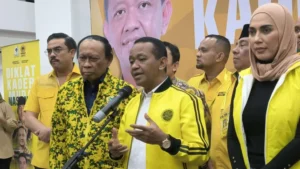
Speaking at a press conference held at the PKB Central Executive Board (DPP) office in Central Jakarta on Wednesday, May 29, 2024, Halim Iskandar articulated the party’s enthusiasm for the public’s initiative. "For East Java, today KH Marzuki’s name is circulating among the community; he is meeting with the public to convey their aspirations to PKB," Halim stated, highlighting the organic nature of the support. This indicates a proactive engagement from the populace, rather than a top-down party directive, which PKB appears keen to capitalize on. The party, deeply rooted in the Nahdlatul Ulama (NU) mass organization, often frames its political strategies around the aspirations and needs of the Nahdliyin (NU members and sympathizers), particularly in provinces with a strong NU presence like East Java.
The Quest for East Java’s Top Seat: PKB’s Strategic Bid
East Java, with its vast electorate of over 31 million registered voters as of the 2024 general election, stands as a pivotal political battleground in Indonesia. Its demographic composition, deeply intertwined with the cultural and religious fabric of Nahdlatul Ulama, makes it a critical province for any party aiming for significant national influence. The gubernatorial election here is not merely a contest for regional leadership but often a barometer of national political trends and the enduring power of religious-based organizations. PKB, historically founded by Gus Dur (KH Abdurrahman Wahid), a former chairman of NU, naturally sees East Java as its ideological and electoral heartland. Dominating the executive and legislative branches in East Java is a long-standing aspiration for the party, positioning it to leverage its strong NU connections.
The party’s decision to consider KH Marzuki Mustamar is thus a calculated move. It reflects an understanding of the local political dynamics and an attempt to rally the influential Nahdliyin vote. East Java’s political landscape is often characterized by the robust competition between candidates who can demonstrate strong ties to NU and its various affiliated bodies, from pesantren (Islamic boarding schools) to community organizations. The province’s economic output, its strategic geographical location, and its significant contribution to national politics further amplify the importance of its gubernatorial contest.
KH Marzuki Mustamar: A Figure Reshaped by Controversy
KH Marzuki Mustamar’s emergence as a strong contender is particularly noteworthy given his recent history. Until his dismissal in December 2023, he served as the highly respected Chairman of the East Java PWNU. His abrupt removal by the Nahdlatul Ulama Central Executive Board (PBNU) sparked widespread controversy and a significant outpouring of sympathy and support from various NU circles, especially in East Java. The PBNU cited administrative reasons for his dismissal, but many observers and supporters perceived it as politically motivated, leading to accusations of internal power struggles within the largest Islamic organization in Indonesia.
Ironically, as Halim Iskandar pointed out, this controversial episode did not diminish KH Marzuki Mustamar’s standing; instead, it significantly boosted his popularity. "He is a prominent kiai (religious scholar) in East Java. He has become even more popular after receiving unfavorable treatment following his dismissal by PBNU; he has become even more popular. Thus, this wave of aspirations emerged," Halim explained. This surge in public recognition and solidarity positioned him as a potential ‘martyr’ figure for some, galvanizing support from those who felt he was unfairly targeted. His dismissal, rather than sidelining him, inadvertently propelled him into a more prominent political spotlight, making him an attractive figure for parties like PKB seeking a strong, locally resonant candidate. His deep understanding of East Java’s socio-religious fabric, coupled with his widespread network within the pesantren and NU communities, makes him a formidable potential candidate.
PKB’s Overture: Gauging Willingness and Public Sentiment
Despite the clear enthusiasm from the public and within PKB, Abdul Halim Iskandar underscored that the party’s primary focus remains on securing KH Marzuki Mustamar’s consent. "If PKB is ready for the aspirations, but the final touch will be to await Kiai Marzuki’s willingness," he stated, emphasizing the respect the party holds for the kiai’s decision. This approach highlights the delicate balance PKB must maintain between responding to public demand and respecting the autonomy of a respected religious leader. In Indonesian politics, particularly involving NU figures, a candidate’s willingness often holds more weight than mere party endorsement, reflecting the cultural reverence for religious scholars.
Halim further elaborated on PKB’s stance, affirming that the party would honor KH Marzuki Mustamar’s decision, even if he chooses not to enter the political fray. "Even though we are ready, if Kiai Marzuki says ‘oh, no thank you,’ of course, we will not force him because he is also an extraordinary figure and icon of NU East Java," Halim reiterated. This demonstrates PKB’s strategic prudence, recognizing that forcing a revered figure could backfire and alienate his supporters. The party understands that Marzuki Mustamar’s moral authority and religious leadership are assets that cannot be simply commanded but must be earned through consensus and respect. This patient approach is crucial in navigating the intricate dynamics of NU politics, where spiritual guidance often precedes political maneuvering.
A Potential Clash of Titans: Marzuki vs. Khofifah
Should KH Marzuki Mustamar accept PKB’s overtures and officially enter the East Java gubernatorial race, he would likely face a formidable opponent in Khofifah Indar Parawansa. Khofifah, who served as Governor of East Java from 2019 to 2024, has a long and distinguished political career. She is also a prominent figure within Nahdlatul Ulama, currently serving as the Chairwoman of Muslimat NU, the women’s wing of the organization, which boasts millions of members nationwide. Her strong base among women voters and her established network within various NU institutions provide her with a significant advantage.
A contest between KH Marzuki Mustamar and Khofifah Indar Parawansa would represent a true battle of NU heavyweights, potentially dividing the traditional Nahdliyin vote. Both candidates draw their strength from the same large constituency, making the election a fascinating internal contest within the broader NU family. Khofifah’s incumbency, coupled with her successful track record during her previous term, gives her a distinct advantage in terms of name recognition and governance experience. However, Marzuki Mustamar’s recent surge in popularity, fueled by the sympathy vote and his deep grassroots connections, could present a serious challenge. This hypothetical match-up would force voters to choose between two highly respected figures, each with deep roots in the community and significant influence. The electoral implications for both candidates would hinge on their ability to mobilize their respective factions within the NU ecosystem and appeal to broader segments of the East Java electorate.
The Enduring Influence of Nahdlatul Ulama in East Java Politics
The political landscape of East Java cannot be understood without acknowledging the colossal influence of Nahdlatul Ulama. Founded in Surabaya in 1926, NU has its spiritual and demographic heartland in East Java, where its network of pesantren, mosques, and community organizations forms an unparalleled social and political infrastructure. Electoral success in East Java is often contingent on securing the endorsement, or at least the tacit approval, of key NU figures and institutions. PKB, as the political vehicle explicitly linked to NU, naturally seeks to leverage this connection.
However, NU itself is not a monolithic political entity. While it provides a strong cultural and religious identity for millions, its members and leaders often support various political parties. The internal dynamics of NU, including the relationships between PBNU, PWNU, and individual kyai, play a critical role in shaping political outcomes. The controversy surrounding KH Marzuki Mustamar’s dismissal highlights these internal complexities. His potential candidacy, therefore, is not just a PKB initiative but also a reflection of the evolving power dynamics and allegiances within the broader NU community. A significant segment of the Nahdliyin community views PBNU’s actions against Marzuki Mustamar with skepticism, and his candidacy could serve as a focal point for expressing dissent or reaffirming loyalty to specific NU figures over the central board.
PKB’s Electoral Ambitions and the East Java Landscape
PKB’s ambition in East Java is not new. In the 2024 legislative elections, PKB demonstrated considerable strength in the province, securing a significant number of seats in both the provincial and national parliaments. This performance indicates a robust party machinery and a loyal voter base. However, gubernatorial elections present a different challenge, often requiring broader coalition building and cross-party appeal. PKB’s decision to back an NU figure like KH Marzuki Mustamar aligns perfectly with its core identity and electoral strategy, aiming to consolidate the Nahdliyin vote, which is critical for winning in East Java.
The party’s current strength in East Java, combined with the potential appeal of KH Marzuki Mustamar, positions PKB as a major player in the upcoming Pilkada. The challenge for PKB will be to translate this grassroots enthusiasm into a structured and effective campaign, overcoming the formidable challenge posed by established figures like Khofifah Indar Parawansa, who also commands significant NU support. The 2024 Pilkada in East Java will test PKB’s organizational capabilities, its ability to form effective coalitions, and its capacity to mobilize its extensive network.
The Road Ahead: Building Coalitions and Selecting a Running Mate
While the focus is currently on securing KH Marzuki Mustamar’s willingness, the issue of a running mate is also on PKB’s agenda. Halim Iskandar noted that many individuals have expressed readiness to serve as his deputy, indicating the allure of partnering with a figure of Marzuki Mustamar’s stature. "Many are ready to accompany Kiai Marzuki, but we will not expose them because Kiai Marzuki comes first. For his running mate, many are ready; many have come forward to accompany Kiai Marzuki, but the key remains with him," Halim affirmed. This suggests that once Marzuki Mustamar commits, PKB will have a strong pool of candidates to choose from, likely seeking a running mate who can complement his profile, perhaps someone with a strong bureaucratic background or a different regional base to broaden the appeal.
The selection of a running mate will be crucial for a balanced ticket, potentially aiming to consolidate support from diverse demographic groups or geographical regions within East Java. This phase will involve extensive internal discussions within PKB and potential negotiations with other political parties to form a winning coalition. The political dynamics in East Java often necessitate multi-party alliances to meet the electoral threshold and maximize campaign resources.
Broader Implications: NU Internal Dynamics and National Political Resonance
The East Java gubernatorial election, particularly with a potential Marzuki Mustamar candidacy, carries broader implications beyond the provincial borders. It will undoubtedly shine a spotlight on the internal dynamics of Nahdlatul Ulama. The outcome could be interpreted as a referendum on the PBNU’s decision to dismiss Marzuki Mustamar, or it could highlight the complex and often fragmented nature of NU’s political influence. Should Marzuki Mustamar succeed, it would send a powerful message about grassroots power and the potential for religious scholars to defy central organizational directives if they retain strong popular backing.
Furthermore, the East Java Pilkada outcome often has a ripple effect on national politics. It can influence coalition formations for future national elections, test the strength of various political parties, and even impact the broader discourse surrounding the role of religious organizations in Indonesian democracy. For PKB, a victory in East Java would solidify its position as a major national political force and a dominant voice for the Nahdliyin community. Conversely, a loss would necessitate a re-evaluation of its strategies in its traditional stronghold.
As the 2024 Pilkada approaches, all eyes will be on East Java, awaiting KH Marzuki Mustamar’s decision and the subsequent political maneuvering. The stage is set for a compelling and potentially historic election that will undoubtedly shape the future of the province and resonate across the Indonesian political landscape. The interplay of public aspiration, party strategy, and the personal decision of a revered kiai will define the narrative of this critical electoral contest.