Socio Today
The Hamas movement, which maintains its primary base of operations in the Gaza Strip, has officially announced the appointment of Khalil Al-Hayya as its new top leader. Al-Hayya was chosen to succeed the late Yahya Sinwar, the architect of the October 7 attacks, who was killed during a direct engagement with Israeli Defense Forces (IDF) in the Gaza Strip in October 2024. The formal elevation of Al-Hayya to the position of Chairman of the Hamas Political Bureau marks a definitive turning point for the organization as it navigates a protracted conflict and intense international pressure.
The announcement, released in a brief but significant statement on Monday, July 20, 2026, was reported by major international news outlets, including Reuters and the Anadolu Agency. According to regional political analysts, the selection of Al-Hayya is not merely a personnel change but a strategic signal to the international community. His appointment is widely interpreted as an indication that the group will adopt a more uncompromising stance toward growing international calls for its disarmament and the dismantling of its military wing, the Izz ad-Din al-Qassam Brigades.
The short communiqué from Hamas confirmed that Al-Hayya has been "elected as the head of the movement’s political bureau," filling the vacuum left by Sinwar’s death nearly two years prior. This move concludes a long and complex internal deliberation process that had been delayed by shifting regional dynamics and the ongoing hostilities across the Middle East.
A Profile of Khalil Al-Hayya: From Negotiator to Supreme Leader
Khalil Al-Hayya is far from a newcomer to the upper echelons of Palestinian politics. Before his ascension to the top post, he served as the deputy head of the Hamas regional bureau for Gaza and acted as the group’s chief negotiator during multiple rounds of ceasefire talks facilitated by Egypt and Qatar. For several years, Al-Hayya has operated from exile, primarily based in Doha, which allowed him to maintain a degree of diplomatic mobility that leaders remaining inside the Gaza Strip lacked.
Al-Hayya’s rise to prominence accelerated following the high-profile assassinations of his predecessors. In July 2024, the then-political leader Ismail Haniyeh was killed in a precision strike in Tehran, Iran. Just months later, in October 2024, Yahya Sinwar was killed by Israeli troops in the ruins of Rafah. These back-to-back losses forced Hamas into a transitional phase where it relied on a collective leadership model. During this period, Al-Hayya emerged as the most visible face of the movement, bridging the gap between the military leadership on the ground and the political leadership in exile.
Within the internal hierarchy of Hamas, Al-Hayya is regarded as a figure of significant ideological weight. While Khaled Meshaal, the former head of the movement and current leader of the office in exile, was considered a strong contender for the position, he is often viewed as a more pragmatic or diplomatically flexible figure. In contrast, Al-Hayya is perceived as a hardliner who maintains deep, unbreakable ties with the movement’s military wing and its primary regional benefactor, the Islamic Republic of Iran. His selection suggests that the Shura Council—the consultative body that governs Hamas—favored a leader who would prioritize the "resistance" identity over potential diplomatic concessions.
The Intricacies of the Hamas Election Process
The process of electing a new leader for Hamas is notoriously secretive and complex, involving several layers of internal consensus-building. The selection of Al-Hayya was the culmination of a cycle that began in early 2025 but faced numerous interruptions.
The election is conducted by a 50-member General Shura Council. This body represents a broad cross-section of the movement’s constituency, including:
- Members based within the Gaza Strip.
- Representatives from the West Bank.
- Leaders currently held within Israeli prisons.
- The "external" leadership living in the diaspora, primarily in Qatar, Turkey, and Lebanon.
The delay in finalizing the leadership transition was attributed to the volatile security environment in the region. Since 2024, the Middle East has seen a series of escalations, including direct confrontations between Iran and the United States-Israel alliance, as well as a devastating conflict in southern Lebanon between Hezbollah and the Israeli military. Furthermore, the continued Israeli military operations in the Gaza Strip made communication between the different branches of the Shura Council exceptionally difficult, necessitating a prolonged period of interim governance.
Following Sinwar’s death, the group was managed by a five-member high council. This committee included Al-Hayya and Khaled Meshaal, alongside three other senior officials whose identities were often shielded for security reasons. The eventual consensus on Al-Hayya indicates a desire for a unified command that aligns with the "Axis of Resistance," the regional coalition led by Tehran.
Strategic Implications: Resistance Over Disarmament
The appointment of Khalil Al-Hayya carries heavy implications for the future of the Gaza Strip and the broader Israeli-Palestinian conflict. Reham Owda, a prominent Palestinian political analyst, suggests that this leadership choice is a calculated message of defiance.
"The selection of Al-Hayya signals that Hamas remains fundamentally committed to the doctrine of armed struggle," Owda told Reuters. "It suggests a total rejection of disarmament under any prevailing conditions and an intent to rebuild the group’s military infrastructure, even as the humanitarian crisis in Gaza persists. Furthermore, it reinforces the movement’s strategic alliance with Iran and the broader ‘Axis of Resistance’."
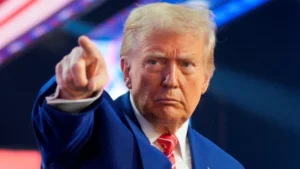
This stance poses a direct challenge to the "Gaza Peace Plan" spearheaded by the administration of U.S. President Donald Trump. The Trump-led initiative, which has gained traction among some regional powers, hinges on a "Day After" scenario that requires Hamas to fully disarm and relinquish its administrative control over Gaza in exchange for a total Israeli military withdrawal and a multi-billion dollar reconstruction package.
However, the Al-Hayya-led leadership appears poised to block such proposals. Negotiations involving mediators from Egypt, Qatar, and Turkey, as well as envoys from the "Trump Peace Council," have so far reached a stalemate. The insistence by the new Hamas leadership on maintaining its weapons cache and its right to "resistance" remains the primary obstacle to a comprehensive settlement.
Chronology of the Leadership Transition (2024–2026)
To understand the context of Al-Hayya’s election, one must look at the timeline of the leadership crisis that preceded it:
- July 2024: Ismail Haniyeh is assassinated in Tehran. Hamas appoints Yahya Sinwar, the leader inside Gaza, as the overall head of the political bureau.
- October 2024: Yahya Sinwar is killed during an IDF operation in Rafah, Gaza. Hamas enters a period of collective leadership.
- Late 2024 – Mid 2025: A five-member committee is formed to manage the movement’s affairs. Khalil Al-Hayya takes the lead in international negotiations.
- January 2025: The General Shura Council begins the formal process of selecting a permanent successor, but the process is hampered by the expansion of the conflict into Lebanon and direct Iran-Israel exchanges.
- Early 2026: Diplomatic pressure from the U.S. and regional mediators intensifies for Hamas to accept a disarmament-for-peace deal.
- July 20, 2026: Hamas officially announces Khalil Al-Hayya as the new Chairman of the Political Bureau.
Regional and International Reactions
While official state responses have been measured, the undercurrent of the international reaction is one of concern. Israeli officials have long viewed Al-Hayya as a legitimate target, noting that he was among the high-ranking Hamas officials targeted during previous operations in Doha and Gaza. The Israeli government has reiterated its stance that it will not negotiate with any leadership that remains committed to the destruction of the state of Israel.
In Washington, the appointment is likely to be seen as a setback for the Trump administration’s efforts to stabilize the region. By choosing a leader so closely aligned with Tehran, Hamas has effectively doubled down on its role as a regional proxy, complicating the efforts of Arab nations like Egypt and Jordan who are seeking a more moderate Palestinian path forward.
For Iran, the election of Al-Hayya is a significant victory. It ensures that Hamas remains a key pillar of the "Axis of Resistance" and prevents the movement from drifting toward a more independent or Turkish-aligned political path, which had been a concern during Ismail Haniyeh’s later years.
Conclusion: The Road Ahead
As Khalil Al-Hayya takes the helm, the path toward a ceasefire in Gaza remains fraught with difficulty. His leadership signifies that Hamas is not yet ready to transition into a purely political entity. Instead, the movement appears prepared to endure continued military pressure in the hope of outlasting the political will of its adversaries.
The "Al-Hayya era" will likely be defined by a stubborn adherence to the principles of armed resistance and a rejection of any peace plan that necessitates the surrender of the group’s military capabilities. For the millions of civilians in Gaza and the surrounding region, this leadership change suggests that the cycle of conflict is far from over, as both sides remain entrenched in their respective visions for the future of the Palestinian territories. With Al-Hayya at the wheel, the "resistance" remains the priority, even as the world watches and waits for a breakthrough that remains increasingly elusive.