Socio Today
The city of Depok, currently a bustling satellite metropolis situated in the West Java province of Indonesia, holds a historical legacy that diverges sharply from the standard narrative of Indonesian regional development. While today it is recognized as a strategic urban center and a hub for higher education, few realize that for nearly 250 years, Depok functioned as an autonomous entity—a "state within a state"—governed by its own administration and led by democratically elected presidents. This unique socio-political experiment predates the Republic of Indonesia’s independence and offers a fascinating glimpse into a colonial-era anomaly that transformed a wilderness into a self-sustaining republic.
The Genesis of a Private Estate
The history of Depok began in the late 17th century, a period dominated by the expansion of the Dutch East India Company (VOC). In 1696, Cornelis Chastelein, a high-ranking official and member of the Council of the Indies (Raad van Indië), purchased a vast tract of land measuring approximately 12.44 square kilometers. Chastelein, a man of significant wealth and progressive—albeit paternalistic—ideals, acquired the territory for a sum equivalent to 2.4 million copper doits. Unlike most land holdings during the VOC era, this territory was designated as a particulier land (private estate), meaning it operated outside the direct administrative jurisdiction of the colonial government in Batavia (modern-day Jakarta).
At the time of purchase, the region was a dense, untamed jungle. Chastelein’s vision for the land was not merely commercial but also social and religious. As a devout Christian, he sought to create a self-sufficient community. To clear the land and establish agricultural plantations, Chastelein brought in approximately 150 workers and slaves from various parts of the Indonesian archipelago, including Bali, Makassar, Timor, and Ambon. These individuals were not merely laborers; they were the founding citizens of what would become the Depok community.
The Manumission and the Twelve Clans
The most significant turning point in Depok’s history occurred upon Cornelis Chastelein’s death on June 28, 1714. In a move that was radical for the 18th century, Chastelein’s will granted freedom to all his slaves. Furthermore, he bequeathed the entirety of the 1,244-hectare estate to these newly freed individuals and their descendants. This act of manumission was accompanied by the condition that they convert to Christianity and cultivate the land collectively.
The freed individuals were organized into twelve distinct clans or "marga," which became the social backbone of Depok. These clans were: Jonathans, Laurens, Bacas, Loen, Soedira, Isakh, Samuel, Leander, Joseph, Tholense, Jacob, and Zadokh. To this day, many of these surnames persist among the original inhabitants of Depok, often referred to as "Belanda Depok" (Depok Dutch), despite their diverse ethnic roots across the Indonesian archipelago.
To prevent internal conflict over the newly inherited land, Chastelein appointed an overseer named Jarong van Bali to manage the transition. However, as the community grew, the need for a formal governance structure became apparent. The residents, fearing that the death of their original leaders would lead to chaos or the loss of their land to the colonial government, decided to implement a democratic system.
The Rise of the Republic of Depok
By the 19th century, Depok had evolved into a sophisticated administrative enclave known as Het Gemeente Bestuur van Het Particuliere Land Depok (The Municipal Government of the Private Estate of Depok). This entity operated with a degree of autonomy that was virtually unheard of in the Dutch East Indies. While the surrounding territories were under the iron grip of the colonial administration, Depok held its own elections to choose a leader.

The formalization of this "republican" structure reached its zenith in 1913. A legal framework, designed with the assistance of lawyers from Batavia, established the office of the President. The President served as both the head of state and the head of government, assisted by a secretary and a council of elders. These leaders were elected democratically by the members of the twelve clans for a term of three years.
The first President of Depok, Gerrit Jonathans, took office in 1913. His administration focused on maintaining the community’s agricultural productivity and preserving its unique legal status. Following Jonathans, the presidency was held by several other notable figures, including:
- Gerrit Jonathans (Inaugurated 1913)
- Martinus Laurens (Inaugurated 1921)
- Leonardus Leander (Inaugurated 1930)
- Johannes Matjis Jonathans (The final president, serving until 1952)
The center of this mini-republic was located at "Kilometer 0," marked today by the Depok Monument (Tugu Depok). Nearby, the government building served as the seat of power; this structure still stands today, having been repurposed as the Harapan Hospital. During its peak, the "Republic of Depok" managed its own infrastructure, schools, and social welfare systems, funded by the collective agricultural output of the estate.
Geographical and Economic Reach
While the modern city of Depok is concentrated in West Java, the original Chastelein estate and its influence extended much further. At its height, the reach of the Depok administration and its land interests touched areas as far north as Pasar Minggu in South Jakarta and even reached toward the Gambir region in Central Jakarta.
The economy of this autonomous enclave was primarily agrarian. The residents cultivated rice, coffee, and fruit, trading their surplus with the nearby capital of Batavia. Because the land was "particulier," the residents did not pay the same heavy taxes to the Dutch colonial treasury that other indigenous populations were forced to endure. This relative prosperity and legal protection allowed the Depok community to develop a distinct cultural identity—a blend of various Indonesian ethnicities, Dutch language and legal customs, and Protestant Christianity.
The Turmoil of the 1940s: Gedoran Depok
The stability of the Depok republic was shattered by the outbreak of World War II and the subsequent Indonesian National Revolution. Following the surrender of Japan in 1945 and Sukarno’s proclamation of Indonesian independence, Depok found itself in a precarious position. The community, perceived by some Indonesian revolutionaries as being too close to the Dutch due to their religion, language, and historical privileges, became a target.
In October 1945, an event known as "Gedoran Depok" occurred. Revolutionary mobs and local militias, fueled by anti-colonial fervor, attacked the enclave. Many residents were displaced, and the autonomous government was effectively paralyzed. This period of violence marked the beginning of the end for Depok’s special status. The residents, who had enjoyed centuries of self-rule, were forced to navigate a rapidly changing political landscape where "private estates" were viewed as remnants of colonial feudalism.
Integration into the Republic of Indonesia
As the Republic of Indonesia solidified its sovereignty following the Round Table Conference in 1949, the legal status of particuliere landen became untenable. The new Indonesian government sought to centralize administration and redistribute land that had been held under colonial-era private titles.
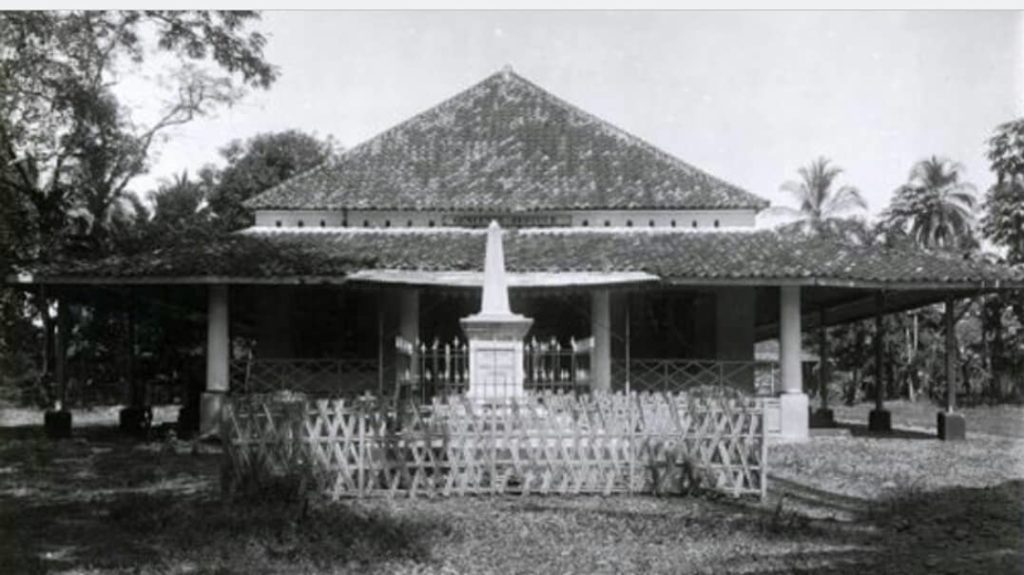
In 1952, the final President of Depok, Johannes Matjis Jonathans, oversaw the formal dissolution of the autonomous government. Through an official act of land transfer, the private estate of Depok was handed over to the Republic of Indonesia. In exchange for the land, the Indonesian government provided compensation to the descendants of the twelve clans, though many residents felt the loss of their ancestral autonomy deeply.
Following the transfer, Depok was integrated into the Bogor Regency as a district (kecamatan). It remained a quiet, semi-rural area until the late 20th century. The transition from a district to an administrative city occurred in 1982, and finally, on April 27, 1999, Depok was established as a fully independent municipality (Kotamadya) within the province of West Java.
Analysis of Legacy and Modern Implications
The history of Depok serves as a unique case study in Indonesian socio-political development. While most of Indonesia experienced colonization as a direct struggle between the indigenous population and the Dutch state, Depok existed as a third entity—a private, democratic community born from the intersection of colonial wealth and manumitted labor.
The legacy of the "Republic of Depok" is visible today in several ways:
- Demographics: The descendants of the 12 clans still reside in "Depok Lama" (Old Depok), maintaining their genealogical records and community ties.
- Urban Layout: The administrative heart of modern Depok still mirrors the original Kilometer 0 planned by the Chastelein administration.
- Legal Precedent: The transition of Depok from a private estate to a city is often cited in Indonesian legal history regarding the abolition of colonial land rights.
From a sociological perspective, Depok was an early experiment in Indonesian pluralism. By bringing together people from Bali, Sulawesi, and Timor and granting them land and freedom, Chastelein unintentionally created a precursor to the "Bhinneka Tunggal Ika" (Unity in Diversity) ethos, albeit under a specific religious and colonial framework.
Conclusion
Today, Depok is a thriving city of over two million people, known for being the home of the University of Indonesia and a vital residential hub for the Greater Jakarta area. However, the skyscrapers and congested thoroughfares mask a three-hundred-year-old secret. Beneath the veneer of a modern Indonesian city lies the foundation of a sovereign republic that elected its own presidents while the rest of the archipelago was still under monarchical or colonial rule.
The story of Depok is a reminder that history is rarely a straight line. It is a tapestry of anomalies, where a Dutch merchant’s will could create a democratic enclave in the heart of a colonial empire. As Depok continues to grow, the preservation of its unique history—from the 12 clans to the final presidency of 1952—remains essential for understanding the complex identity of this West Javanese powerhouse.