Socio Today
The global smartphone market has recorded one of its weakest quarters in over a decade during the second quarter of calendar year 2026 (Q2 CY2026), a significant downturn driven by a confluence of economic pressures and a seismic shift in the semiconductor industry. Rising prices for key memory components, DRAM and NAND, fueled by manufacturers diverting production capacity to meet the insatiable demand from AI data centers, have dramatically escalated smartphone production costs. This surge in expenses arrives at a time when global consumers are exhibiting heightened price sensitivity amidst persistent economic uncertainties, creating a challenging environment for most device manufacturers. Yet, against this backdrop of widespread decline, two industry titans, Apple and Samsung, have managed to defy the trend, emerging demonstrably stronger in terms of market share.
A Market in Retreat: Unpacking the Q2 2026 Decline
The data from leading market research firms paints a grim picture for the overall smartphone sector. Counterpoint Research reported an 11 percent year-on-year (YoY) decline in global smartphone shipments for Q2 CY2026, marking it as the weakest second-quarter performance since 2013. This figure underscores a profound contraction, indicating that the market has not seen such a significant slump in quarterly shipments for well over a decade.
While other firms offered slightly varied estimates, the underlying trend of decline remained consistent. Omdia, another prominent market intelligence provider, estimated a comparatively smaller, but still significant, 4 percent decrease in shipments. Meanwhile, International Data Corporation (IDC), a long-standing tracker of the global technology market, projected Q2 CY2026 shipments at 277.5 million units, representing a 6.7 percent YoY drop. Despite these minor discrepancies in percentage points and absolute unit figures, the consensus among these research powerhouses was unmistakable: the smartphone market is contracting, and rapidly. The decline is not merely a cyclical dip but signals deeper structural challenges impacting the industry.
The AI Revolution’s Unintended Consequence: Soaring Memory Costs
The primary catalyst for this unprecedented increase in smartphone production costs lies within the semiconductor supply chain, specifically the market for DRAM (Dynamic Random-Access Memory) and NAND (Not-AND) flash memory. These components are fundamental to the operation of every modern smartphone, providing the necessary temporary storage for active applications and permanent storage for data, photos, and the operating system itself.
The dramatic price hike for these essential components can be directly attributed to the explosive growth of artificial intelligence (AI), particularly generative AI and large language models (LLMs). The development and deployment of these advanced AI systems require massive computational power, which in turn demands vast quantities of high-bandwidth memory (HBM) and specialized high-capacity storage solutions within AI data centers. Memory manufacturers, recognizing the significantly higher profit margins and burgeoning demand in the AI segment, have strategically reallocated substantial portions of their production capacity away from traditional DRAM and NAND products used in consumer electronics, including smartphones.
This strategic pivot began to take shape in late 2025 and intensified into early 2026. As memory suppliers shifted their focus to cater to the booming AI sector, the available supply for smartphone-grade memory components dwindled. This reduction in supply, coupled with steady demand (even if declining overall for smartphones), inevitably led to sharp price increases. Industry analysts estimate that some smartphone manufacturers are now paying four to five times more for the same memory components compared to just a year ago.
Omdia’s detailed analysis further illuminates the severity of this cost inflation, particularly for lower-end devices. According to their findings, memory and storage now account for over 60 percent of the Bill of Materials (BOM) for entry-level smartphones priced under $100. For devices in the $100 to $400 range, memory can still represent up to 59 percent of the total production cost. While the proportion decreases for premium devices—around 28 percent for phones priced between $600 and $800, and slightly over a quarter for those above $800—the absolute increase in cost is still substantial across all segments. This disproportionate impact on lower-tier devices has profound implications for manufacturers whose portfolios are heavily weighted towards the budget and mid-range segments.
The Resilient Duo: Apple and Samsung Capitalize on Disruption
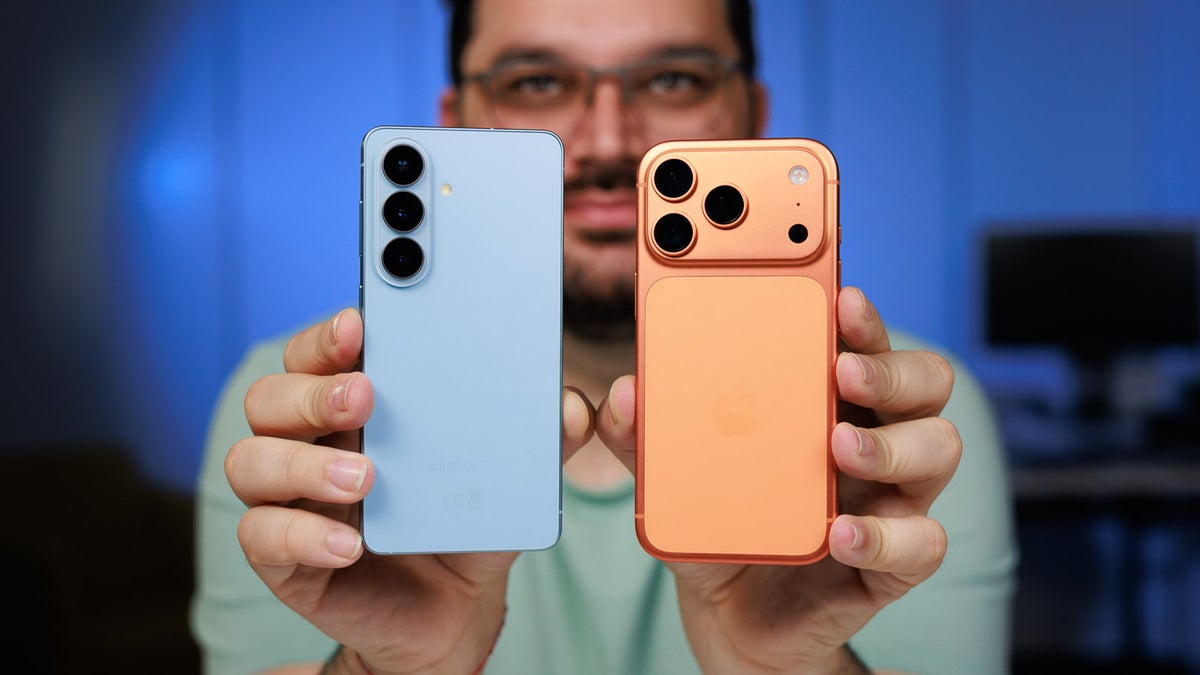
Amidst the broader market turmoil, Apple and Samsung stood out as notable exceptions, demonstrating remarkable resilience and even gaining market share. This phenomenon underscores their strategic advantages, encompassing brand loyalty, diversified product portfolios, and, crucially, formidable supply chain leverage.
Samsung, the South Korean technology giant, reclaimed its position as the global market leader in Q2 CY2026. Counterpoint data awarded Samsung a 24 percent market share, while Omdia estimated it at 22 percent. This achievement is particularly significant as Samsung recorded the strongest growth among the top five smartphone brands, defying the overall market contraction. Samsung’s broad product portfolio, spanning from entry-level Galaxy A series to premium Galaxy S and Z series, allows it to cater to a wide demographic. However, its primary advantage in this challenging climate stems from its vertical integration and immense purchasing power. As a major producer of memory components itself, Samsung possesses an inherent degree of supply chain stability and preferential allocation that smaller OEMs cannot match. Even for components sourced externally, its sheer scale enables it to negotiate more favorable terms and secure consistent supply, mitigating the impact of volatile memory prices.
Apple, the Cupertino-based tech behemoth, also reported an impressive performance. The company saw a 3 percent year-on-year increase in iPhone shipments, a modest but significant growth given the prevailing market conditions. This propelled its market share to a record 20 percent for a second quarter, which Omdia described as the company’s strongest Q2 performance in its history. Apple’s success is largely attributed to its premium positioning, robust brand ecosystem, and an exceptionally loyal customer base that exhibits less price sensitivity than consumers in lower-tier segments. Furthermore, Apple’s strategic pricing decisions during the quarter played a pivotal role in maintaining demand.
The Plight of the Challengers: Xiaomi, OPPO, and Vivo Face Headwinds
In stark contrast to Apple and Samsung, major Chinese smartphone manufacturers such as Xiaomi, OPPO, and Vivo experienced significant setbacks in Q2 CY2026. All three companies recorded double-digit year-on-year declines in shipments and consequently lost market share. The reasons for their struggles become evident when viewed through the lens of the ongoing memory shortage and cost inflation.
These manufacturers have historically built their market presence on offering feature-rich smartphones at highly competitive prices, particularly in the budget and mid-range segments. Omdia’s analysis from Q1 CY2026 revealed that over half of Xiaomi’s global shipments, for instance, were in the sub-$200 price segment. This is precisely where the inflation in memory costs has had the most devastating impact, accounting for the largest proportion of their Bill of Materials.
With memory costs soaring, these companies face a difficult dilemma: either absorb the increased costs and accept drastically reduced profit margins, or raise retail prices and risk alienating their price-sensitive customer base. Unlike Apple and Samsung, whose premium segments can buffer some of these shocks, Xiaomi, OPPO, and Vivo remain heavily reliant on these cost-sensitive market segments. Their limited flexibility in adjusting prices without losing competitiveness has directly translated into reduced shipments and market share.
Strategic Responses to Cost Pressures: A Divergent Path
The disparate impact of rising component costs has led to divergent strategic responses from the industry’s leading players.
Apple adopted a highly strategic approach by initially shielding its flagship iPhone lineup from price increases during Q2 CY2026. This decision helped sustain demand for the iPhone 17 series in key markets, even as competitors were forced to repeatedly adjust their pricing upwards. However, Apple’s restraint was not universal across its entire hardware portfolio. On June 25th, the company notably raised prices for its iPads, Macs, MacBooks, and various home products. This move followed statements from CEO Tim Cook to The Wall Street Journal, acknowledging that higher component costs had become unsustainable. By protecting the iPhone, Apple effectively safeguarded its most strategic and highest-volume product line ahead of its next major launch cycle. Analysts, including Navkendar Singh, Associate Vice President at IDC India, widely anticipate that Apple will incorporate price increases of approximately $100 to $150 across the next generation of iPhones, expected later this year, to fully recover these accumulated costs. This tiered approach allows Apple to manage public perception and gradually pass on costs while maintaining the perceived value of its core product.
Samsung has implemented a similar, albeit more nuanced, strategy, leveraging its diverse product mix. Price increases were more visibly applied to its mid-range Galaxy F and M series devices, while its premium Galaxy S and Z series models largely maintained their pricing during the quarter. This mirrors Apple’s broader strategy: protecting the flagship products that reinforce the brand’s premium positioning while recovering higher component costs through models in lower, yet still significant, price segments. Samsung’s ability to selectively adjust prices across its extensive portfolio provides it with a crucial advantage in navigating the current economic headwinds.
For Xiaomi, OPPO, and Vivo, replicating such a strategy is considerably more challenging. Premium smartphones constitute only a small fraction of their total shipments, meaning they have less leverage to offset increased costs by raising prices on a limited number of high-margin devices. As Shilpi Jain, Senior Analyst at Counterpoint, observed, the low-end and mid-range smartphone segments, which account for the majority of global shipments, have become exceedingly difficult to maintain at their previous price points. Faced with the unrelenting pressure of memory scarcity and cost inflation, these manufacturers have been compelled to adopt various survival tactics: some are accepting significantly lower profit margins; others are extending the lifecycle of existing products to delay the need for new, more expensive component purchases; and some have even reduced the pace of new product launches altogether, effectively slowing their market expansion.
Broader Implications and Future Outlook
The events of Q2 CY2026 carry significant implications for the future trajectory of the global smartphone market. The widening gap between the market leaders and their challengers suggests a potential acceleration of market consolidation. Smaller OEMs, already operating on tighter margins, may find it increasingly difficult to compete without substantial vertical integration or strategic partnerships to secure component supply.
Furthermore, the disproportionate impact of memory costs on budget devices could stifle innovation in these crucial segments. As manufacturers prioritize cost recovery, investment in new features, designs, or performance upgrades for affordable smartphones might be curtailed, potentially limiting consumer choice and slowing technology adoption in emerging markets.
The emphasis on supply chain resilience has never been more pronounced. Companies with strong relationships with suppliers, or those with internal component manufacturing capabilities (like Samsung’s semiconductor division), are clearly at an advantage. This could lead to a strategic reassessment by many OEMs, potentially fostering greater vertical integration efforts or deeper, more exclusive partnerships with key component providers.
Looking ahead, the stability of memory prices remains a critical factor. While the immediate surge is tied to AI data center demand, the semiconductor industry is inherently cyclical. However, the sustained growth trajectory of AI suggests that the demand for high-performance memory will likely remain robust for the foreseeable future, potentially keeping traditional memory prices elevated or at least preventing a rapid return to previous lows. The integration of AI capabilities into smartphones themselves could also reshape future component requirements, leading to new waves of demand and potentially further supply chain adjustments.
As the industry moves into the latter half of 2026, all eyes will be on how manufacturers adapt to these new realities. Consumers can likely expect higher prices across a broader range of devices, while the competitive landscape may see further shifts as companies recalibrate their strategies to survive and thrive in an environment profoundly shaped by the AI revolution’s insatiable hunger for memory. The current period is not just a downturn, but a fundamental reordering of priorities and power dynamics within the global technology ecosystem.