Socio Today
The geopolitical landscape of the Middle East has entered a period of unprecedented volatility following the publication of a "retaliation list" by Hamshahri, a prominent media outlet closely affiliated with the Iranian government. The publication, which features the names and images of thirteen high-ranking global political and military figures, identifies these individuals as primary targets for revenge following the death of Iran’s Supreme Leader, Ayatollah Ali Khamenei. This development comes at a time of extreme friction between Tehran, Washington, and Tel Aviv, signaling a potential shift in Iran’s strategic posturing under its new leadership.
The list was presented in the form of a highly provocative infographic, depicting the thirteen figures dressed in orange jumpsuits—a visual trope often associated with prisoners or those awaiting execution. Among the most prominent names featured are United States President-elect Donald Trump and Israeli Prime Minister Benjamin Netanyahu. The imagery included crosshair symbols superimposed over the heads of several leaders, accompanied by captions asserting that "vengeance is a national demand." While the Iranian government has not officially ratified this list as formal state policy, the affiliation of Hamshahri with the Tehran municipality and the broader state apparatus suggests that the publication serves as a significant instrument of psychological warfare and political messaging.
The Succession of Ayatollah Mojtaba Khamenei
The release of the list follows the ascension of Ayatollah Mojtaba Khamenei as the new Supreme Leader of the Islamic Republic. In his inaugural address, Mojtaba Khamenei addressed a nation in mourning, emphasizing that the blood of his father would not go unavenged. He characterized the pursuit of those responsible for the elder Khamenei’s death as a fundamental duty of the Iranian state and its people. Although his speech stopped short of naming specific individuals for assassination, the rhetoric provided the ideological framework for the Hamshahri publication.
Mojtaba Khamenei’s rise to power marks a critical juncture in Iranian history. Long considered a powerful figure behind the scenes, his formal assumption of the leadership role suggests a consolidation of power within the most conservative factions of the Iranian establishment. Analysts suggest that the new Supreme Leader may adopt a more confrontational stance toward the West and Israel to solidify his domestic legitimacy and appease hardline elements within the Islamic Revolutionary Guard Corps (IRGC).
A Detailed Breakdown of the Thirteen Targets
The list published by Hamshahri is notable not only for its high-profile inclusions but also for its inclusion of European leaders, suggesting that Tehran views the current conflict as a broader struggle against a Western-led coalition. The thirteen individuals identified are:
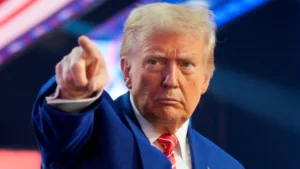
- Donald Trump (President-elect of the United States): Trump’s inclusion is tied to his previous administration’s "maximum pressure" campaign and the 2020 assassination of Qasem Soleimani.
- Benjamin Netanyahu (Prime Minister of Israel): As the primary architect of Israel’s military operations against Iranian interests, Netanyahu is viewed by Tehran as the chief antagonist.
- Israel Katz (Minister of Defense, Israel): Katz’s role in overseeing direct military strikes against Iranian infrastructure places him at the forefront of the list.
- Pete Hegseth (Designated Secretary of Defense, United States): His inclusion reflects Tehran’s concerns over the incoming U.S. administration’s hawkish stance.
- Marco Rubio (Designated Secretary of State, United States): Known for his hardline views on Iran, Rubio is seen as a key figure in future diplomatic and economic containment efforts.
- Emmanuel Macron (President of France): Macron’s inclusion signals Iran’s displeasure with French support for Israel and the enforcement of European sanctions.
- Keir Starmer (Prime Minister of the United Kingdom): The UK’s consistent military and intelligence cooperation with the U.S. in the region has made its leadership a target of Iranian rhetoric.
- Friedrich Merz (Likely Chancellor Candidate, Germany): The inclusion of Merz suggests Iran is monitoring political shifts in Europe, targeting those who advocate for a tougher stance against Tehran.
- Giorgia Meloni (Prime Minister of Italy): Meloni’s government has been vocal in its support for Israel’s security, drawing the ire of Iranian state media.
- Mike Huckabee (Designated U.S. Ambassador to Israel): His appointment is viewed by Tehran as a signal of unwavering U.S. support for Israeli territorial claims.
- Brad Cooper (Commander, CENTCOM/Vice Admiral): As a key military figure in the U.S. Central Command, Cooper represents the direct military threat to Iranian naval and regional operations.
- Gideon Sa’ar (Foreign Minister of Israel): Sa’ar’s diplomatic efforts to isolate Iran internationally have placed him in the crosshairs of state-affiliated media.
- Additional High-Ranking Military Personnel: The list also targets specific operational commanders involved in the joint U.S.-Israeli strike that led to the death of Ali Khamenei.
Chronology of Escalation
The current crisis is the culmination of a series of escalatory events that have pushed the Middle East to the brink of a regional war. The timeline of recent events provides essential context for the current threats:
- The October 7 Aftermath: Following the attacks on Israel and the subsequent war in Gaza, Iran’s "Axis of Resistance"—including Hezbollah, the Houthis, and various militias in Iraq and Syria—intensified attacks on Israeli and U.S. assets.
- Direct Confrontations: Throughout the past year, Israel and Iran transitioned from a "shadow war" to direct exchanges of missile and drone strikes.
- The Strike on Ali Khamenei: According to regional reports, a sophisticated joint operation involving U.S. intelligence and Israeli precision munitions targeted a high-security compound, resulting in the death of the Supreme Leader. This event fundamentally altered the "rules of engagement" that had existed for decades.
- The Transition of Power: Within days of the death, Mojtaba Khamenei was consolidated as the successor, and the rhetoric of "severe revenge" became the central theme of state media.
Regional and Maritime Security Implications
The threats issued by Iranian-affiliated media have immediate practical implications for regional security, particularly concerning global trade and maritime safety. The Strait of Hormuz, a chokepoint through which approximately one-fifth of the world’s oil passes, has once again become a focal point of tension.
In response to the heightened risk of Iranian naval retaliation, the Indian government recently issued a directive prohibiting its citizens from working on vessels transiting the Strait of Hormuz. This move underscores the international community’s concern that Iran may use its naval capabilities to harass commercial shipping as a form of asymmetric retaliation. Iranian parliamentary officials have reiterated that the security of the region depends on "arrangements" that respect Iranian sovereignty, a statement widely interpreted as a threat to disrupt shipping if Western pressure continues.
Furthermore, the "Axis of Resistance" is expected to play a crucial role in any coordinated response. Hezbollah in Lebanon and the Houthis in Yemen have already signaled their readiness to escalate operations. The Houthis, in particular, have demonstrated the capability to disrupt Red Sea shipping, and any expansion of these activities to the Arabian Sea or the Indian Ocean would have profound effects on global supply chains.
Analysis: Propaganda vs. State Policy
While the Hamshahri list is a significant escalation in rhetoric, it is essential to distinguish between media propaganda and official state policy. Historically, Iran has used state-affiliated media to voice threats that the official diplomatic corps might avoid. This allows the state to maintain "plausible deniability" while still projecting strength to its domestic audience and regional proxies.
However, the specific nature of this list—naming European leaders and incoming U.S. cabinet members—suggests a more aggressive posture. By targeting individuals like Marco Rubio and Pete Hegseth before they have even taken office, Tehran is attempting to set a deterrent tone for the next U.S. administration.
From a security perspective, the naming of these individuals necessitates an immediate increase in protective details and intelligence monitoring. For the European leaders mentioned, the inclusion is a stark reminder that Tehran no longer views Europe as a neutral mediator but as an active participant in the conflict.
International Response and the Path Forward
The international response to the Hamshahri publication has been one of cautious vigilance. U.S. officials have reaffirmed their commitment to the security of their personnel and allies, stating that any attempt to harm American officials would be met with a "decisive and overwhelming" response. Israel has similarly maintained a high state of alert, with Prime Minister Netanyahu stating that Israel is prepared for any scenario.
Diplomatically, the situation remains at a stalemate. Iranian diplomats have argued that U.S. and European pressure is "no longer effective" and that the Islamic Republic will pursue its strategic interests regardless of sanctions. This defiance, coupled with the new leadership’s need to prove its resolve, suggests that the cycle of provocation and retaliation is likely to continue.
The publication of the 13-person "retaliation list" serves as a grim indicator of the current state of international relations in the Middle East. It reflects a breakdown of traditional diplomatic channels and a shift toward a more volatile and unpredictable era of confrontation. As the region waits for the next move from the new leadership in Tehran, the global community remains on edge, recognizing that a single miscalculation could ignite a conflict with global repercussions.