Socio Today
The Indonesian government has officially announced that Rusal, one of the world’s largest aluminum producers based in Russia, is poised to enter the Indonesian market to develop a major bauxite refining facility. This strategic investment, which aligns with Indonesia’s aggressive downstream industrialization agenda, follows high-level diplomatic and economic engagements between President Prabowo Subianto and Russian leadership. The collaboration marks a significant milestone in bilateral economic relations, signaling a shift toward deeper industrial integration between the two nations in the resource-processing sector.
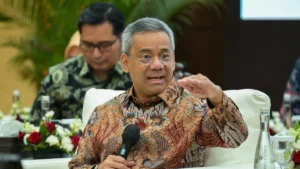
Minister of Energy and Mineral Resources (ESDM) Bahlil Lahadalia confirmed on Friday, September 11, that the project is currently in the advanced stages of administrative preparation. The facility, intended to process bauxite ore into alumina, is earmarked for construction in Kalimantan, a region central to Indonesia’s mining and industrial operations. By partnering with domestic Indonesian companies, Rusal aims to leverage local expertise and regulatory frameworks to establish a robust supply chain within the archipelago.
Chronology of Diplomatic and Economic Engagement
The momentum for this project crystallized during President Prabowo Subianto’s recent visit to Russia. The sequence of events leading to the official announcement reflects a concerted effort by both nations to expand their economic cooperation beyond traditional sectors.
- Early September 2024: President Prabowo Subianto attended the Eastern Economic Forum (EEF) in Vladivostok, Russia. During his address on Thursday, September 4, the President emphasized Indonesia’s openness to Russian investment, explicitly mentioning Rusal’s interest in large-scale refinery development.
- Post-Forum Deliberations: Following the EEF, technical teams from both the Indonesian Ministry of ESDM and Rusal began formalizing the regulatory requirements and collaboration frameworks.
- September 11, 2024: Minister Bahlil Lahadalia confirmed that the licensing process is nearing completion, underscoring the government’s commitment to accelerating the project’s timeline.
This trajectory reflects the Indonesian government’s strategy of courting global players to enhance the value-added component of its natural resource exports, moving away from the raw export model that has historically characterized the nation’s mining sector.
The Strategic Importance of Bauxite Downstreaming
Indonesia holds some of the world’s largest bauxite reserves, essential for the production of aluminum—a metal increasingly in demand due to its role in the global energy transition, automotive manufacturing, and aerospace industries. For years, the Indonesian government has implemented a ban on the export of raw bauxite ore to force mining companies to invest in domestic processing facilities.
The entry of Rusal is particularly significant because it brings not only capital but also deep technical proficiency in aluminum smelting and alumina refining. Rusal’s global footprint, which spans across multiple continents, provides Indonesia with access to advanced processing technology that can improve the efficiency of local refineries.
According to Ministry of ESDM data, the development of an alumina refinery in Kalimantan is expected to create thousands of jobs, ranging from construction labor to highly skilled engineering and management positions. Furthermore, this project is expected to stimulate the local economy in Kalimantan, which has historically been dependent on coal and palm oil.
Official Responses and Government Stance
Minister Bahlil Lahadalia emphasized that the government is ensuring that this foreign investment is not a standalone operation but a joint venture with local Indonesian entities. This "collaboration model" is a cornerstone of the current administration’s policy to ensure that domestic players are not sidelined by international giants.
"We are currently in the final stages of the licensing process. The key here is the collaboration; they are working hand-in-hand with domestic business groups to ensure that technology transfer and economic benefits remain within the country," Bahlil stated during the press briefing at his office.
President Prabowo, during his time in Vladivostok, highlighted that the cooperation with Rusal is part of a broader vision to strengthen Indonesia’s industrial independence. "We are looking forward to increasing the number of partnerships between Russia and Indonesia. Rusal’s entry is a clear indication that Indonesia is a viable and attractive destination for large-scale, high-technology industrial investments," the President noted.
Implications for the Global Aluminum Market
The inclusion of Rusal in the Indonesian market carries significant geopolitical and economic implications. As global supply chains diversify, Russia is increasingly looking toward the Global South, particularly Southeast Asia, to mitigate the impact of Western sanctions. For Indonesia, the partnership provides a reliable partner willing to invest in long-term infrastructure, despite the complex geopolitical climate.
Industry analysts suggest that the project will likely increase Indonesia’s position in the global alumina supply chain. By refining bauxite domestically, Indonesia can command higher prices for its refined products compared to raw ore, significantly improving the country’s trade balance.
However, the project also faces challenges. Environmental regulations regarding bauxite mining and refining are stringent in Indonesia. The process of converting bauxite to alumina generates "red mud" or bauxite residue, which requires sophisticated waste management facilities. Observers note that the success of the Rusal project will depend on strict adherence to environmental, social, and governance (ESG) standards, which are increasingly scrutinized by international investors and local civil society.
Economic Analysis: A Catalyst for Growth
The partnership is expected to serve as a catalyst for further industrial development. If the Kalimantan facility proves successful, it could pave the way for downstream investments in aluminum smelting, which would allow Indonesia to produce finished aluminum products. This would be a significant upgrade from the current plan of merely producing alumina.
The financial scope of the project, while not yet officially disclosed in exact monetary terms, is categorized as "large-scale" by the Indonesian government. This suggests an investment value likely in the range of hundreds of millions to billions of dollars, depending on the scale of the refinery’s capacity.
Furthermore, the involvement of domestic partners ensures that Indonesian companies will gain equity and management experience in the refinery. This is part of the government’s broader "hilirisasi" (downstreaming) program, which aims to maximize the value-added of natural resources through domestic processing.
Addressing Potential Challenges
While the announcement has been met with optimism, stakeholders are monitoring several critical factors:
- Technological Integration: The integration of Rusal’s proprietary refining technology with Indonesian operational standards will require significant training and logistical coordination.
- Infrastructure Readiness: Kalimantan’s existing energy and transportation infrastructure must be capable of supporting the high energy demands of a major refinery. The government has previously indicated that it is prioritizing the development of special economic zones (SEZs) to provide the necessary support for such projects.
- Global Market Volatility: Aluminum prices are subject to global commodity market fluctuations. The long-term viability of the project will depend on the stability of global demand for alumina and the operational cost-effectiveness of the Kalimantan facility.
Conclusion
The entry of Rusal into Indonesia’s bauxite refining sector represents a landmark development in the nation’s industrial roadmap. By aligning its vast mineral reserves with Russian technical expertise, Indonesia is taking a concrete step toward becoming a global hub for aluminum processing. As the licensing phase concludes and the project moves toward ground-breaking, the eyes of the global mining community will be on this partnership to see how it navigates the complexities of international trade, environmental mandates, and domestic industrial goals.
For the Indonesian government, the success of this initiative is vital to proving that its resource nationalism policy—specifically the ban on raw ore exports—is a sustainable path toward economic prosperity. With the support of established global players like Rusal, the administration of President Prabowo Subianto aims to solidify Indonesia’s role as an indispensable player in the global mineral and energy transition supply chain.