Socio Today
Jakarta, CNN Indonesia — The Indonesian government has officially designated state-owned defense and electronics manufacturer PT Len Industri (Persero) as the primary executor and lead integrator for the National Electric Motorcycle, or Motor Listrik Nasional (Molinas), program. This strategic appointment is formally anchored in an assignment letter issued by the Ministry of State Secretariat under the reference number B-15/M/SDK/KI.00/08/2026, signed by Minister of State Secretariat Prasetyo Hadi.
The policy marks a pivotal milestone in Indonesia’s broader industrial transformation agenda, aiming to accelerate the electrification of national transport, reduce reliance on fossil fuels, and build a robust, self-sustaining domestic automotive ecosystem. According to the official directive, the mandate stems directly from directives delivered by President of the Republic of Indonesia during a limited cabinet meeting convened on July 14, 2026. The presidential directive emphasized the necessity of achieving national automotive industrial independence while simultaneously deepening domestic industrial downstreaming efforts.
Following the presidential mandate, the formal assignment letter was issued on August 12, 2026. It tasks PT Len Industri with orchestrating and executing the Molinas program through structured coordination with relevant ministries, non-ministerial government agencies, and state-owned enterprises. Furthermore, the document mandates that PT Len Industri submit regular, periodic progress reports regarding the implementation of the program directly to the President via the Ministry of State Secretariat.
Strategic Architecture and the Role of PT Len Industri as Lead Integrator
The operational blueprint for the Molinas program was detailed by Setia Diarta, Director General of Metal, Machinery, Transportation Equipment, and Electronics (ILMATE) at the Ministry of Industry, during a working meeting with Commission VII of the House of Representatives (DPR RI) on Thursday, September 10, 2026. During the hearing, Setia elaborated on the comprehensive industrial framework designed to support the national electric motorcycle initiative, highlighting PT Len Industri’s central positioning within the supply chain.
"PT Len will serve as the lead integrator of the National Electric Motorcycle program," Setia stated before the parliamentary commission, outlining the sprawling ecosystem engineered to support the initiative.
Under the finalized operational framework, the Molinas ecosystem will operate under the overarching coordination of Danantara, Indonesia’s newly empowered super-holding entity for state-owned assets. Within this grand strategy, PT Len Industri’s responsibilities are multifaceted, encompassing core competencies such as product design, research and development (R&D), advanced manufacturing, vehicle assembly, and the deployment and management of public charging stations.
The production and supply of critical lithium-ion battery components will be spearheaded by Indonesia Battery Corporation (IBC), working in tandem with strategic international partnerships, including established joint ventures like CATIB and CATL, whose advanced production facilities in Karawang, West Java, have recently reached completion. Meanwhile, the extensive distribution, retail, and after-sales maintenance network will leverage grassroots infrastructure by involving the Koperasi Merah Putih and other established state-owned enterprises. Financial backing, capital structuring, and funding mechanisms will be managed in partnership with PT Sarana Multi Infrastruktur (SMI), ensuring a stable liquidity pipeline for both producers and consumers.
"This is the Molinas ecosystem, and almost all aspects will involve Danantara in the execution process. For research and development, Len will act as the lead integrator, while batteries will involve CATIB and CATL from the facilities already completed in Karawang," Setia explained to legislators.
Technological Readiness and the Genesis of the Sprint E-Bike
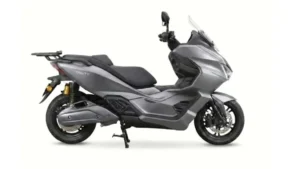
PT Len Industri is not entering the electric vehicle arena without precedent. The state-owned enterprise has already made measurable strides in indigenous electric vehicle development through the creation of its proprietary electric trail motorcycle, known as the Electrical Bike Sprint.
Engineered, tested, and assembled entirely within domestic facilities, the Sprint is presented by company engineers as a testament to Indonesian engineering capabilities. The motorcycle features a robust 3,000-watt electric motor designed to handle rugged terrain and urban environments alike. Performance metrics for the Sprint indicate a maximum cruising range of up to 60 kilometers on a single charge, with top speeds reaching approximately 80 kilometers per hour.
Industry analysts view the development of the Sprint as a crucial proving ground for PT Len Industri. By mastering the integration of high-torque electric motors, lightweight chassis architecture, and battery management systems on a smaller scale, the company has built the institutional knowledge necessary to oversee a national-level manufacturing rollout.
Chronology of the Molinas Initiative
The formal designation of PT Len Industri represents the culmination of years of policy formulation, regulatory adjustments, and strategic repositioning aimed at establishing a homegrown electric vehicle industry in Indonesia.
The concept of Molinas traces its origins back to early initiatives by the government to foster domestic electric vehicle manufacturing, running parallel to policies promoting electric cars under various presidential regulations designed to incentivize low-carbon emission vehicles. However, earlier iterations faced hurdles related to fragmented supply chains, heavy reliance on imported components, and a lack of centralized coordination among state enterprises.
The turning point for the current phase of Molinas occurred in mid-2026. A timeline of key milestones highlights the swift progression of the initiative:
- July 14, 2026: President of the Republic of Indonesia convenes a limited cabinet meeting focusing on industrial downstreaming and automotive self-reliance, culminating in the decision to appoint PT Len Industri as the primary operational vehicle for Molinas.
- August 12, 2026: The Ministry of State Secretariat formalizes the directive through assignment letter number B-15/M/SDK/KI.00/08/2026, outlining PT Len Industri’s reporting duties and inter-agency coordination mandates.
- September 10, 2026: Ministry of Industry officials, led by ILMATE Director General Setia Diarta, brief Commission VII of the House of Representatives (DPR RI), unveiling the comprehensive ecosystem involving Danantara, IBC, Koperasi Merah Putih, and PT Sarana Multi Infrastruktur.
- Late 2026 and Beyond: PT Len Industri prepares to scale up its infrastructure, transitioning from regional testing phases—such as the Electrical Bike Sprint platform—to mass-market production capabilities.
Broader Economic Implications and Strategic Analysis
The structured rollout of the Molinas program carries profound implications for Indonesia’s macroeconomic landscape, industrial sector, and energy transition goals. Economists and industry observers have analyzed the potential impacts across several key dimensions:
-
Strengthening the Downstream Mineral Sector
Indonesia holds the world’s largest reserves of nickel, a critical feedstock for electric vehicle battery chemistry. By embedding Indonesia Battery Corporation, along with international cell manufacturers operating in Karawang, directly into the Molinas supply chain, the government is successfully bridging the gap between raw mineral extraction and finished high-value consumer goods. This prevents the export of unprocessed or semi-processed commodities and retains maximum economic value within domestic borders. -
Fostering Technological Sovereignty
Relying on a defense-oriented state-owned enterprise like PT Len Industri to act as lead integrator brings unique advantages. PT Len possesses extensive experience in complex systems engineering, electronics, and telecommunications—skills that translate effectively into electric vehicle powertrain design, electronic control units (ECUs), and vehicle-to-grid integration. This approach reduces technological dependency on foreign automotive giants and builds local intellectual property. -
Socio-Economic Inclusion and Aftersales Infrastructure
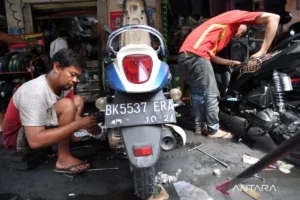
A persistent challenge for electric vehicle adoption in emerging markets is the lack of reliable maintenance networks and charging infrastructure. By integrating the Koperasi Merah Putih and various state-owned entities into the distribution and aftersales domain, the Molinas program creates an inclusive commercial framework. This strategy ensures that local cooperatives and small-to-medium enterprises can participate in the maintenance economy, transforming local mechanics into certified technicians for electric powertrains. -
Accelerating Net-Zero Commitments
As Indonesia pursues its ambitious target of achieving net-zero emissions by 2060 or sooner, decarbonizing the transportation sector is paramount. Two-wheeled motor vehicles constitute the vast majority of the country’s vehicular fleet, numbering in the tens of millions. Providing an affordable, domestically manufactured, and robust electric alternative through Molinas directly addresses the most ubiquitous segment of Indonesian road transport.
Challenges Ahead
Despite the strong political backing and comprehensive institutional framework, industry experts caution that the road ahead is fraught with operational challenges. Successfully executing the Molinas program will require seamless cross-sectoral collaboration, strict adherence to quality control standards, and competitive pricing to win over cost-conscious consumers accustomed to internal combustion engine motorcycles.
Furthermore, building out an extensive charging and battery-swap station network across Indonesia’s diverse geographical terrain requires sustained capital expenditure and robust grid stability. The involvement of PT Sarana Multi Infrastruktur and Danantara will be critical in ensuring that financial bottlenecks do not stall manufacturing momentum.
As PT Len Industri assumes its mantle as the lead integrator, all eyes will be on the state-owned enterprise to demonstrate that domestic industrial policy can successfully marry technological innovation with mass-market commercial viability, ultimately reshaping the future of mobility in Southeast Asia’s largest economy.