Socio Today
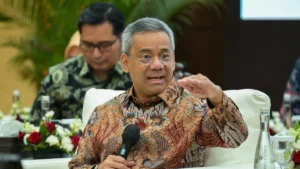
The Chair of the National Economic Council (DEN), Luhut Binsar Pandjaitan, has officially opened high-level negotiations with Chinese authorities regarding the restructuring of the debt incurred by the Whoosh high-speed railway project. During a recent diplomatic visit to Beijing, which spanned from September 15 to September 18, Luhut engaged in a series of strategic discussions with the Chairman of China’s National Development and Reform Commission (NDRC), Zheng Shanjie. The dialogue centered on refining the financial mechanisms governing the Jakarta-Bandung high-speed rail, ensuring that the debt burden remains manageable while maintaining the operational viability of the regional infrastructure asset.
The visit, which included attendance at the China Economic and Social Forum 2026 in Hangzhou and meetings with prominent figures such as Chinese Foreign Minister Wang Yi, marks a critical phase in the administration of President Prabowo Subianto. As the government transitions into its new mandate, the focus has shifted from the completion of the construction phase to the optimization of fiscal liabilities and the potential expansion of the rail network.
Historical Context and Project Chronology
The Jakarta-Bandung High-Speed Railway, rebranded as Whoosh, represents the first of its kind in Southeast Asia. The project began as a centerpiece of the Belt and Road Initiative (BRI) cooperation between Indonesia and China. Formally inaugurated in late 2023, the project aimed to cut travel time between the capital, Jakarta, and the provincial capital of West Java, Bandung, to under 45 minutes.
However, the project faced significant budgetary overruns during its development phase. Initially projected to cost approximately $6 billion, the final price tag saw substantial increases due to land acquisition challenges, technical complexities, and the global economic disruptions caused by the pandemic. These overruns necessitated additional financing, which was secured through loans from the China Development Bank (CDB).
The recent discussions led by Luhut are not the first attempts to address the debt. Throughout the construction phase, various inter-ministerial task forces were established to manage the escalating costs and ensure that Indonesian state-owned enterprises (SOEs) involved in the PT Pilar Sinergi BUMN Indonesia (PSBI) consortium remained solvent. The current focus on restructuring suggests a transition toward a more permanent, long-term repayment framework that aligns with the current fiscal strategy of the Prabowo administration.
Financial Mechanics and Restructuring Proposals
Central to the ongoing negotiations is a proposal to restructure the debt through a long-term installment plan. Previous analysis by financial experts, including former finance officials, has indicated a preference for a repayment scheme involving annual installments of approximately IDR 1 trillion. With a projected tenor reaching up to 80 years, the government aims to lower the immediate impact on the national budget while ensuring steady, predictable cash flows to the Chinese creditors.
The Indonesian government is simultaneously navigating a shift in ownership structure. Current plans involve the Ministry of Finance potentially taking a 60 percent controlling stake in PT Kereta Cepat Indonesia China (KCIC). This move is designed to consolidate management under a state-led entity, streamlining decision-making and financial oversight. The remaining 40 percent stake is held by the Chinese consortium, Beijing Yawan HSR Co. Ltd.
Chief Executive Officer of Danantara Indonesia, Rosan Roeslani, has confirmed that despite administrative changes within the Ministry of Finance, the due diligence process regarding the valuation of these shares is proceeding as planned. This internal auditing is essential for determining the equity split and the final liabilities of the Indonesian state-owned partners.
Official Stance and Diplomatic Synergy
Luhut Binsar Pandjaitan emphasized that the discussions in Beijing were highly productive, noting that Chinese officials expressed no significant objections to the proposed restructuring mechanisms. The "green light" from President Prabowo Subianto has been instrumental in empowering the DEN and the relevant ministries to finalize the technical details of the agreement.
"We cannot simply let this issue persist; it requires a proactive approach," Luhut stated. He underscored that the collaboration between the Ministry of Finance, the Coordinating Ministry for Economic Affairs, and the DEN ensures that all stakeholders are aligned. The close personal rapport between Indonesian officials and their Chinese counterparts has been cited as a key factor in the smooth progression of these high-level negotiations.
From the Chinese perspective, the sustainability of the Whoosh project is seen as a benchmark for successful bilateral cooperation. By ensuring the project is financially stable, both nations aim to maintain the momentum of the Belt and Road Initiative in the region.
Broader Economic Implications and Future Expansion
The impact of Whoosh on the socio-economic landscape of Java has been palpable. The high-speed rail has fundamentally altered commuting patterns, enabling a "megacity" lifestyle where professionals can live in Jakarta and commute daily to Bandung. This increased mobility has spurred economic activity in both cities, leading to calls from various sectors to extend the network to Surabaya.
Luhut confirmed that the potential expansion of the high-speed rail to Surabaya was indeed a topic of conversation during his meetings in China. While the current priority remains the stabilization of the Jakarta-Bandung line, the prospect of a trans-Java high-speed link remains a long-term strategic goal.
However, such an expansion would require an even more robust financial model. The government is currently evaluating the necessity of appointing a specific coordinating minister—potentially someone like Agus Harimurti Yudhoyono—to oversee the continuity of these large-scale infrastructure projects. This institutional continuity is vital to assure international investors and partners that infrastructure projects in Indonesia are insulated from the volatility of political transitions.
Analysis: Challenges and Opportunities
The decision to transition ownership to the Ministry of Finance reflects a strategic shift toward treating the high-speed railway as a public utility rather than purely a commercial venture. While this minimizes the risk of default for individual SOEs, it places a direct responsibility on the national fiscal budget.
The success of this restructuring hinges on three primary factors:
- Ridership Growth: Maintaining and increasing the number of daily passengers is critical to generating operational revenue to offset maintenance and repayment costs.
- Operational Efficiency: The transition to the Ministry of Finance must be accompanied by rigorous management standards to prevent the accumulation of further hidden debt.
- Diplomatic Relations: The willingness of Chinese creditors to accept an 80-year tenor indicates a high level of diplomatic trust, which must be maintained through transparent governance and timely communication.
As the administration continues its due diligence, the eyes of the international financial community remain fixed on Jakarta. The outcome of the Whoosh debt restructuring will likely set a precedent for how Indonesia manages its foreign debt portfolio in the context of major infrastructure projects in the coming decade.
Conclusion
As of late 2026, the progress on the Whoosh debt restructuring remains a cornerstone of Indonesia’s infrastructure diplomacy. With the support of the National Economic Council and a clear mandate from the President, the government appears poised to finalize a sustainable path forward. By balancing fiscal responsibility with the long-term goal of connectivity, Indonesia aims to leverage its high-speed rail assets to drive sustained economic growth across the island of Java. The coming months will likely see the formalization of these agreements, marking a definitive chapter in the story of Indonesia’s infrastructure modernization.