Socio Today
The transformation of West Java’s highland landscapes has emerged as a critical environmental and urban planning concern, following continuous observations of rapid real estate conversion in rural enclaves like Cisarua. Recent cycling expeditions and regional assessments across the southern and western slopes of Mount Burangrang in West Bandung Regency reveal a striking visual and ecological shift. Over the past three to four decades, traditional agricultural zones and open green spaces have steadily given way to commercial structures, luxury villas, cafes, and residential properties. This localized land-use transition underscores a broader global phenomenon known in urban geography as amenity migration, where capital, population, and commercial enterprises gravitate toward regions boasting high environmental quality and scenic value.
The Rise of Amenity Migration in West Java Highlands
Amenity migration redefines how populations select places to live, work, and invest. Historically, human settlement patterns clustered tightly around administrative hubs, manufacturing districts, and major trade corridors. However, contemporary demographic shifts indicate that environmental amenities—such as cooler ambient temperatures, mountainous panoramas, clean air, and proximity to nature—have transformed into valuable commodities.
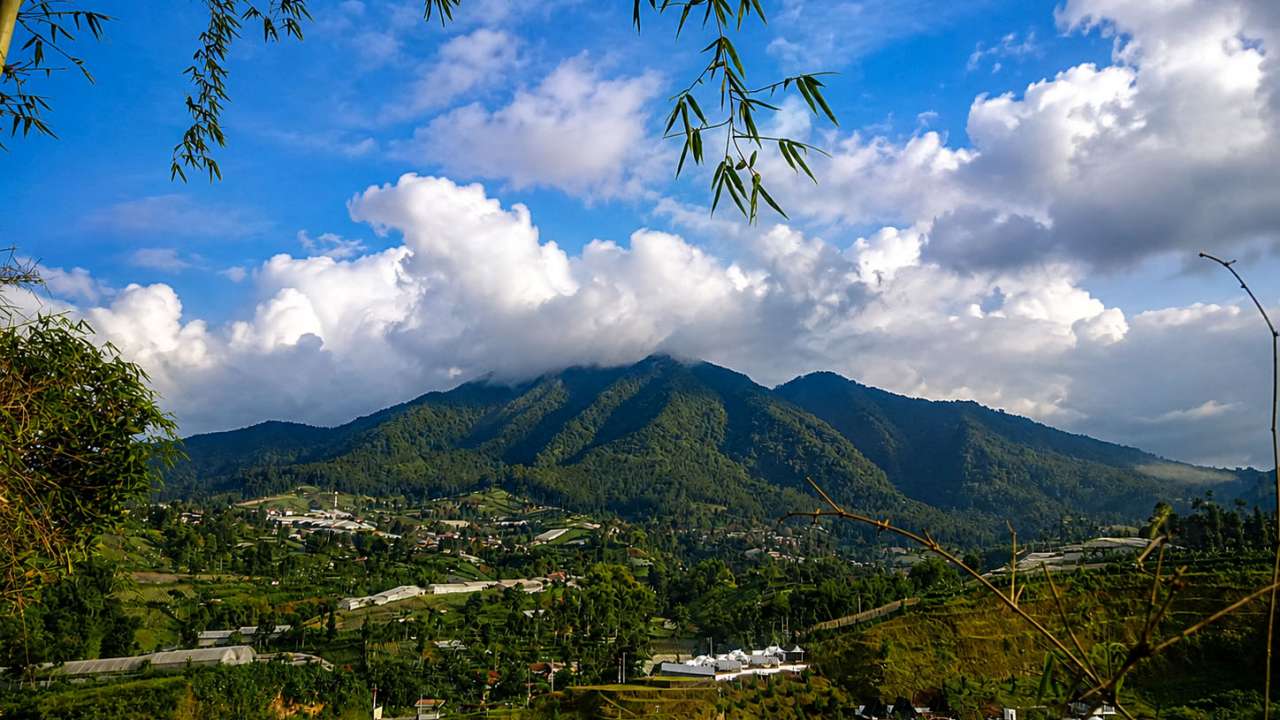
Cisarua and the surrounding foothills of Mount Burangrang possess ideal prerequisites for this socio-economic shift. Located within accessible distance from dense urban centers like Cimahi and Bandung, the area offers a stark relief from metropolitan congestion. Urban residents seeking respite from high-density living have increasingly driven up land demand in these rural-agrarian zones. Consequently, what was once perceived strictly as a suburban periphery has evolved into a dynamic economic zone characterized by high-value real estate developments.
Urban planners note that while this influx of private investment stimulates local commerce, raises land values, and diversifies income streams for indigenous landowners, it simultaneously initiates profound structural changes in land-use patterns. Cafes, restaurants, boutique hotels, and housing complexes now occupy spaces historically dedicated to horticulture and forestry, altering both the socio-economic fabric and the visual topography of the region.
Economic Growth Versus Ecological Limits
The core dilemma facing regions experiencing amenity migration lies in the finite capacity of natural ecosystems to absorb continuous anthropogenic pressure. Economic incentives heavily favor the expansion of tourism and residential infrastructure. Local businesses generate employment opportunities and expand municipal tax bases, making real estate conversion an attractive proposition for local economies.

Nevertheless, academic literature on amenity migration—such as the foundational frameworks established by researchers like Gosnell and Abrams (2011)—highlights the inherent contradictions of development driven by natural aesthetics. When commercial enterprises and residential housing proliferate because of a region’s natural beauty, they inadvertently degrade the very attributes that initially attracted investors and visitors.
In the context of Mount Burangrang, the progressive replacement of permeable agricultural soils with concrete, asphalt, and structural foundations introduces significant ecological vulnerabilities. Mountainous topography is governed by strict hydrological and geological boundaries, including steep slopes, natural water infiltration zones, and riparian buffers. When these zones are heavily built upon, the landscape’s capacity to regulate rainwater runoff, mitigate soil erosion, and maintain moisture retention diminishes drastically.
Ecological Functions Beyond Visual Landscapes
Environmental scientists emphasize that mountain foothills operate as complex ecological systems rather than mere scenic backdrops for commercial leisure. The slopes of Mount Burangrang function as critical water catchment areas, sustaining subterranean aquifers and regulating hydrological cycles for downstream communities in the Bandung basin.

While market transactions assign a clear monetary value to real estate parcels, the ecological services provided by undisturbed vegetation—such as carbon sequestration, microclimate regulation, and landslide prevention—rarely register in standard commercial exchanges. The loss of green cover compromises these vital support systems, escalating the risks of localized flooding, soil degradation, and slope instability during extreme weather events.
Local government officials and spatial planning agencies face mounting pressure to balance economic development agendas with environmental conservation mandates. Unchecked real estate expansion risks transforming serene rural corridors into congested commercial strips, mirroring the over-commercialization observed in other popular West Javanese highland destinations like Lembang and Puncak.
Policy Implications and Future Outlook
Addressing the pressures facing Cisarua and the Mount Burangrang foothills requires a rigorous reevaluation of regional spatial planning enforcement. Observers and environmental advocates argue that regulatory frameworks must move beyond administrative compliance to rigorously assess long-term carrying capacities. Sustainable management in amenity-rich destinations necessitates strict zoning laws, protection of designated green belts, preservation of agricultural land, and mandatory environmental impact assessments for commercial ventures.

Ultimately, the preservation of Mount Burangrang’s environmental integrity is not synonymous with the rejection of economic progress. Rather, it demands a paradigm shift that recognizes ecological stability as a non-negotiable prerequisite for long-term regional prosperity. Without proactive interventions to curb overdevelopment, the defining natural assets—clean air, scenic vistas, and environmental tranquility—that render Cisarua and the Burangrang foothills economically desirable will be irreversibly compromised, neutralizing the foundational appeal of the region itself.