Socio Today
The Financial Services Authority of Indonesia (OJK) has officially initiated a comprehensive evaluation of various digital financial innovations within its regulatory sandbox framework. This strategic move, announced during the FEKDI x IFSE 2026 event at the Jakarta International Convention Center, aims to bridge the gap between emerging technological capabilities and tangible socio-economic benefits for the Indonesian population. As the global financial landscape pivots toward tokenization and blockchain integration, the OJK is positioning itself to supervise the transition from speculative digital assets to regulated, utility-driven financial instruments.
The Scope of Regulatory Sandbox Initiatives
The current sandbox testing environment includes a diverse range of asset classes and operational models. Key among these are the tokenization of physical and financial assets, including gold, government securities (SBN), and real estate interests. Furthermore, the regulatory body is scrutinizing the integration of crypto asset funds, digital financial asset custodianship, and the emergence of stablecoins—digital assets pegged to stable reserve assets intended to minimize volatility.
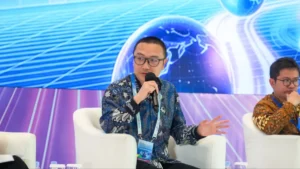
Friderica Widyasari Dewi, Chair of the Board of Commissioners of the OJK, emphasized that the objective extends beyond technological proficiency. The regulatory body is applying a "benefit-to-society" filter to ensure that these innovations contribute to the welfare of the Indonesian public. "We are not merely assessing the technical sophistication of these innovations; we are evaluating whether these technologies generate a positive impact and, more importantly, whether they foster prosperity for the people of Indonesia," stated Widyasari during the event.
Chronology and the Evolution of Digital Regulation in Indonesia
Indonesia’s journey toward regulating the digital financial space has been characterized by a cautious yet proactive approach. Following the rapid growth of the crypto asset industry in 2021 and 2022, which saw millions of retail investors enter the market, the government recognized the necessity of a structured regulatory framework.
In 2023, the enactment of the Law on the Development and Strengthening of the Financial Sector (UU PPSK) marked a turning point. This legislation effectively transferred the oversight of crypto assets from the Commodity Futures Trading Regulatory Agency (Bappebti) to the OJK. This transition signaled that crypto assets were no longer to be treated merely as commodities, but as integral components of the broader financial ecosystem.
By 2024, the OJK began formulating the institutional infrastructure for the regulatory sandbox. The 2026 FEKDI x IFSE event serves as the current milestone, where the OJK has transitioned from policy formulation to active, real-time testing of business models that integrate blockchain and decentralized ledger technologies into the formal financial sector.
Assessing Risk, Security, and Consumer Protection
The evaluation criteria within the OJK sandbox are stringent, focusing on four primary pillars: technological readiness, business model viability, risk management, and consumer protection. The emphasis on consumer protection is paramount, given the history of market volatility in the crypto sector and the potential for fraud associated with unverified digital investment schemes.
According to OJK officials, the "custodian" aspect of the sandbox is particularly critical. By testing digital financial asset custodianship, the OJK aims to establish standards for how these assets are stored, secured, and audited, ensuring that they match the standards of traditional banking and brokerage services. This is intended to mitigate the risks associated with hacks, loss of private keys, and operational failures that have plagued less regulated international markets.
Strategic Roadmap for Implementation
The OJK has outlined a clear trajectory for any innovation that successfully exits the sandbox. A "graduation" from the sandbox does not automatically equate to a full-scale license; rather, it marks the beginning of a structured implementation phase guided by four foundational pillars:
- Strategic Roadmaps: Developing clear, long-term directions for each specific class of digital asset.
- Regulatory Frameworks: Establishing robust legal foundations that define the rights and obligations of both issuers and investors.
- Infrastructural Support: Ensuring that the underlying technology is supported by reliable and secure operational frameworks, including clear data reporting requirements.
- Cross-Institutional Cooperation: Leveraging partnerships between the OJK, the Central Bank (Bank Indonesia), and relevant ministries to create a unified regulatory environment.
This collaborative approach is essential for the development of secondary markets for tokenized assets. For a tokenized government security or gold-backed asset to be traded effectively, there must be a transparent, reliable, and highly liquid marketplace. The OJK envisions that successful sandbox participants will help build these secondary markets, thereby democratizing access to financial products that were previously difficult for the average citizen to acquire.
Fact-Based Analysis of Economic Implications
The potential economic impact of these initiatives is significant. By tokenizing government securities, for instance, the government could lower the barrier to entry for retail investors, allowing them to participate in the financing of national infrastructure projects with smaller capital outlays. This has the potential to increase the depth of the domestic capital market, which has traditionally been dominated by institutional players.
However, the inclusion of stablecoins in the sandbox presents unique challenges. Stablecoins often serve as a bridge between fiat currency and the digital asset ecosystem. Their integration into the formal economy requires close coordination with Bank Indonesia to ensure that monetary policy transmission is not undermined and that foreign exchange stability is maintained.
Moreover, the shift toward tokenization addresses the chronic issue of transaction costs in the Indonesian financial system. Blockchain-based settlements have the potential to significantly reduce the administrative overhead associated with traditional clearing and settlement processes. If implemented correctly, this could lead to faster transaction speeds and lower fees, thereby increasing the overall efficiency of the national payment and investment landscape.
Industry Perspectives and Broader Market Sentiment
Financial industry analysts suggest that the OJK’s sandbox is a necessary evolution. By creating a "safe space" for innovation, the regulator is encouraging legitimate fintech companies to invest in compliance rather than seeking regulatory arbitrage in offshore jurisdictions.
"The OJK is essentially building a sandbox that functions as a laboratory for the future of finance," noted one industry observer familiar with the FEKDI proceedings. "By allowing companies to test these models under supervision, the OJK is reducing the ‘unknown unknowns’ that typically hinder the adoption of new technology in the banking sector."
However, industry participants also highlight the need for agility. The technology in the digital finance space evolves at a pace that often outstrips traditional rulemaking. Therefore, the success of the OJK’s initiative will depend heavily on the authority’s ability to update its regulations in real-time as the sandbox yields data on how these technologies behave in live market conditions.
Conclusion: Toward a Productive Digital Ecosystem
The OJK’s ongoing efforts represent a sophisticated approach to the intersection of digital technology and financial regulation. By focusing on tokenized assets and stablecoins, the authority is addressing the most pressing segments of the digital asset market.
Ultimately, the goal is to create a digital financial ecosystem that is not only productive but also inclusive. As the OJK continues to test and refine these models, the focus will remain on the long-term goal: expanding access to financing and investment opportunities for all levels of society. If the outcomes of the current sandbox phase meet the OJK’s rigorous standards for safety and transparency, Indonesia could soon see a robust, regulated, and highly efficient digital financial infrastructure that serves as a benchmark for the broader Southeast Asian region. The integration of these technologies into the formal economy is not just an opportunity for modernization, but a critical step in ensuring that the Indonesian financial system remains resilient and competitive in an increasingly digital global economy.