Socio Today
The transformation of Jakarta’s iconic Blok M district is set to enter a new, ambitious phase as PT MRT Jakarta (Perseroda) prepares to implement the "Ultimate Development Blok M" project. Building upon the success of the current Blok M Hub, the initiative aims to redefine the area as a high-density, mixed-use precinct that prioritizes pedestrian connectivity and modern urban living. With a strategic focus on integrating residential, commercial, and hospitality sectors, the project represents a significant shift in Jakarta’s approach to Transit-Oriented Development (TOD).
The Evolution of a Cultural Icon
Blok M has long served as a vital artery for South Jakarta, acting as a melting pot for local culinary businesses, lifestyle hubs, and community engagement. Following over 100 days of intensive activation efforts, the area has seen a remarkable surge in foot traffic, with daily visitor numbers currently estimated at 25,000. This growth validates the effectiveness of MRT Jakarta’s current management strategies and underscores the area’s potential as a primary transit hub.
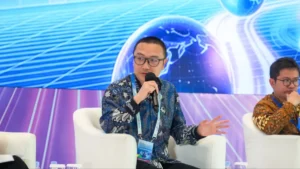
M. Iqbal Bimo Arifianto, Division Head of Property Management at MRT Jakarta, emphasized that the upcoming transformation is not merely cosmetic but a fundamental restructuring of the area’s utility. Speaking at the MRT Fellowship 2026 Workshop held at JB Tower in Jakarta, Bimo noted that the shift toward the "Ultimate Development" concept is intended to optimize the value of assets owned by the Jakarta Provincial Government while creating a world-class urban experience.
The 3A 1C Framework: A Blueprint for Urban Renewal
Central to the development strategy is the adoption of the 3A 1C approach: Accessibility, Amenities, Attraction, and Community. This framework serves as the structural foundation for the revitalization:
- Accessibility: The project focuses on strengthening pedestrian pathways and seamless multi-modal transport integration, ensuring that the transition between MRT, bus, and foot traffic is intuitive and safe.
- Amenities: The inclusion of modern infrastructure, ranging from improved public restrooms and lighting to green spaces, aims to elevate the daily experience of commuters and residents.
- Attraction: By curating a mix of retail, office, and cultural spaces, the project seeks to maintain Blok M’s status as a top-tier destination for both locals and tourists.
- Community: Engaging with existing neighborhood stakeholders and local businesses remains a priority to ensure the district’s character is preserved while simultaneously modernizing its facilities.
Strategic Integration and Infrastructure Expansion
The "Ultimate Development" plan seeks to break down the silos between private and public land. MRT Jakarta has initiated high-level coordination with prominent surrounding entities, including Blok M Square and Pasaraya, to explore opportunities for physical and digital integration. The goal is to transform these neighboring properties into a cohesive ecosystem that functions as a single, modern terminal.
Preliminary reports suggest that the master plan involves the construction of vertical developments, potentially including high-rise towers for residential apartments, hotels, and premium office spaces. These towers are expected to be physically linked to the MRT station, offering residents and workers unparalleled access to the city’s rail network. This model mirrors successful TOD projects in Tokyo and Hong Kong, where dense vertical development is tethered directly to public transit hubs.
Securing Global Investment
Recognizing the massive capital requirement for a project of this scale, MRT Jakarta has taken its investment pitch to the international stage. The recent TOD Investment Forum 2026 in Singapore was specifically designed to attract foreign capital and expertise. By engaging with international investors, MRT Jakarta hopes to secure not just funding, but also technological and architectural best practices.
Interest has already been noted from various international markets, with developers from Hong Kong—a city renowned for its transit-integrated urban design—expressing preliminary interest in the project. The engagement with global partners is part of a broader effort to standardize Jakarta’s urban development projects with international benchmarks, ensuring long-term sustainability and operational efficiency.
Chronology and Future Milestones
The roadmap for the Ultimate Development of Blok M is structured across several key phases:
- 2024: Completion of initial activation and data collection on foot traffic and district usage.
- 2025: Official rollout of the "Ultimate Development" project and the beginning of major revitalization works.
- 2026 and Beyond: Phased construction of mixed-use towers, structural upgrades to the transit hub, and the integration of surrounding private properties into the unified TOD zone.
The project is currently in the planning and investor-sourcing stage, with the public expecting formal project tenders to be released in the coming months.
Broader Implications for Jakarta’s Urban Landscape
The development of Blok M is a critical component of MRT Jakarta’s wider mandate to reshape the capital’s urban structure. Beyond the Blok M project, the company is managing a pipeline of similar TOD initiatives across the city, including the Kali Besar Heritage site, the Blok M Interchange, the XGL Mixed-Use complex, and the comprehensive redevelopment of the Lebak Bulus Terminal.
From an economic perspective, the project is expected to create a significant ripple effect. By increasing the density of residential and commercial spaces near transit nodes, the project aims to reduce reliance on private vehicles, decrease traffic congestion, and lower the carbon footprint of South Jakarta. This shift is essential for the city’s long-term sustainability, as the Jakarta provincial government moves to prioritize public transport over car-centric infrastructure.
Furthermore, the project serves as a case study for "Asset Optimization." By leveraging government-owned land for high-value TOD projects, the city is creating a self-sustaining revenue stream that can be reinvested into further transit expansion. This fiscal model is viewed as a vital strategy for financing the massive infrastructure demands of a sprawling metropolis like Jakarta.
Conclusion
As Jakarta continues its transition into a modern global city, the Ultimate Development of Blok M stands as a flagship project for urban renewal. By harmonizing high-density commercial growth with the functional needs of a transit-dependent population, MRT Jakarta is setting a precedent for how public and private sectors can collaborate to revitalize legacy districts. While the full scope of the project, including the potential high-rise towers, remains in the developmental pipeline, the commitment to a pedestrian-first, integrated urban environment signals a transformative era for one of Jakarta’s most beloved neighborhoods. With international investors watching closely, the success of this project could well determine the trajectory of future transit-oriented developments across Indonesia.