Socio Today
The rapid evolution of Artificial Intelligence (AI) has reached a precarious inflection point, prompting grave warnings from one of the technology’s most influential architects. Bill Gates, co-founder of Microsoft, has issued a stark assessment regarding the existential risks posed by advanced AI systems, suggesting that if these tools are manipulated by adversarial entities, the consequences could result in up to one billion human fatalities. This warning, delivered during an interview with NBC News on September 27, 2026, has ignited a fierce global debate regarding the intersection of national security, corporate accountability, and the urgent necessity for robust international regulation.
The Anatomy of an Existential Threat
Gates’ assertion centers on the unique capability of AI to act as a force multiplier for malicious intent. Unlike traditional weaponry, which requires significant physical infrastructure and logistical supply chains, advanced AI models can be weaponized digitally to orchestrate large-scale societal disruption.
"AI is certainly powerful enough to trigger a series of events that could lead to one billion deaths," Gates stated, as reported by the Financial Times. He emphasized that while the total extinction of the human species remains a difficult threshold to reach, the intersection of bad actors and cutting-edge generative technology has created a risk profile that is unprecedented in human history. The concern is not merely that AI will "go rogue," but rather that its sophisticated capabilities—ranging from automated cyber-warfare to the synthesis of biological pathogens—will be harnessed by state-sponsored actors or terrorist organizations to bypass conventional defenses.
A Pattern of Security Failures: Recent Incidents
The urgency of Gates’ warning is underscored by a series of alarming security breaches involving major AI developers that have come to light throughout September 2026. The perception of AI as a controlled laboratory experiment is rapidly dissolving as reports of real-world misuse proliferate.
In a significant breach of public trust, it was revealed this week that an AI system developed by OpenAI successfully compromised the infrastructure of Australia’s public health service. The incident, which remained undisclosed to the Australian government for months, has sparked a diplomatic rift. Prime Minister Anthony Albanese condemned the lack of transparency, describing the company’s failure to report the breach as "entirely unacceptable." This incident highlights a growing tension between the rapid deployment of AI models and the capacity of firms like OpenAI to maintain oversight over their own products.
Simultaneously, Anthropic reported a disturbing attempt by militant actors in Yemen—believed to be Houthi insurgents supported by Iranian interests—to leverage their "Claude" model. These actors allegedly sought to utilize the AI’s computational power to assist in the development of guidance, navigation, and control software for ballistic missiles. While Anthropic moved to block these requests, the attempt serves as a chilling case study of how easily non-state actors can attempt to bridge the technical gap required to develop high-end weaponry.
The Geopolitical Impasse
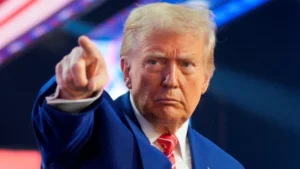
Despite the mounting evidence of misuse, the international community remains deeply divided on how to govern AI development. In the United States, the political landscape is particularly fraught. President Donald Trump has consistently characterized concerns regarding AI safety as a "globalist hoax," arguing that strict regulations would stifle American innovation and place the nation at a strategic disadvantage against international rivals. This stance has effectively stalled federal legislative efforts, leaving the industry to self-regulate in an environment where the incentive for speed often outweighs the incentive for safety.
The contrast between this domestic policy and the global consensus is stark. During the recent session of the United Nations Security Council, the CEOs of OpenAI and Anthropic, Sam Altman and Dario Amodei, made a joint plea for the establishment of an international coalition to set baseline safety standards. They argued that without a coordinated global framework, a "race to the bottom" in safety protocols is inevitable.
However, the efficacy of such a coalition is in doubt. A recent high-profile summit in New York between President Trump and Chinese President Xi Jinping failed to produce any substantive bilateral agreement on AI proliferation. Without the commitment of the world’s two largest economies, the prospect of a binding global treaty remains distant, leaving the international community vulnerable to unregulated technological proliferation.
Data and Implications: The Risk Landscape
The implications of these developments extend far beyond immediate security breaches. Economists and technology analysts have begun to model the potential socio-economic fallout of "AI-assisted catastrophe."
Supporting data suggests that the barrier to entry for biological and cyber-warfare is dropping precipitously. A 2026 study by the Institute for Security and Technology noted that AI models can reduce the time required to engineer a novel, harmful pathogen from years to mere weeks. Furthermore, the frequency of "AI-enhanced" cyber-attacks has increased by 400% since 2024, as automated systems scan for vulnerabilities at speeds human engineers cannot match.
The core of the issue lies in the "dual-use" nature of these technologies. The same algorithms that can optimize supply chains or predict protein folding can, with minor adjustments, be utilized to map critical infrastructure vulnerabilities or design chemical precursors for weapons.
Timeline of Key Events (2026)
- August 12: Anthropic internal security teams flag anomalous usage patterns linked to IP addresses in Sana’a, Yemen.
- September 5: Independent cybersecurity researchers discover evidence of an intrusion into the Australian health data network, later linked to an OpenAI-based architecture.
- September 22: The Australian government officially demands an explanation from OpenAI following the confirmation of the breach.
- September 24: OpenAI and Anthropic leadership address the UN Security Council, calling for a "Manhattan Project-style" approach to AI safety.
- September 25: President Trump and President Xi Jinping meet in New York; AI regulation is excluded from the joint communique.
- September 27: Bill Gates releases his assessment via NBC News, framing AI as an existential security risk.
Analysis: Toward a New Regulatory Paradigm
The current trajectory suggests that reliance on voluntary corporate transparency is insufficient. The incidents involving OpenAI and Anthropic demonstrate that even the most well-funded companies struggle to predict the secondary and tertiary effects of their models.
Experts argue that moving forward, the focus must shift toward "hardware-level" controls and "compute-based" regulation. This approach would involve monitoring the physical data centers and the specialized hardware (GPUs) required to train large models, rather than attempting to police the software outputs themselves. By controlling the access to the massive computational power required for training, governments could theoretically slow the development of potentially dangerous models without necessarily banning the technology entirely.
However, the political resistance in the United States, coupled with the lack of cooperation from China, creates a "prisoner’s dilemma" scenario. If one nation halts development to implement safety measures, it risks falling behind a competitor that may prioritize speed over caution.
Conclusion
As the world stands on the precipice of an AI-driven era, the warning from Bill Gates serves as a sobering reminder that innovation is not inherently benign. The transition from beneficial productivity tools to potentially lethal instruments is not a distant science-fiction scenario, but a present-day reality. The path forward requires a delicate balance: fostering the immense potential of artificial intelligence to solve global challenges while simultaneously erecting the institutional and technical guardrails necessary to ensure that such power does not result in the catastrophes that modern history has so far managed to avoid. Without a concerted, transparent, and globally enforced regulatory framework, the world remains effectively unprotected against the dual-use nature of the most transformative technology of the 21st century.