Donald Trump Criticizes Giorgia Meloni Over Iran Policy and Strait of Hormuz Security as Diplomatic Rift Deepens Between Washington and Rome

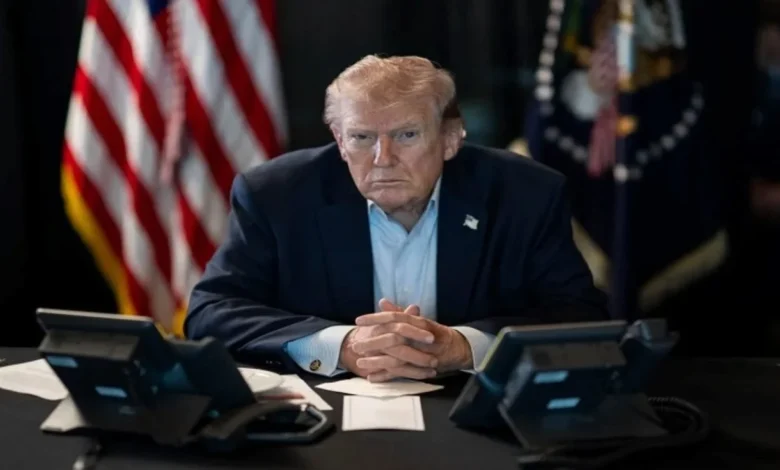
The burgeoning alliance between United States President Donald Trump and Italian Prime Minister Giorgia Meloni, once characterized by mutual ideological admiration, has entered a period of significant turbulence. The friction became public following a series of sharp rebukes from the American president, who accused his Italian counterpart of a lack of resolve regarding Middle Eastern security and a failure to support Washington’s intensified stance against Iran. The escalation marks a definitive shift in the Transatlantic dynamic, signaling a potential realignment of Italy’s foreign policy as Rome navigates domestic political pressures and a worsening humanitarian crisis in the Middle East.
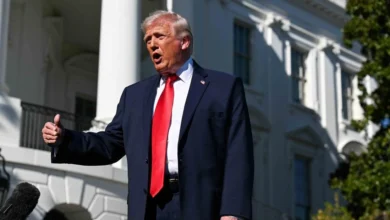
In an expansive and unfiltered telephone interview with the prominent Italian daily Corriere della Sera on Wednesday, April 15, 2026, President Trump expressed his profound disappointment with Meloni. He characterized her recent refusal to align with U.S. naval and diplomatic efforts against Tehran as an act of political cowardice. Trump, who had previously lauded Meloni as a "strong and visionary leader" during his 2025 inauguration, appears to have reassessed her administration’s value as a strategic partner in the Mediterranean and beyond.
The Strait of Hormuz and Energy Dependency
Central to President Trump’s grievance is the security of the Strait of Hormuz, a vital maritime chokepoint through which approximately one-fifth of the world’s total oil consumption passes. The Trump administration has recently sought to bolster an international coalition to counter Iranian influence in the region, demanding that European allies provide more than just moral support.
"She is giving us no help whatsoever, and I am truly surprised," Trump told reporters, echoing sentiments shared in his Corriere della Sera interview and subsequent briefings. He argued that Italy, as a major energy consumer and a hub for Mediterranean trade, is a direct beneficiary of U.S. military protection in the Persian Gulf. "They depend on Donald Trump to keep those lines open," he added, referring to the heavy presence of the U.S. Fifth Fleet in ensuring the flow of oil and liquefied natural gas (LNG) from the Middle East to European ports.
The President’s rhetoric underscores a persistent theme of his "America First" foreign policy: the expectation that allies must share the financial and military burden of global security. By highlighting Italy’s reliance on the U.S. Navy for its energy security, Trump is attempting to leverage Rome’s economic vulnerabilities to force a more hawkish stance on Iran.
Italy’s Strategic Pivot and the Israel Factor
The tension is not merely a result of American pressure but stems from a calculated shift in Italian foreign policy. On Tuesday, April 14, 2026, Prime Minister Meloni announced that Italy would suspend the automatic renewal of its long-standing defense cooperation agreement with Israel. This move, described by analysts as a "watershed moment" in Italian-Israeli relations, reflects a growing discomfort within the Italian government regarding the scale of military operations in the Middle East.
"Given the current situation and the unacceptable level of civilian suffering, the government has decided to suspend the automatic extension of our defense partnership with Israel," Meloni stated during a press briefing in Rome. This decision was met with immediate criticism from the White House, which views Israel as its most essential ally in the region.
The suspension of this agreement impacts joint military exercises, intelligence sharing, and the procurement of defense technologies. For Meloni, the move is a response to intense domestic pressure. Italy has seen a surge in public protests and parliamentary debate regarding the regional conflict, with various factions within her own right-wing coalition expressing concerns about Italy being dragged into a broader war that could disrupt Mediterranean stability.
The Religious Dimension: A Conflict Over the Papacy
Adding a layer of cultural and religious complexity to the diplomatic spat is a public disagreement involving the Vatican. The tension spiked after President Trump utilized his Truth Social platform to launch a scathing attack on Pope Leo XIV, the first American-born Pope in history. Trump criticized the Pontiff’s calls for a ceasefire and de-escalation in the Middle East, labeling the Pope’s foreign policy as "weak" and "dangerously aligned with the radical left."
Trump’s social media posts warned the Pope to "focus on being a good religious leader and stay out of politics," further alleging that the Vatican’s stance was undermining global security. Prime Minister Meloni, who has long positioned herself as a defender of Christian values and a respectful ally of the Holy See, quickly came to the Pope’s defense. She described Trump’s remarks as "inappropriate" and "unbecoming of a world leader," a critique that Trump immediately dismissed, firing back that it was Meloni herself who was "unbecoming" of her office.
This exchange has resonated deeply in Italy, a predominantly Catholic nation where the influence of the Vatican remains a potent force in social and political life. By defending Pope Leo XIV, Meloni is signaling that her "God, Fatherland, and Family" platform does not equate to blind subservience to Washington’s ideological dictates.
Timeline of a Fracturing Alliance (2025–2026)
To understand the current state of affairs, it is necessary to examine the trajectory of the Trump-Meloni relationship over the past eighteen months:
- January 2025: Prime Minister Meloni attends the second inauguration of Donald Trump in Washington D.C. The two leaders hold a private meeting where they pledge to form a "New Atlanticist" axis based on border security and traditional values.
- June 2025: Italy signs an initial memorandum of understanding to increase LNG imports from the U.S., aiming to further reduce reliance on Eastern European energy sources.
- November 2025: Regional tensions in the Middle East escalate. The U.S. requests Italy to deploy naval assets to the Strait of Hormuz under a new task force. Rome hesitates, citing constitutional limitations and the need for a UN or EU mandate.
- February 2026: Pope Leo XIV issues a landmark encyclical on global peace, calling for an immediate end to hostilities in the Levant. The U.S. administration views the document as an obstacle to its regional objectives.
- March 2026: Meloni faces a series of confidence votes in the Italian Parliament over her support for U.S. foreign policy. She begins to moderate her rhetoric to preserve her governing majority.
- April 14, 2026: Italy suspends its defense treaty with Israel.
- April 15, 2026: Trump’s interview with Corriere della Sera is published, marking the first major public break between the two leaders.
Supporting Data and Economic Stakes
The economic implications of this rift are substantial. Italy is the United States’ 11th largest trading partner, with bilateral trade in goods and services exceeding $100 billion annually. Italy’s defense industry, led by giants like Leonardo and Fincantieri, has deep ties with U.S. contractors.
Furthermore, Italy’s energy profile makes it uniquely sensitive to Persian Gulf instability. According to 2025 data from the International Energy Agency (IEA):
- Italy imports approximately 12% of its crude oil through the Strait of Hormuz.
- The Mediterranean nation serves as a primary entry point for 15% of the European Union’s total natural gas supply.
- U.S. military spending in the Mediterranean and Gulf regions, which benefits Italian maritime security, is estimated at $25 billion annually.
Trump’s assertion that Italy is "dependent" on the U.S. for these routes is factually grounded in the current security architecture of the region, where the Italian Navy (Marina Militare) lacks the expeditionary capacity to protect its merchant fleet in the Gulf without U.S. logistical and aerial support.
Broader Geopolitical Implications
The friction between Trump and Meloni is indicative of a broader trend within the North Atlantic Treaty Organization (NATO). As the U.S. moves toward a more transactional model of diplomacy, middle powers like Italy are finding themselves caught between their traditional security guarantees and the need for regional autonomy.
For the European Union, the Meloni-Trump rift presents an opportunity and a challenge. On one hand, Meloni’s distancing from Washington aligns her more closely with the "strategic autonomy" goals championed by France and Germany. On the other hand, a weakened relationship between Rome and Washington could embolden adversaries who seek to exploit divisions within the Western alliance.
Diplomatic observers suggest that Meloni’s pivot may also be an attempt to position Italy as a mediator. By maintaining a dialogue with the Vatican and cooling relations with the more hawkish elements of the Trump administration, Rome could potentially serve as a bridge between the West and the Global South, particularly in the Mediterranean and North Africa.
Official Responses and Future Outlook
As of late Wednesday, the White House Press Secretary declined to elaborate on the President’s comments, stating only that "the President expects our allies to live up to their commitments in the fight against global terror and state-sponsored aggression."
In Rome, a spokesperson for the Palazzo Chigi (the Prime Minister’s office) issued a brief statement: "Italy remains a committed member of the Atlantic Alliance. However, our foreign policy is dictated by the national interest and the pursuit of a just and lasting peace. We respect our partners, but we also expect respect for our sovereign decisions."
The coming months will be critical. If the Trump administration decides to impose tariffs or reduce security cooperation as a retaliatory measure, the Italian economy could face significant headwinds. Conversely, if Meloni successfully navigates this crisis, she may emerge as a more independent and influential leader on the European stage, having proven that she can stand her ground against the world’s most powerful executive.
For now, the "special relationship" between the MAGA movement and the Italian Right appears to have hit a formidable wall, replaced by the cold realities of geopolitical necessity and the clashing ambitions of two leaders who, despite their ideological similarities, find themselves on opposite sides of a deepening global divide.