Global Concerns Mount as IAEA Reports Rapid Expansion of North Korean Nuclear Weapons Production and Sophisticated Missile Testing Programs

The international community is facing a renewed security challenge as the International Atomic Energy Agency (IAEA) warns of a significant and rapid escalation in North Korea’s nuclear weapons manufacturing capabilities. While global attention has been largely diverted by the escalating conflict involving the United States, Israel, and Iran, the Democratic People’s Republic of Korea (DPRK) has quietly but systematically advanced its nuclear program. This development was underscored by IAEA Director General Rafael Grossi, who recently characterized the current trajectory of North Korea’s nuclear production as an "extremely serious" development that threatens regional and global stability.
During a high-level press conference in Seoul on April 15, 2026, Grossi revealed that the IAEA has observed a surge in activity across several key nuclear sites within the isolated nation. According to intelligence gathered via satellite monitoring and assessments from South Korean agencies, Pyongyang is currently operating multiple facilities dedicated to the enrichment of uranium. This process is a critical prerequisite for the fabrication of nuclear warheads, and the increased throughput suggests that the regime is moving toward a mass-production phase of its nuclear deterrent.
The Resurgence of the Yongbyon Nuclear Complex
At the heart of North Korea’s nuclear ambitions is the Yongbyon Nuclear Scientific Research Center. This facility has long been a focal point of international diplomacy and friction. Although Pyongyang had previously signaled a willingness to decommission the site during past negotiations, the IAEA confirmed that the complex was fully reactivated in 2021. Since then, operations have not only resumed but have intensified significantly.
Director General Grossi highlighted that the IAEA’s periodic assessments show a "rapid increase" in the operational tempo of the Yongbyon reactor. Furthermore, the agency has detected heightened activity at the site’s radiochemical laboratory, the centrifuge enrichment plant, and the newly operational light-water reactor (LWR). The integration of these facilities allows North Korea to produce both plutonium and highly enriched uranium, providing the regime with multiple pathways to expand its fissile material stockpile.
"All these indicators point to a very serious increase in the DPRK’s capability in the field of nuclear weapons production," Grossi stated. He estimated that the country’s current arsenal could already consist of "several dozen" nuclear warheads, a figure that continues to grow as the production infrastructure reaches new levels of efficiency. The activation of the light-water reactor is particularly concerning to experts, as it is capable of producing significantly more plutonium than the older 5-megawatt reactor that previously served as the primary source of the material.
Naval Power and Missile Advancements
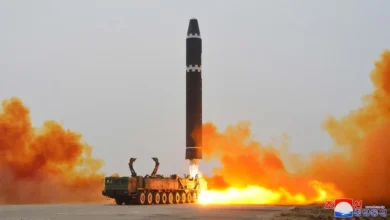
Parallel to its nuclear developments, North Korea has also demonstrated a leap in its conventional and strategic missile technology. In a recent display of military might, Leader Kim Jong Un personally supervised a series of missile tests conducted from the Choe Hyon, a 5,000-ton destroyer that represents the vanguard of the North’s modernized navy. These exercises focused on the deployment of strategic cruise missiles and advanced anti-ship weaponry.
According to reports from the Korean Central News Agency (KCNA), the tests involved two strategic cruise missiles that successfully remained airborne for over two hours, navigating a predetermined flight path over the West Sea of Korea (Yellow Sea). These missiles are designed to fly at low altitudes to evade radar detection and are capable of carrying nuclear payloads, making them a "strategic" asset in Pyongyang’s lexicon. Additionally, the military tested a new anti-ship missile that demonstrated a flight duration of 33 minutes, hitting its target with what state media described as "ultra-precision accuracy."
The use of the Choe Hyon destroyer is significant. Launched last year as part of Kim Jong Un’s initiative to bolster the North’s naval presence, the vessel is one of two such destroyers currently in operation. The KCNA further revealed that two more vessels of the same class, designated "No. 3" and "No. 4," are currently under construction. This naval expansion aims to transform the North Korean People’s Navy from a coastal defense force into a more capable blue-water or "green-water" fleet capable of launching standoff strikes against carrier strike groups or regional adversaries.
The Russia-North Korea Strategic Partnership
A major variable in North Korea’s rapid technological advancement is its deepening relationship with the Russian Federation. Following the onset of the conflict in Ukraine, Pyongyang and Moscow have moved into a closer orbit of military cooperation. North Korea has reportedly supplied Russia with millions of artillery shells and ballistic missiles to support its invasion of Ukraine, and more recently, it has deployed ground troops to assist Russian forces.
In exchange for this support, international observers and South Korean intelligence believe that Moscow is providing North Korea with critical military technology. This assistance is thought to include expertise in satellite reconnaissance, submarine technology, and potentially refinements to nuclear delivery systems. When questioned about this burgeoning alliance, Rafael Grossi noted that while the IAEA has not yet seen "specific evidence" of direct Russian assistance in nuclear fuel cycle technology, the broader military-technical exchange remains a subject of intense scrutiny.
The geopolitical implications of this partnership are profound. By aligning with a permanent member of the UN Security Council, North Korea has effectively insulated itself from further international sanctions. Russia’s veto power ensures that any new attempts by the United Nations to punish Pyongyang for its nuclear or missile tests are likely to be blocked, further emboldening Kim Jong Un to pursue his military objectives without fear of additional diplomatic repercussions.
A Chronology of Defiance
The current crisis is the culmination of decades of failed diplomacy and North Korean persistence. To understand the gravity of the 2026 developments, one must look at the timeline of the North’s nuclear journey:
- 2003: North Korea officially withdraws from the Nuclear Non-Proliferation Treaty (NPT), the first nation ever to do so.
- 2006: The regime conducts its first underground nuclear test, leading to the imposition of the first round of UN sanctions.
- 2017: A series of high-profile tests, including an Intercontinental Ballistic Missile (ICBM) capable of reaching the US mainland and a hydrogen bomb test, brings the region to the brink of conflict.
- 2018-2019: Diplomatic summits between Kim Jong Un and US President Donald Trump lead to a temporary freeze in long-range testing but fail to produce a denuclearization agreement.
- 2021: Satellite imagery confirms the reactivation of the Yongbyon reactor, marking the end of the post-summit lull.
- 2022: North Korea passes a law declaring its status as a nuclear-armed state "irreversible" and authorizing the preemptive use of nuclear weapons.
- 2024-2025: Deepening military ties with Russia result in the transfer of conventional munitions and the deployment of North Korean troops to the European theater.
- 2026: The IAEA confirms a "rapid increase" in production facilities and the deployment of new naval-based nuclear delivery systems.
Regional Reactions and Security Implications
The reports from the IAEA and the recent missile tests have sent shockwaves through the Indo-Pacific region. South Korea’s Ministry of National Defense has reiterated its commitment to the "Kill Chain" preemptive strike system and has called for a strengthening of the "extended deterrence" provided by the United States. In Seoul, the government is under increasing domestic pressure to consider its own nuclear options or to request the redeployment of US tactical nuclear weapons to the peninsula.
Japan has also voiced grave concerns, particularly regarding the cruise missile tests. Unlike ballistic missiles, which follow a predictable high-altitude arc, cruise missiles fly low and can maneuver, making them significantly harder to intercept with existing missile defense systems like Aegis or PAC-3. The ability of North Korea to launch these from ships adds a layer of unpredictability, as the launch platform can be positioned anywhere along the coastline.
The United States, while occupied with the Middle East and Ukraine, has maintained that its goal remains the "complete, verifiable, and irreversible denuclearization" of the Korean Peninsula. However, many analysts suggest that this goal is becoming increasingly unrealistic. With North Korea now possessing dozens of warheads and a diversified delivery system (including land-based silos, mobile launchers, submarines, and now destroyers), the focus may need to shift from denuclearization to arms control and containment.
Conclusion: A New Era of Nuclear Proliferation
The findings presented by Rafael Grossi and the IAEA serve as a stark reminder that the North Korean nuclear issue is not a stagnant problem but a rapidly evolving threat. The transition from testing prototypes to the mass production of warheads and sophisticated delivery systems marks a new and more dangerous phase of the standoff.
The convergence of North Korean nuclear persistence, Russian tactical support, and a distracted international community has created a "perfect storm" for proliferation. As Kim Jong Un continues to prioritize the "strengthening of nuclear deterrence" as his nation’s most vital task, the window for a diplomatic solution appears to be closing. The international community now faces the difficult task of managing a nuclear-armed North Korea that is more capable, more integrated into global conflicts, and more defiant than ever before. The "serious increase" in production reported by the IAEA is not just a technical milestone; it is a fundamental shift in the global balance of power that will demand a sophisticated and unified response in the years to come.