PSSI Partners with French Football Federation for Youth Development, Focusing on Women’s Football

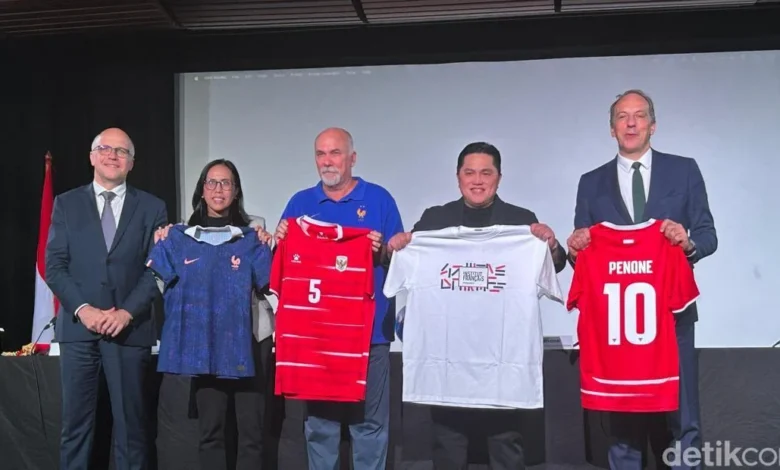
Jakarta – In a significant stride towards elevating the standard of Indonesian football, particularly for its young female athletes, the Football Association of Indonesia (PSSI) has announced a comprehensive collaboration with the French Football Federation (FFF). This partnership aims to foster a robust development pipeline for aspiring footballers through a series of exchange programs, specialized training, and knowledge sharing. The initiative underscores PSSI’s commitment to enhancing the technical and tactical capabilities of Indonesian players and coaches on a global stage.
The cornerstone of this collaboration will involve the dispatch of promising young female players from Indonesia to France for intensive training and exposure. This strategic move is designed to provide them with invaluable experience, allowing them to compete against higher-caliber opposition and immerse themselves in a world-renowned footballing culture. This program is not merely about individual player development but represents a broader vision for the future of women’s football in Indonesia, aiming to cultivate a generation of confident and skilled athletes capable of competing at international levels.
A Strategic Alliance for Footballing Excellence
The partnership between PSSI and FFF is a meticulously planned endeavor, designed to leverage the extensive expertise and established infrastructure of French football. France, a nation with a rich footballing heritage and a consistent presence in major international tournaments, offers an ideal environment for Indonesian talent to flourish. The FFF, recognized for its advanced training methodologies and its role in nurturing world-class players, is poised to become a pivotal partner in Indonesia’s footballing journey.
The agreement encompasses several key areas of cooperation. A significant component is the commitment to developing grassroots football in Bandung, West Java. This will include specialized coaching clinics for coaches and officials, designed to impart modern training techniques and strategic insights. Simultaneously, a group of twenty promising young footballers will be selected to participate in these development programs. This focus on the foundational aspects of the sport aims to create a sustainable ecosystem for talent identification and development from an early age.
Furthermore, the partnership will see eight officials from Indonesia undertake a training program at Clairefontaine, France’s prestigious national football center, renowned for its elite training facilities and academy. This visit, scheduled from May 3rd to May 9th, will provide Indonesian officials with firsthand exposure to French football’s operational excellence, including training regimens, sports science applications, and overall management strategies. The selected female players who will be sent to Clairefontaine are a blend of graduates from the Hydro Plus Program and current members of the Indonesian U-17 Women’s National Team, ensuring that those with proven potential and prior competitive experience are prioritized.
Clairefontaine: A Crucible for Future Talent
The program at Clairefontaine is meticulously structured to maximize the learning experience for the Indonesian contingent. The young female players will engage in six intensive training sessions, designed to hone their technical skills, tactical understanding, and physical conditioning. These sessions will be complemented by practice matches against academy teams appointed by the FFF. These matches are crucial for exposing the players to different playing styles and increasing their adaptability and competitive resilience.
The choice of France as a partner is not arbitrary. PSSI Chairman Erick Thohir highlighted the global standing of French football, noting its historical significance, including FIFA’s initial establishment in Paris in 1904. This historical context underscores France’s deep-rooted connection to the global footballing community and its pioneering role in the sport’s organization. Thohir expressed his optimism about the collaboration, stating, "This partnership is excellent for us (Indonesia), as it allows us to develop our young female players to a higher level." His remarks, made at the Institut Francais d’Indonesie in Jakarta on Wednesday, April 15, 2026, signal a strong endorsement from the highest echelons of Indonesian football leadership.
Strengthening Bilateral Ties Through Sport Diplomacy
Beyond the immediate footballing benefits, this collaboration is also viewed as a means to strengthen diplomatic relations between Indonesia and France. The sports diplomacy initiative aligns with the broader agenda of both nations to foster deeper cultural and political ties. French President Emmanuel Macron’s known interest in sports diplomacy further bolsters the significance of this partnership, positioning it as a key element in the bilateral relationship.
Erick Thohir elaborated on Indonesia’s strategic approach to international sports cooperation, mentioning that Indonesia has identified 21 sports disciplines for collaborative efforts with various nations. France, with its expertise in football, stands out as a prime partner. He also revealed PSSI’s ongoing efforts to establish a central training academy in Bogor, an initiative for which French expertise in coaching and sports science would be highly valuable. "We are also building a central training academy in Bogor, for which we may need assistance from France regarding coaching and sports science," Thohir added. This indicates a long-term vision that integrates international best practices into Indonesia’s domestic sporting infrastructure.
French Endorsement and Future Prospects
The French Ambassador to Indonesia, Fabien Penone, expressed his enthusiastic support for the initiative. He described the collaboration as an "extraordinary step" for both football federations, fostering a mutual exchange of knowledge and experience. Ambassador Penone emphasized the shared goal of empowering young female athletes. "What we are doing in France and what we are doing here is to create opportunities for young female players to build confidence as future players," he stated. This sentiment highlights the humanistic aspect of the partnership, focusing on nurturing not just skilled athletes but also confident individuals.
The implications of this partnership extend far beyond the immediate training programs. For Indonesia, it represents a crucial step in closing the gap with more established footballing nations. The exposure to French methodologies in coaching, player development, and sports science is expected to have a ripple effect throughout Indonesian football. The focus on women’s football is particularly noteworthy, addressing a long-standing need for greater investment and support in this area. By providing young female players with unprecedented opportunities, PSSI is not only aiming to improve the performance of the national teams but also to inspire a new generation of girls to participate in the sport.
Supporting Data and Context
France has a well-established footballing infrastructure, boasting one of the most successful national teams in the world, with multiple FIFA World Cup titles and a strong showing in European Championships. The French Football Federation (FFF) oversees a vast network of clubs and academies, producing a steady stream of elite talent. In 2022, France had over 2.1 million licensed players, with a significant portion being youth players, highlighting the depth of its talent pool. The country’s commitment to sports science and advanced training techniques is well-documented, with institutions like Clairefontaine serving as benchmarks for excellence globally.
Indonesia, on the other hand, has been actively seeking to improve its footballing standards. Despite a large population and a passionate fan base, the nation has faced challenges in consistently producing world-class talent, particularly in the women’s game. The Indonesian Women’s National Team has participated in the AFC Women’s Asian Cup, but has yet to qualify for the FIFA Women’s World Cup. The partnership with FFF is therefore a strategic move to accelerate development and bridge this gap. The investment in youth development, especially in women’s football, aligns with global trends that emphasize inclusivity and equal opportunity in sports.
The timing of this announcement, made in April 2026, suggests a forward-looking strategy by PSSI, with tangible outcomes expected in the coming years. The focus on a specific age group (U-17 and younger) indicates a long-term vision for building a sustainable talent pipeline. The inclusion of both players and officials in the exchange program ensures a holistic approach, aiming to uplift the entire footballing ecosystem in Indonesia.
Broader Impact and Future Implications
The success of this PSSI-FFF collaboration could serve as a model for future international partnerships in Indonesian sports. By investing in high-quality training and development programs, Indonesia aims to not only improve its sporting performance but also to enhance its global standing. The focus on women’s football carries significant social implications, potentially empowering young women and promoting gender equality through sports.
The establishment of a central training academy, with potential French assistance, would be a monumental achievement for Indonesian sports. Such an academy, equipped with modern facilities and staffed by qualified personnel, could become a hub for talent development across various disciplines, not just football. This would provide a structured pathway for aspiring athletes, from grassroots to elite levels, and contribute to the professionalization of sports in Indonesia.
In conclusion, the partnership between PSSI and the French Football Federation marks a pivotal moment for Indonesian football. It signifies a commitment to learning from one of the world’s leading footballing nations and investing strategically in the future of its young athletes, with a particular emphasis on empowering women in sports. The long-term implications are substantial, promising to elevate the quality of play, enhance the professionalism of the sport, and inspire a new generation of Indonesian footballers. The journey ahead will undoubtedly be challenging, but with the expertise and support of the FFF, Indonesia is well-positioned to make significant strides on the global footballing map.