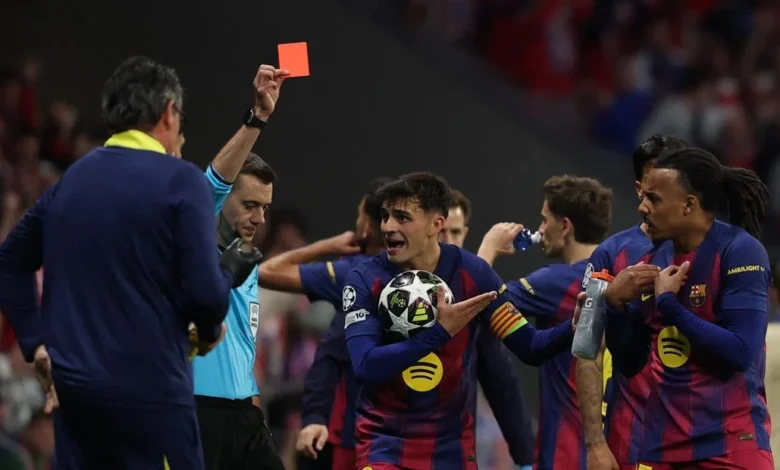
Barcelona has cemented an unwelcome record in the UEFA Champions League, emerging as the team with the most red cards issued over the past ten seasons. The Catalan giants have amassed a total of 12 dismissals in this prestigious European competition, a statistic that underscores a recurring issue with disciplinary matters on the continental stage. This tally places them ahead of other football powerhouses, raising questions about the team’s temperament and tactical discipline in high-stakes encounters.
The latest red card, contributing to this unfortunate statistic, was shown to Eric Garcia during Barcelona’s quarter-final second-leg clash against Atletico Madrid on April 14, 2026, at the Riyadh Air Metropolitano stadium. The incident, which occurred after a VAR review, highlights the intensity and pressure inherent in Champions League knockout ties. While the specific details of Garcia’s infraction were not immediately detailed in the initial reports, the consequence was a dismissal, forcing Barcelona to play with ten men during a crucial phase of the match. This event, while recent, is symptomatic of a broader trend observed throughout the last decade.

A Decade of Disciplinary Struggles
Examining Barcelona’s Champions League tenure over the last ten seasons reveals a consistent pattern of disciplinary infractions. The 12 red cards are distributed across both the group stages and the knockout phases, indicating that the issue is not confined to particularly fraught elimination rounds. The breakdown shows six red cards occurring in the group stages and another six in the knockout rounds, suggesting a persistent challenge for the team in maintaining eleven players on the field throughout their European campaigns.
This trend is particularly striking when considering Barcelona’s stature as one of Europe’s elite clubs, a team renowned for its technical prowess and attacking flair. The accumulation of red cards suggests a potential disconnect between the team’s on-field execution and its ability to adhere to the rules, especially under pressure.
Key Incidents and Players Involved
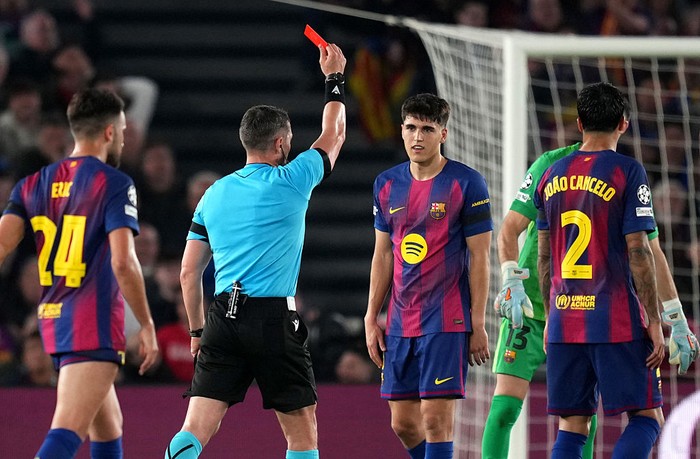
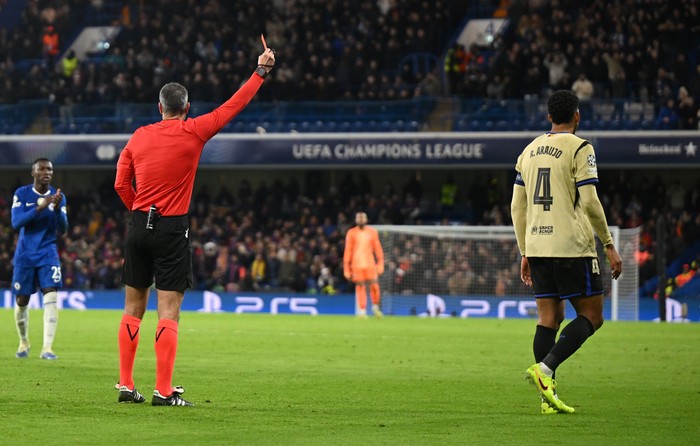
While the original report does not provide an exhaustive list of all 12 dismissals, it does highlight some notable instances and players who have contributed to this tally. Pau Cubarsi and Ronald Araujo are mentioned as having received two red cards each within this ten-season period, making them the most frequent offenders among the Barcelona squad.
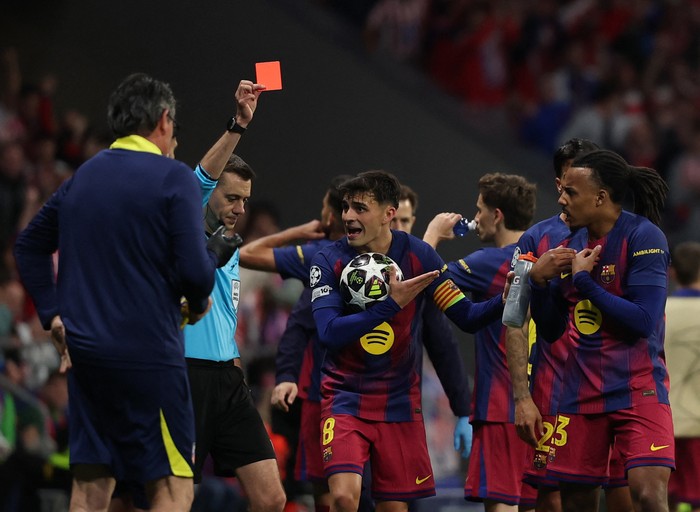
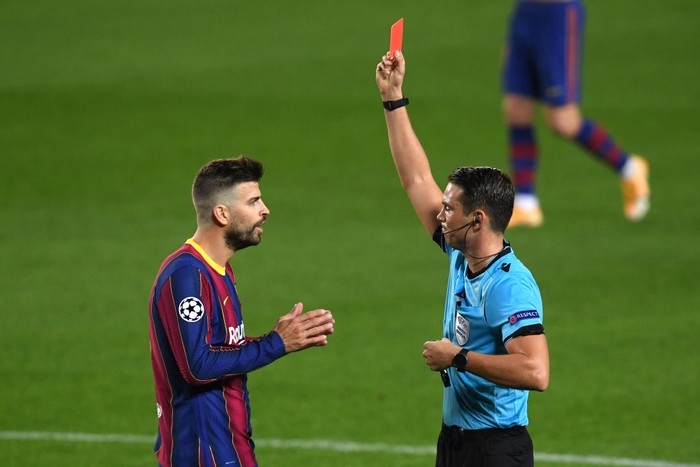
The image accompanying the report of Eric Garcia’s recent dismissal also features a photograph of Gerard Piqué receiving a red card during a group stage match against Ferencváros Budapest on October 20, 2020. These individual incidents, while seemingly isolated, contribute to the cumulative figure that paints a concerning picture of Barcelona’s disciplinary record.
The implication of frequent red cards extends beyond the immediate disadvantage of playing with a reduced number of players. It often leads to suspensions for subsequent matches, impacting team selection and strategy. For a club like Barcelona, which relies heavily on its established players and intricate tactical systems, the absence of key personnel due to suspension can be a significant blow to their Champions League aspirations.
Broader Context and Historical Performance
Barcelona’s pursuit of Champions League glory has been notably absent for over a decade. The last time the club lifted the coveted trophy was in the 2014-2015 season. The current drought, now extending to 11 years, coincides with this period of frequent disciplinary issues. While it is an oversimplification to attribute the lack of European success solely to red cards, the disciplinary record certainly does not aid their cause.
The Champions League is a competition where marginal gains are crucial. Every player on the pitch matters, and conceding a red card often shifts the momentum irrevocably. Teams that consistently maintain their discipline and numerical advantage are inherently better positioned to succeed.
Potential Contributing Factors and Analysis
Several factors could contribute to Barcelona’s high red card count. The intensity of their playing style, often characterized by aggressive pressing and a commitment to winning the ball back quickly, can sometimes lead to mistimed tackles or overly zealous challenges. Furthermore, the pressure associated with representing a club of Barcelona’s magnitude in the Champions League can undoubtedly influence player behavior on the field.
The involvement of VAR in recent years has also meant that fouls and indiscretions are more closely scrutinized. While VAR aims to ensure fairness, it can also lead to more red cards being issued for infringements that might have gone unnoticed in previous eras. However, the statistic spans a decade, predating the widespread implementation and evolution of VAR in its current form, suggesting that the issue is more deeply rooted than just recent officiating trends.
Another analytical perspective could consider the psychological impact of high-pressure situations. Players might react impulsively to perceived injustices or moments of frustration, leading to disciplinary actions. The demanding schedule and the constant scrutiny from media and fans could also play a role in exacerbating these pressures.
Club’s Response and Future Implications
While official statements from Barcelona’s management or coaching staff regarding this specific statistic were not immediately available, it is a trend that the club’s leadership would likely be aware of and concerned about. Addressing disciplinary issues typically involves a multi-faceted approach. This could include:
- Enhanced Player Education: Reinforcing the importance of discipline and responsible play during training sessions and team meetings.
- Tactical Adjustments: Reviewing tactical approaches to minimize situations that frequently lead to fouls and red cards.
- Player Recruitment: Considering the disciplinary record of potential signings and ensuring they fit the club’s expectations for behavior on and off the pitch.
- Mentality Coaching: Providing players with tools to manage pressure and frustration effectively during matches.
The implications of this record are significant. Beyond the immediate on-field disadvantages, a reputation for indiscipline can affect a team’s standing in the eyes of opponents, referees, and even potential recruits. For Barcelona, a club that prides itself on its sporting integrity and fair play, this statistic is a blemish on its otherwise illustrious history.
The challenge for Barcelona moving forward is clear: to address the root causes of their disciplinary problems and to foster a more disciplined approach on the field. Success in the UEFA Champions League requires not only talent and tactical acumen but also the ability to maintain composure and adhere to the rules throughout the grueling competition. Until this issue is effectively managed, it will likely remain a significant impediment to their European ambitions. The accumulation of 12 red cards over a decade serves as a stark reminder that even the most talented teams can be undone by a lack of discipline.