Indonesia’s Finance Minister Purbaya Yudhi Sadewa Engages Global Financial Leaders, Reassuring Investors Amidst Geopolitical Headwinds

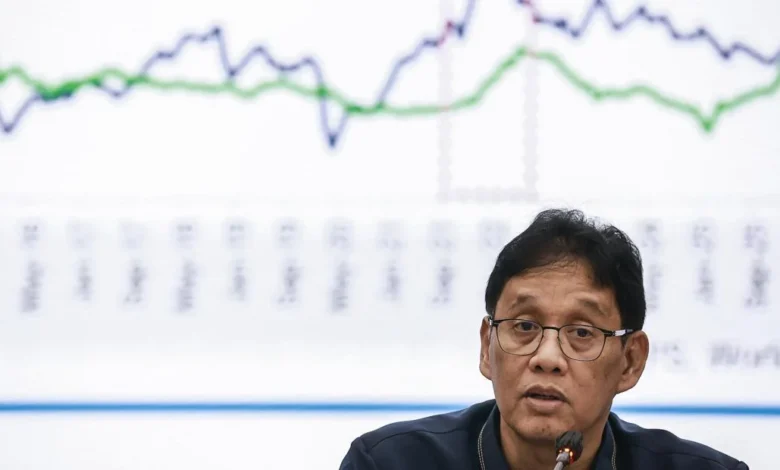
Indonesia’s Minister of Finance, Purbaya Yudhi Sadewa, recently concluded a pivotal series of high-level meetings with prominent global financial institutions and leading international investors in Washington D.C., United States. The extensive itinerary, which took place on Wednesday, April 15, 2026, involved critical discussions with the Managing Director of the International Monetary Fund (IMF), Kristalina Georgieva, senior representatives from the World Bank, and influential international credit rating agencies, including S&P Global Ratings. These engagements were further complemented by significant interactions with eighteen major global investors, featuring financial powerhouses such as Goldman Sachs and Fidelity Investments, underscoring Indonesia’s proactive strategy to solidify confidence in its economic trajectory and fiscal resilience amidst an increasingly complex and uncertain global environment.
Strategic Outreach in Washington D.C.: Anchoring Economic Credibility
The core objective of Minister Sadewa’s visit was to articulate Indonesia’s steadfast commitment to achieving a delicate yet robust balance between sustained economic growth and the enduring sustainability of its state budget (Anggaran Pendapatan dan Belanja Negara – APBN). These discussions are particularly pertinent in an era marked by persistent global uncertainties, ranging from geopolitical conflicts to fluctuating commodity prices. Such direct engagements, often coinciding with annual gatherings like the IMF-World Bank Spring Meetings, serve as crucial platforms for member countries to present their economic outlooks, engage in constructive policy dialogues, and actively attract vital foreign capital. For Indonesia, a dynamic emerging economy in Southeast Asia, these interactions are instrumental in shaping international perceptions, safeguarding its hard-earned investment-grade credit rating, and ensuring continued, favorable access to global financial markets.
During these intensive sessions, Minister Sadewa meticulously detailed the Indonesian government’s comprehensive economic policies, providing in-depth explanations of their anticipated impacts on both the national budget and the broader national economic growth. "We met with 18 large investors, including Goldman Sachs and Fidelity Investments. They sought to understand Indonesia’s policy direction for growth and budget management, and to assess whether our strategies are credible and sustainable," Sadewa stated in a written press release. This direct, transparent interaction allowed the Indonesian delegation to directly address investor queries and concerns, offering clear insights into the nation’s fiscal prudence and growth initiatives. The dialogue transcended mere presentation, delving into the foundational strengths of Indonesia’s economy and the strategic rationale underpinning its key policy choices.
Positive Assessment from Global Financial Guardians
The response from leading international institutions, including the IMF, the World Bank, and the esteemed credit rating agencies, was notably positive and encouraging. Minister Sadewa particularly highlighted their enthusiasm regarding Indonesia’s demonstrated capacity to foster robust economic growth without imposing undue burdens on its fiscal policy framework. "They showed high enthusiasm and delved deeper into our economic fundamentals and policies. They have consistently questioned how Indonesia can achieve faster growth while keeping its budget under control," Sadewa elaborated. This resounding positive reception serves as a powerful testament to the effectiveness of Indonesia’s macroeconomic management and its consistent adherence to principles of fiscal discipline.
In his meeting with Kristalina Georgieva, the IMF Managing Director, Ms. Georgieva acknowledged the persistent nature of global uncertainties, primarily attributing them to ongoing geopolitical tensions and the inherent volatility in global energy price dynamics. In response, Minister Sadewa emphatically reaffirmed Indonesia’s exceptionally strong fiscal condition and its substantial budgetary buffers. "The IMF does not possess the authority to diminish global uncertainty, but it provides support to countries in need. Indonesia is not among them, as our fiscal condition is strong with a budgetary buffer of approximately Rp 420 trillion (equivalent to over US$26 billion at the prevailing exchange rates)," Sadewa clarified. This substantial fiscal reserve functions as a critical shock absorber, effectively insulating the Indonesian economy from external vulnerabilities and reinforcing its self-sufficiency in navigating global economic turbulences.
Indonesia’s proactive approach to policy adjustments, which commenced in late 2025, was also a significant talking point. These timely and strategic interventions have demonstrably enabled the nation to effectively absorb various external pressures, including significant spikes in global oil prices exacerbated by international conflicts. "We have been able to absorb the shocks that have occurred. The IMF views Indonesia’s economic condition positively, although they do not provide special treatment to any particular country," Sadewa added, underscoring the objective and impartial assessment of Indonesia’s economic resilience.
Similarly, discussions with the World Bank and S&P Global Ratings yielded strong positive affirmations. Both institutions expressed considerable satisfaction with the fiscal strategies presented by the Indonesian government, particularly acknowledging those implemented under the leadership of President Prabowo Subianto’s incoming administration. "The World Bank and the rating agencies conveyed their satisfaction with the strategies we outlined. Doubts regarding Indonesia’s ability to maintain fiscal discipline while simultaneously promoting economic growth are now diminishing," Sadewa remarked. This crucial positive feedback from key arbiters of global financial health is paramount for maintaining and potentially enhancing Indonesia’s sovereign credit rating, which directly influences its borrowing costs and overall attractiveness to international investors.
The World Bank further indicated a strong and tangible interest in deepening its existing cooperation with Indonesia. This expanded collaboration is envisioned to provide crucial support for long-term development initiatives, accelerate poverty alleviation programs, and facilitate the financing of strategic projects across developing nations, reflecting Indonesia’s increasingly prominent role as a reliable partner in global development efforts.
Catalyzing Global Investor Interest: Fueling Portfolio Inflows
Beyond the endorsements from official institutions, a significant and tangible outcome of Minister Sadewa’s visit was the palpable interest expressed by global investors, particularly those based in the United States, in Indonesia’s diverse financial sector instruments. This keen interest spans both the nation’s fixed-income and equity markets. "This is largely portfolio investment, not foreign direct investment (FDI). However, we are optimistic that these funds will flow in the near future and contribute to strengthening Indonesia’s capital markets," Purbaya stated.
The Indonesian delegation held meetings with representatives from leading asset managers and investment firms, including Fidelity, GSAM (Goldman Sachs Asset Management), Eaton Vance, and MFS. These "real money" investors, collectively managing trillions of dollars on behalf of pension funds, endowments, and individual clients, actively seek stable, high-growth opportunities. Their expressed interest in Indonesia signals a burgeoning confidence in the country’s macroeconomic stability, its robust corporate earnings potential, and the attractive yields offered on Indonesian government bonds.
While portfolio investments, which typically involve the purchase of stocks and bonds, are generally more liquid and can exhibit greater volatility compared to FDI, their substantial influx serves as a powerful indicator of burgeoning investor confidence. Increased portfolio flows can lead to a strengthening of the Indonesian Rupiah, reduce borrowing costs for both the government and corporations, and foster a more vibrant and liquid domestic capital market. The Indonesian government continues to strategically balance its efforts to attract both portfolio investment and FDI, recognizing that FDI typically brings with it invaluable technology transfer, sustainable job creation, and more stable, long-term economic benefits. However, the immediate prospect of substantial portfolio inflows represents a significant win, signaling a robust and growing appetite for Indonesian financial assets.
Indonesia’s Economic Fundamentals: A Beacon of Stability and Growth
Indonesia’s consistent ability to command such positive international attention stems from its remarkably robust economic fundamentals. For an extended period, Indonesia has maintained a consistent and impressive GDP growth rate, typically hovering around the 5% mark annually, largely driven by strong domestic consumption and steadily increasing investment. Its debt-to-GDP ratio remains prudently managed, consistently below 40%, which is significantly lower than many developed and even comparable emerging economies, thereby providing ample fiscal space for future policy interventions. Inflation has been largely contained within the central bank’s target range, underpinned by a credible and proactive monetary policy framework.
The nation’s healthy foreign exchange reserves, which have remained at substantial levels even amidst significant global turbulence, provide a crucial buffer against external shocks and effectively support the stability of the rupiah. This robust macroeconomic framework, coupled with a consistent and unwavering commitment to fiscal discipline, has been instrumental in safeguarding Indonesia’s investment-grade rating from all three major international rating agencies (S&P, Moody’s, and Fitch). S&P Global Ratings, for instance, has consistently affirmed Indonesia’s ‘BBB’ long-term sovereign credit rating with a stable outlook, citing the country’s strong economic growth prospects and prudent fiscal management as key contributing factors.
Navigating Global Headwinds: Proactive Policy and Strategic Fiscal Buffers
The global economic landscape continues to be shaped by a complex confluence of challenging factors. Persistent geopolitical tensions, particularly those emanating from ongoing conflicts in Eastern Europe and the Middle East, have contributed to sustained elevated energy and commodity prices, which in turn fuel inflationary pressures globally. Major central banks, including the U.S. Federal Reserve, have pursued aggressive monetary tightening cycles, leading to higher interest rates and a stronger U.S. dollar. This can often exert significant pressure on emerging market currencies and capital flows.
In this inherently volatile global environment, Minister Sadewa’s emphasis on Indonesia’s substantial Rp 420 trillion fiscal buffer is particularly reassuring. This significant reserve provides the government with crucial flexibility to effectively respond to unforeseen economic challenges, fund essential public services, or implement counter-cyclical policies without resorting to immediate austerity measures or excessive borrowing. The "policy adjustments" implemented since late 2025 likely encompass a strategic combination of expenditure reprioritization, targeted subsidy reforms, and judicious revenue-enhancing measures, all meticulously designed to strengthen overall fiscal resilience. For example, Indonesia has historically made sensitive but necessary adjustments to fuel subsidies to manage its budget effectively, especially when global oil prices experience sharp increases.
The Prabowo Administration: Continuity and Enhanced Credibility
The positive feedback garnered by Minister Sadewa also carries profound implications for the incoming administration under President Prabowo Subianto. While the current fiscal strategies were developed and diligently implemented by the outgoing government, the prospect of a seamless transition and the continued unwavering commitment to fiscal discipline are absolutely critical for maintaining and enhancing investor confidence. The explicit mention of satisfaction with strategies "under the leadership of Prabowo Subianto" signals an early and significant endorsement of the new government’s economic credibility, even prior to its official inauguration. This continuity in fundamental economic policy is highly valued by international investors and rating agencies, as it significantly reduces uncertainty and provides a clear, predictable long-term outlook. The new administration is widely expected to continue prioritizing critical infrastructure development, human capital investment, and the crucial downstream processing of natural resources, all of which necessitate significant and stable funding.
Broader Implications for Indonesia’s Economic Future
The highly successful engagements in Washington D.C. are poised to yield several profound and positive implications for Indonesia’s economic future. Firstly, the reaffirmed confidence from leading international financial institutions and respected credit rating agencies significantly strengthens Indonesia’s sovereign credit profile. This could potentially lead to lower borrowing costs for both the government and state-owned enterprises in international markets, which, in turn, frees up valuable fiscal resources for critical development spending.
Secondly, the expressed and tangible interest from global investors in Indonesian portfolio instruments could trigger a fresh and substantial wave of capital inflows into Indonesia’s dynamic stock and bond markets. This influx would not only boost market liquidity and valuations but also provide crucial financing for businesses and government projects. A stronger, more vibrant capital market can also significantly facilitate fundraising for Indonesian companies, thereby fostering innovation and driving economic expansion.
Thirdly, by consistently demonstrating fiscal prudence and articulating a credible growth strategy, Indonesia significantly enhances its standing as an increasingly attractive destination for foreign direct investment (FDI) over the long term. While the immediate interest focused on portfolio flows, sustained positive sentiment often serves as a precursor to greater FDI, which is indispensable for job creation, technology transfer, and sustainable industrial development.
Finally, Indonesia’s demonstrated resilience and proactive economic management in the face of persistent global uncertainty further reinforce its position as a stable, influential, and reliable economic power in Southeast Asia and on the broader global stage. This strengthens its voice in international economic forums and facilitates greater cooperation on both regional and global challenges.
Looking Ahead: Sustaining Momentum in a Dynamic World
As Indonesia advances, the invaluable insights gained and the strengthened confidence built during these strategic Washington meetings will be absolutely crucial. The paramount challenge now lies in effectively sustaining this momentum, translating expressed investor interest into tangible capital inflows, and diligently implementing the ambitious growth and fiscal sustainability strategies outlined. Continuous and transparent dialogue with international partners, clear and consistent policy communication, and adaptive economic management will be paramount in navigating the ever-evolving and dynamic global economic landscape. Indonesia’s unwavering commitment to prudent fiscal management, coupled with its ambitious development agenda, positions it strongly to capitalize on future opportunities and solidify its indispensable role as a key player in the global economy. The ongoing efforts to enhance the ease of doing business, improve critical infrastructure, and develop human capital will further cement its enduring appeal to a diverse range of global investors seeking both stability and promising growth prospects.