Socio Today
The Bolivarian Republic of Venezuela has emerged as the focal point of intense international scrutiny following reports concerning the detention of President Nicolas Maduro, an event that has sent shockwaves through the global diplomatic community and ignited a firestorm of reactions from major world powers. While the immediate headlines are dominated by the high-stakes political maneuvering between Caracas and Washington, the situation serves as a catalyst for a deeper examination of a nation that possesses a complex history, unparalleled natural resources, and a cultural identity that remains resilient despite years of socio-economic turbulence. As the international community grapples with the implications of this shift in leadership and the involvement of the United States, Venezuela stands at a critical crossroads, its future dictated by both its internal fortitude and its strategic importance on the world stage.
A Nation in Turmoil: The Chronology of Recent Events
The current crisis reached a fever pitch following a series of escalations involving the United States administration and the Venezuelan executive branch. According to reports from the Venezuelan Ministry of Interior, the transition has been marked by significant unrest, with estimates suggesting that military engagements have resulted in over 100 casualties. This escalation follows years of diplomatic freezing and economic sanctions designed to pressure the Maduro administration.
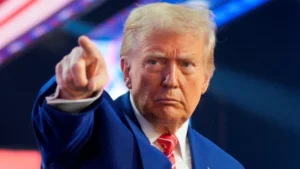
The timeline of the current escalation began with a surge in domestic protests as citizens took to the streets of Caracas and other major hubs to demand political reform and the release of detained officials. The situation intensified when the United States, under the direction of President Donald Trump, took a more direct interventionist stance, citing concerns over regional stability and human rights. In response, massive demonstrations have broken out across the country, with supporters of the Maduro government decrying what they term as a violation of national sovereignty and "imperialist overreach."
The international reaction was swift. The Chinese government issued a formal protest, particularly focusing on the strategic implications of the United States targeting Venezuela’s vast energy assets, including reports of moves to secure 50 million barrels of Venezuelan crude oil. This geopolitical tug-of-war highlights Venezuela’s role not just as a sovereign state, but as a vital node in the global energy supply chain.
The Historical Foundation: From Pre-Columbian Roots to Sovereignty
To understand the current state of Venezuela, one must look back at its deep historical roots. The territory has been inhabited for at least 10,000 years, originally home to diverse indigenous groups including the Carib, Arawak, and Chibcha peoples. These civilizations established complex social structures and agricultural practices long before European contact.
The European chapter of Venezuela’s history began in 1498 when Christopher Columbus arrived during his third voyage, describing the land as a "Terrestrial Paradise." Shortly thereafter, in 1499, the explorer Amerigo Vespucci observed the indigenous stilt houses built over the waters of Lake Maracaibo. The sight reminded him of the Italian city of Venice, leading him to name the region Veneziola, or "Little Venice"—the etymological origin of the name Venezuela.
For centuries, Venezuela was a colony of the Spanish Empire, serving as a key agricultural and administrative center. However, the early 19th century brought a wave of revolutionary fervor. Led by the iconic "Libertador" Simon Bolivar, Venezuela played a central role in the South American wars of independence. After a brief period as part of the Republic of Gran Colombia, Venezuela emerged as a fully sovereign nation in 1830. This legacy of revolution and the pursuit of autonomy remains a cornerstone of the national psyche, often invoked by modern political leaders to galvanize public support.
The Paradox of Plenty: Oil Reserves and Economic Realities
Venezuela’s modern identity is inextricably linked to its geology. The country sits atop the world’s largest proven oil reserves, surpassing even those of Saudi Arabia. The Orinoco Belt, a vast territory in the southern part of the country, contains massive deposits of extra-heavy crude. This wealth transformed Venezuela into one of the most prosperous nations in Latin America during the mid-20th century, fostering a period of rapid urbanization and the development of a robust middle class.
However, this reliance on "black gold" has proven to be a double-edged sword. The Venezuelan economy became highly susceptible to the volatility of global oil prices. When prices plummeted or production stalled due to aging infrastructure and political mismanagement, the nation faced severe economic contractions. Currently, despite having the most abundant reserves on the planet, the country struggles with hyperinflation and a scarcity of basic goods.
The paradox extends to the domestic energy market. For decades, Venezuela maintained the lowest gasoline prices in the world due to heavy government subsidies. While this was intended to benefit the populace, it also led to widespread smuggling across borders and a lack of investment in alternative energy or diversified industrial sectors. The current interest from global powers like the U.S. and China underscores that, despite its internal struggles, Venezuela remains a titan in the global energy landscape.
Geographical Majesty and Environmental Diversity
Beyond the oil fields, Venezuela is recognized as one of the 17 "megadiverse" countries in the world. Its geography spans a breathtaking array of ecosystems, from the snow-capped peaks of the Andes Mountains in the west to the vast tropical grasslands of the Llanos in the center, and the dense Amazonian rainforests in the south.
The country is home to several world-record-breaking natural wonders. Most notable is Angel Falls (Salto Ángel), located within the UNESCO-listed Canaima National Park. Dropping from the Auyán-tepui mountain, the water falls a staggering 979 meters, making it the highest uninterrupted waterfall on Earth. The region’s unique "tepuis"—flat-topped mountains that rise abruptly from the jungle floor—provided the inspiration for Sir Arthur Conan Doyle’s classic novel, The Lost World.
In the northwest, Lake Maracaibo hosts a meteorological phenomenon known as the Catatumbo Lightning. At the mouth of the Catatumbo River, unique atmospheric conditions create a nearly continuous series of lightning strikes. This "eternal storm" occurs up to 28 times per minute for several hours a day, nearly 300 nights a year, acting as a natural lighthouse for navigators for centuries.
The nation’s biodiversity is equally impressive. The Orinoco River is home to the rare pink river dolphin, while the country’s plains are the habitat of the capybara, the world’s largest rodent. Venezuela has dedicated approximately 57 percent of its territory to protected areas, reflecting a historical commitment to conservation, though these efforts are currently challenged by illegal mining and economic desperation.
Social Fabric: Culture, Cuisine, and National Pride
Venezuelan culture is a vibrant synthesis of indigenous, African, and Spanish influences. This melting pot is perhaps most visible in the nation’s culinary traditions. While the arepa—a versatile cornmeal cake—is the undisputed staple of the Venezuelan diet, the country is also world-renowned for its cocoa. Venezuelan chocolate, particularly that made from the Criollo bean, is considered by connoisseurs to be among the finest in the world, with a heritage of cultivation that spans generations.
In the realm of modern culture, two areas stand out: beauty pageants and baseball. Venezuela is a global powerhouse in the "Big Four" international beauty pageants, having produced numerous Miss Universe and Miss World winners. These competitions are followed with a fervor usually reserved for major sporting events and are a source of immense national pride.
In sports, while much of South America is dominated by football (soccer), Venezuela’s heart belongs to baseball. The country has exported hundreds of players to Major League Baseball (MLB) in the United States, and the winter domestic league remains a vital part of social life.
The nation also maintains unique local traditions, such as the Christmas custom in the capital city of Caracas, where residents head to early morning mass on roller skates. This tradition is so popular that the government frequently closes streets to cars during the holiday season to ensure the safety of the skaters.
Architectural Enigmas and Urban Challenges
The infrastructure of Caracas offers a visual history of the nation’s ambitions and its subsequent struggles. Two buildings, in particular, capture the world’s imagination. The "Tower of David" (Torre de David) is a 45-story skyscraper that was intended to be a financial center but was abandoned following an economic crisis in the 1990s. It eventually became the world’s tallest "vertical slum," housing thousands of squatters in a self-organized community before a government-led relocation program.
Then there is El Helicoide, a massive, spiral-shaped futuristic building designed in the 1950s as a drive-in shopping mall where patrons could drive their cars directly to the storefronts. The project was never completed as intended and has since been repurposed into a high-security prison and the headquarters of the national intelligence services, symbolizing the shift from mid-century optimism to the stark realities of the modern security state.
Global Implications and the Path Forward
The arrest of a sitting president and the ensuing geopolitical friction represent a watershed moment for the Western Hemisphere. For the United States, the goal appears to be a total reconfiguration of regional alliances and the securing of energy interests. For China and Russia, who have invested billions in Venezuelan infrastructure and debt, the shift represents a threat to their strategic foothold in South America.
Analysts suggest that the immediate future of Venezuela will depend on whether a peaceful transition can be negotiated or if the country will descend further into civil strife. The humanitarian stakes are high; millions of Venezuelans have already emigrated in recent years, creating a migrant crisis that has affected all of Latin America.
The resolution of the current crisis will require more than just a change in leadership. It will necessitate a comprehensive restructuring of the economy, the restoration of democratic institutions, and a delicate balancing act of international diplomacy. As the world watches the unfolding events in Caracas, the resilience of the Venezuelan people remains their greatest asset. From the heights of Angel Falls to the bustling streets of a capital in transition, Venezuela continues to be a nation of profound beauty and immense potential, waiting for the stability that will allow its many riches to benefit its citizens once again.