NASA Astronaut Christina Koch’s Journey to the Moon: A Testament to Childhood Dreams and Unwavering Support

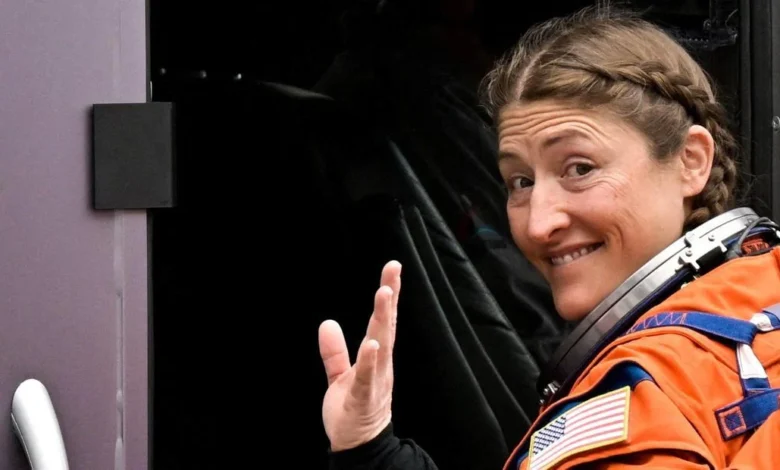
Jakarta, Indonesia – NASA astronaut Christina Koch, a figure synonymous with pioneering spirit and record-breaking achievements in space exploration, has shared an inspiring narrative detailing how foundational encouragement from a young age paved her path to becoming a space explorer. Koch, set to make history as the first woman to journey around the Moon as part of the Artemis II mission, stands as a beacon for aspiring scientists and explorers worldwide, underscoring the profound impact of unwavering belief in one’s dreams.
In a recent interview with El País, Koch revealed that her ambition to explore the cosmos was ignited during her formative years, a dream that, crucially, was never met with skepticism or dismissal. From her earliest days in kindergarten, Koch vividly recalls articulating her aspiration to become an astronaut. Rather than encountering doubt, she was met with enthusiastic support from her educators, a pivotal factor she credits for nurturing her extraordinary journey. "I feel fortunate that when I told my kindergarten teachers, they supported me," Koch recounted, emphasizing the early validation that fueled her resolve. "No one ever told me it wasn’t possible. And whether that was due to my own stubbornness or that encouragement, I continued to pursue that dream." This anecdote highlights a critical element in the development of future innovators: an environment that fosters rather than constrains nascent ambitions.
A Distinguished Career Forged in Science and Exploration
Christina Hammock Koch’s trajectory into the elite ranks of NASA astronauts is a story of relentless dedication, academic excellence, and diverse practical experience. Born in Grand Rapids, Michigan, and raised in Jacksonville, North Carolina, Koch’s intellectual curiosity was evident early on. She pursued higher education at North Carolina State University, where she earned two Bachelor of Science degrees—one in Electrical Engineering and another in Physics—followed by a Master of Science in Electrical Engineering. This robust academic foundation provided her with the theoretical knowledge essential for complex engineering and scientific challenges.
Her professional career before joining NASA was equally impressive and varied, building a unique skillset that would prove invaluable for spaceflight. Koch’s early roles included an electrical engineering position at NASA’s Goddard Space Flight Center, where she contributed to the development of scientific instruments for several space science missions. She later transitioned to the Johns Hopkins University Applied Physics Laboratory (APL), focusing on space science instrument development and research.
Perhaps most distinctive were her extensive experiences in extreme environments. Koch spent significant time working at remote scientific research stations, including deployments to the South Pole Station in Antarctica and the Summit Station in Greenland. At the South Pole, she served as a Field Engineer for the United States Antarctic Program, enduring the harsh, isolated conditions of the continent’s interior, maintaining scientific equipment, and living in extreme cold and darkness for extended periods. This experience provided unparalleled training in self-sufficiency, teamwork under pressure, and adaptability—qualities paramount for long-duration space missions. Her work at these remote outposts, often isolated for months with a small team, inadvertently served as an excellent analog for the psychological and physical demands of living aboard the International Space Station or undertaking a lunar mission.
The Rigorous Path to Becoming a NASA Astronaut
The journey to becoming a NASA astronaut is one of the most competitive career paths globally, attracting thousands of highly qualified applicants for only a handful of positions. Koch was selected as part of NASA Astronaut Group 21 in 2013, a cohort dubbed "The Eight Balls." This selection followed a grueling process that evaluates candidates not only on their academic and professional achievements but also on their physical fitness, psychological resilience, and ability to work effectively in high-stakes team environments.
The typical requirements for astronaut candidates are stringent: U.S. citizenship, a master’s degree in a STEM field (engineering, biological science, physical science, computer science, or mathematics), and at least two years of related professional experience or at least 1,000 hours of pilot-in-command time in jet aircraft. Koch’s background, with her dual engineering and physics degrees, her experience in instrument development, and her invaluable time in extreme terrestrial environments, made her an exceptionally well-rounded candidate for this demanding role. Upon selection, she underwent extensive training, including spacewalk simulations, robotics, Russian language instruction, and survival training, preparing her for the multifaceted challenges of spaceflight.
Breaking Records: A Historic Mission Aboard the International Space Station
Christina Koch cemented her place in space history long before her assignment to Artemis II. On March 14, 2019, she launched aboard a Soyuz MS-12 spacecraft to the International Space Station (ISS) for Expedition 59/60/61. What began as a standard six-month mission evolved into an extraordinary 328-day stay, establishing a new record for the longest continuous spaceflight by a woman. She surpassed the previous record held by Peggy Whitson (289 days), demonstrating remarkable endurance and resilience.
During her nearly year-long tenure on the ISS, Koch participated in numerous scientific experiments across various disciplines, from human physiology to materials science, contributing vital data to understanding the long-term effects of microgravity on the human body and the efficacy of different technologies in space. Her work was crucial for future long-duration missions, including those to the Moon and Mars.
A particularly iconic moment during her ISS mission occurred on October 18, 2019, when Koch, alongside fellow NASA astronaut Jessica Meir, conducted the first all-female spacewalk. This historic Extravehicular Activity (EVA) was not merely symbolic; it involved a critical repair of a faulty battery charge/discharge unit on the station’s exterior. This achievement underscored the growing diversity within NASA’s astronaut corps and served as a powerful visual testament to women’s capabilities in the most demanding aspects of space exploration. The images of Koch and Meir floating in the vastness of space, working side-by-side, resonated globally, inspiring countless individuals and challenging traditional perceptions of who can be an astronaut.
Artemis II: Paving the Way for Humanity’s Return to the Moon
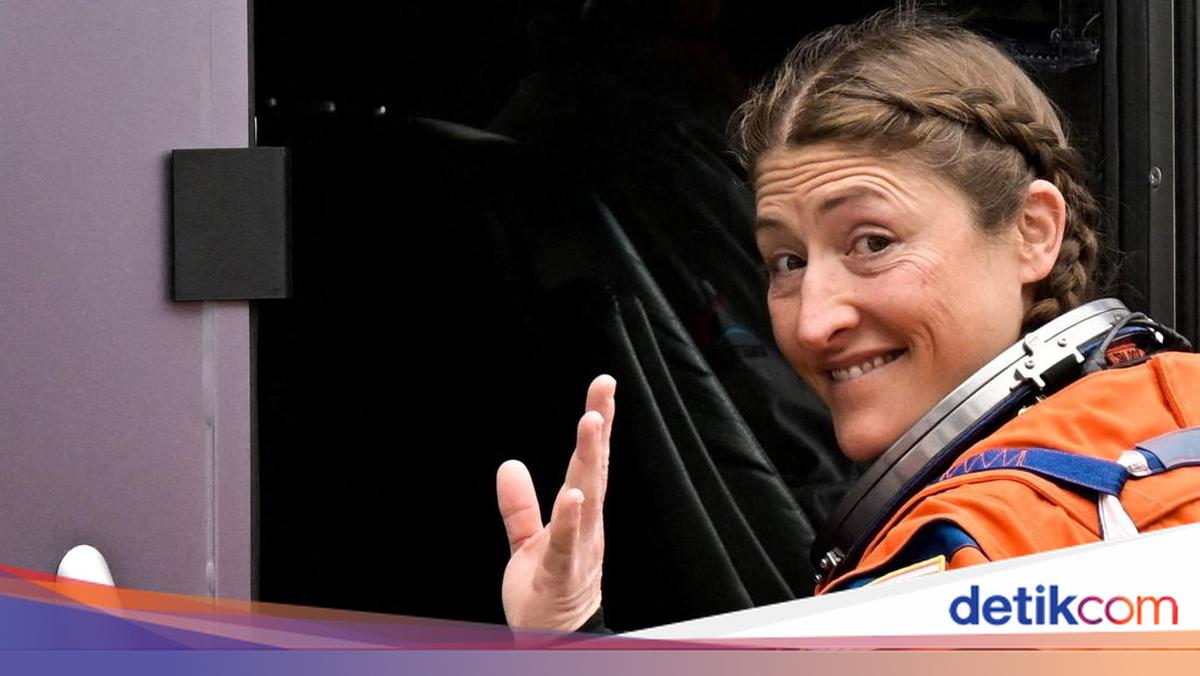
Now, Christina Koch is poised to etch her name even deeper into the annals of space exploration as a mission specialist on Artemis II. This groundbreaking mission represents a critical step in NASA’s ambitious Artemis program, which aims to return humans to the lunar surface for the first time in over 50 years and establish a sustainable long-term human presence on and around the Moon, ultimately preparing for future human missions to Mars.
The Artemis program is structured in phases:
- Artemis I: An uncrewed test flight of the Orion spacecraft and Space Launch System (SLS) rocket, successfully completed in late 2022. This mission demonstrated the performance of the SLS and Orion’s capabilities in a lunar environment, including its heat shield during re-entry.
- Artemis II: The mission Koch will be a part of. This will be the first crewed test flight of the Orion spacecraft, carrying four astronauts on a multi-day journey around the Moon. The crew will orbit the Moon, performing crucial system checks and verifying Orion’s life support systems and communications in deep space before returning to Earth. While it will not land on the Moon, it will venture farther into space than any human has traveled before.
- Artemis III: The highly anticipated mission that will see the first woman and the first person of color land on the lunar south pole, targeting a landing later this decade.
Koch’s role as a mission specialist on Artemis II is vital. She will be responsible for monitoring spacecraft systems, conducting research, and assisting the commander and pilot during the flight. Her extensive experience from the ISS, particularly her expertise in spacecraft systems and long-duration spaceflight, makes her an ideal candidate for this historic voyage. The Artemis II mission is not just a technological demonstration; it’s a profound statement about humanity’s renewed commitment to lunar exploration and a crucial stepping stone towards establishing a permanent human presence beyond Earth.
Inspired by Pioneers, Inspiring a New Generation
Koch readily acknowledges the profound influence of female pioneers in space exploration who came before her, such as Sally Ride, the first American woman in space, and Mae Jemison, the first African American woman in space. These women shattered ceilings and opened doors, demonstrating that the dream of spaceflight was attainable for everyone, regardless of gender or background. Their legacies continue to resonate, providing a powerful narrative for future generations.
Beyond these iconic figures, Koch also draws inspiration from the "ordinary people" in her life, including her family. She credits witnessing individuals bravely championing their beliefs as a significant motivator in her own journey. This speaks to the idea that inspiration can be found not only in extraordinary feats but also in the everyday courage and conviction of those around us.
Despite her monumental achievements, Koch initially expressed a degree of reluctance to highlight her personal accomplishments. However, she later realized the profound importance of doing so, particularly as a source of inspiration for others, especially young girls who might see their own aspirations reflected in her story. "That achievement may mean a lot to many people, and sharing it can be an inspiration," she remarked, embracing her role as a public figure and an advocate for STEM education.
A Message for the Future: Passion and Courage
Christina Koch’s message for the younger generation is clear and empowering. She urges aspiring explorers and innovators to "Follow your passion, that’s where you will be most successful." This advice emphasizes the importance of intrinsic motivation and genuine interest in one’s chosen field, suggesting that true success stems from pursuing what genuinely excites and fulfills an individual.
Furthermore, she champions the idea of stepping outside one’s comfort zone, advocating for deliberate engagement with challenges and fears. "Do the things that actually scare you, because that’s where we grow," Koch advises. This philosophy underscores the transformative power of confronting discomfort, illustrating that personal and professional development often occurs at the boundaries of what we perceive as safe or familiar. Whether it’s taking on a difficult academic subject, embarking on a challenging expedition, or facing public speaking, Koch’s message encourages resilience and a growth mindset.
Broader Implications and Lasting Legacy
Christina Koch’s journey is more than just a personal triumph; it carries significant broader implications for space exploration, gender equality, and global inspiration. Her record-breaking ISS mission and her pivotal role in Artemis II symbolize a new era of space exploration characterized by greater diversity and inclusivity. For decades, space travel was largely dominated by men, particularly military test pilots. The rise of astronauts like Koch, with backgrounds in science and engineering and diverse life experiences, reflects a broader shift in how NASA and other space agencies approach crew selection, valuing a wider range of expertise and perspectives.
Her story powerfully contributes to closing the gender gap in STEM fields. By seeing a woman not only pursue but also excel in a traditionally male-dominated domain, young girls are provided with a tangible role model, helping to dismantle stereotypes and encourage them to pursue careers in science, technology, engineering, and mathematics. NASA, through its various outreach programs and the public visibility of its diverse astronaut corps, actively works to capitalize on this inspiration.
The Artemis program itself, with Koch as a key crew member, represents a return to humanity’s deep-space exploration roots, but with a forward-looking vision. It signifies international collaboration, technological innovation, and a long-term strategy for space colonization. The data gathered from missions like Artemis II will be crucial for understanding human capabilities and limitations in deep space, informing future missions to Mars and beyond.
Ultimately, Christina Koch’s narrative—from a kindergarten dream to an orbital journey around the Moon—is a compelling testament to the transformative power of early encouragement and persistent pursuit of one’s aspirations. Her story serves as a profound reminder that with a supportive environment and the courage to embrace challenges, even the most audacious dreams can become a reality, inspiring a new generation to reach for the stars and beyond.