Filming Concludes for Highly Anticipated Live-Action ‘The Legend of Zelda’ Feature Film, Setting Stage for May 2027 Global Release.

Jakarta – The extensive principal photography for Nintendo’s much-anticipated live-action adaptation of The Legend of Zelda has officially wrapped, marking a significant milestone in bringing one of gaming’s most iconic franchises to the big screen. The film is now entering its post-production phase, with a global theatrical premiere firmly slated for May 7, 2027. This pivotal update was confirmed during the recent CinemaCon event, where industry insiders were assured that the ambitious project remains on schedule for its highly anticipated debut.
The journey to bring Hyrule to life began with primary filming in the picturesque landscapes of New Zealand, a location renowned for its diverse and fantastical scenery, which commenced in November 2025. The choice of New Zealand, a country celebrated for its stunning natural beauty and its proven track record as a filming location for epic fantasy productions like The Lord of the Rings and The Hobbit sagas, underscores the production’s commitment to capturing the grand scale and mystical essence of the Zelda universe. This strategic decision aimed to provide an authentic and breathtaking backdrop for the magical realm of Hyrule and its diverse environments, from the serene plains to the treacherous mountains.
Casting the Icons: Link and Princess Zelda
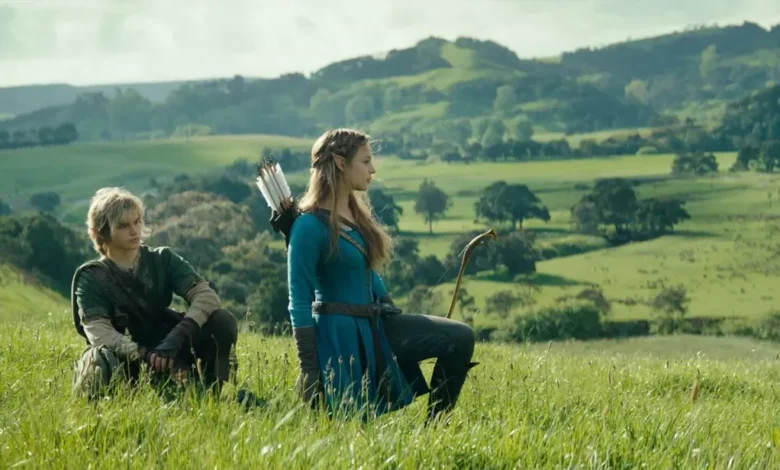
Central to the film’s narrative are its two legendary protagonists. The role of Princess Zelda, the wise and powerful princess of Hyrule, will be portrayed by British actress Bo Bragason. Opposite her, the silent hero Link, the courageous champion destined to save Hyrule, will be brought to life by Benjamin Evan Ainsworth. These casting choices were initially unveiled by none other than Shigeru Miyamoto, the esteemed designer and producer at Nintendo and the visionary creator behind The Legend of Zelda series, in mid-2025.
Miyamoto’s announcement, delivered with characteristic enthusiasm, was widely shared across Nintendo’s official channels. On July 17, 2025, he expressed his excitement, stating, "I am thrilled to announce the cast for the live-action The Legend of Zelda. Zelda will be played by Bo Bragason, and Link by Benjamin Evan Ainsworth." This revelation was met with a fervent mixture of excitement and analysis from the global fanbase, eager to see how these young talents would embody characters held in such high regard.
Bo Bragason, an emerging talent from the United Kingdom, has garnered critical acclaim for her compelling performances across various platforms. She is notably recognized for her roles in the BBC One series Three Girls and The Jetty, as well as her recent appearance in the Disney+ historical fantasy adventure Renegade Nell. Her filmography also includes the vampiric comedy The Radleys, directed by Euros Lyn, showcasing her versatility across genres. Her selection for Princess Zelda suggests a preference for an actress capable of conveying both regal grace and inner strength, qualities essential to the character.
Benjamin Evan Ainsworth, another promising British actor, has rapidly built an impressive portfolio. In 2025, he appeared alongside seasoned actors Bryan Cranston and Allison Janney in the film Everything’s Going to Be Great. His television credits include the comedic series Kanan, Son of a Critch. Notably, Ainsworth also lent his voice to the titular character in Disney’s 2022 live-action adaptation of Pinocchio, demonstrating his capacity for nuanced performance, even in a voice-acting capacity. His casting as Link, a character often defined by his actions and expressions rather than dialogue, hints at a performance that will rely heavily on physical presence and emotive non-verbal communication.
First Glimpses and Fan Reactions
Following the July 2025 casting announcement, Nintendo capitalized on the burgeoning anticipation by releasing the first official production photos of Bragason and Ainsworth in their respective roles. These eagerly awaited images provided fans with their initial glimpse of Link and Princess Zelda adorned in costumes designed to faithfully reflect their iconic in-game appearances. The photos were strategically unveiled on November 17, 2025, via Nintendo Today! – the company’s dedicated application – and across Nintendo’s official social media platforms. This release came just a day after a brief, unauthorized video from the New Zealand set had gone viral, offering a tantalizing, albeit grainy, sneak peek at the production. The official release served to quell speculation and provide high-quality imagery directly from the source.
The visual fidelity of the costumes and the overall aesthetic hinted at in these early images largely reassured a fanbase often wary of adaptations. The commitment to capturing the recognizable designs of the characters was seen as a positive sign, suggesting a respectful approach to the source material while allowing for the necessary cinematic interpretation.
The Visionary Team: Director and Producers
The monumental task of directing The Legend of Zelda film has been entrusted to Wes Ball, acclaimed for his work on The Maze Runner film series and the visually ambitious Kingdom of the Planet of the Apes. Ball’s experience in crafting expansive, action-packed narratives with strong world-building elements makes him a fitting choice for the scale and scope of Hyrule. His previous projects demonstrate a keen eye for visual storytelling and a capability to manage large-scale productions, qualities that will be crucial for a film of this magnitude.
The film is being produced by Nintendo and Arad Productions Inc., with Avi Arad, known for his involvement in numerous Marvel adaptations, serving as a key producer alongside Shigeru Miyamoto himself. This direct involvement of Miyamoto signals Nintendo’s deep commitment to ensuring the film remains true to the spirit and integrity of the original games. Sony Pictures Entertainment is handling the global distribution, leveraging its vast network to ensure the film reaches audiences worldwide. The collaboration between Nintendo’s creative genius, Arad’s extensive production experience, and Sony’s distribution prowess forms a robust framework for the project’s success.
Nintendo’s Strategic Shift into Live-Action
For decades, Nintendo had maintained a cautious, almost hesitant, approach to live-action film adaptations of its beloved intellectual properties, largely due to the critical and commercial disappointment of the 1993 Super Mario Bros. movie. This historical reluctance fostered a protective stance over their IPs. However, the resounding global success of Illumination’s animated The Super Mario Bros. Movie in 2023, which grossed over $1.3 billion worldwide and garnered positive fan reception, marked a significant turning point. The Mario film demonstrated that, with the right creative partners and a faithful approach, Nintendo’s characters could thrive on the big screen.
This success provided Nintendo with renewed confidence and a strategic impetus to explore further cinematic ventures. The announcement of The Legend of Zelda live-action film in late 2023, coming on the heels of the Mario film’s triumph, clearly indicated a new era for Nintendo’s media strategy. The company appears to be actively pursuing a multi-platform approach to expand the reach and cultural impact of its most cherished franchises, moving beyond just video games to encompass film, animation, and potentially other forms of entertainment. This expansion is not merely about financial gain but also about introducing these rich worlds to new generations and deepening engagement with existing fans.
The Legacy of The Legend of Zelda: A Cultural Phenomenon
The Legend of Zelda franchise, which debuted in 1986 with The Legend of Zelda on the Famicom Disk System, is not merely a series of video games; it is a cultural touchstone that has shaped generations of gamers and influenced the landscape of interactive entertainment. Created by Shigeru Miyamoto and Takashi Tezuka, the series pioneered open-world exploration, non-linear gameplay, and intricate puzzle-solving, setting benchmarks for action-adventure games for decades to come.
Over its nearly four-decade history, the franchise has produced over 20 main titles, each pushing the boundaries of storytelling, gameplay mechanics, and artistic design. Iconic entries like Ocarina of Time, Majora’s Mask, The Wind Waker, Twilight Princess, and more recently, Breath of the Wild and Tears of the Kingdom, have consistently received universal critical acclaim, often cited as some of the greatest video games ever made. The series is celebrated for its compelling narrative of good versus evil, its memorable characters, its enchanting musical scores, and its rich, fantastical world of Hyrule, filled with ancient legends, mystical creatures, and challenging dungeons.
The core themes of courage, wisdom, and power, embodied by Link, Zelda, and Ganon respectively, resonate deeply with players. The franchise’s unique blend of exploration, combat, and puzzle-solving, combined with a timeless aesthetic, has cultivated an exceptionally dedicated and passionate global fanbase. Adapting such a beloved and critically revered series into live-action presents both an immense opportunity and a formidable challenge: to honor its deep legacy while creating a compelling cinematic experience that stands on its own.
Plot Details and Fan Expectations
As is common with high-profile productions, specific plot details for the live-action The Legend of Zelda film remain shrouded in secrecy. However, industry observers and fans alike are operating under the strong expectation that the film will deliver a faithful adaptation of the cherished game series. The inherent challenge lies in translating the interactive, often player-driven narrative of a video game into a passive, linear film experience. Key questions revolve around which specific Zelda timeline or game will serve as the primary inspiration, or if the film will craft an entirely new narrative within the established lore.
One of the most significant hurdles for the adaptation is Link’s characterization. In the games, Link is typically a silent protagonist, serving as an avatar for the player. This design choice fosters immersion but poses a unique problem for a live-action film where character development often relies on dialogue and verbal expression. The choice of Benjamin Evan Ainsworth suggests a focus on conveying emotion and determination through physical acting and subtle expressions, a testament to the director’s vision for the character. The filmmakers will need to strike a delicate balance between honoring Link’s iconic silence and giving him enough presence and agency to drive a cinematic narrative.
Fans are also keen to see how elements like the Triforce, Ganon’s evil, the various races of Hyrule (Gorons, Zoras, Rito, Koroks, Gerudo, etc.), and the iconic items (Master Sword, Hylian Shield, bow and arrows, bombs) will be integrated into the live-action setting. The challenge is to make these fantastical elements feel grounded and believable within the film’s reality, avoiding any sense of camp or artificiality.
Broader Impact and Implications
The successful production and impending release of The Legend of Zelda film carry significant implications for Nintendo’s future in entertainment and for the broader landscape of video game adaptations. If the film resonates with both critics and audiences, it could solidify Nintendo’s position as a major player in Hollywood, potentially paving the way for a "Nintendo Cinematic Universe" that could encompass other beloved franchises like Metroid, Donkey Kong, or Star Fox. This strategy would leverage the company’s vast library of globally recognized IPs, transforming them from solely interactive experiences into multi-media phenomena.
From an industry perspective, The Legend of Zelda could further elevate the status of video game adaptations, building on the recent successes of films like Sonic the Hedgehog, Pokémon Detective Pikachu, and Five Nights at Freddy’s. These films have demonstrated that with careful planning, respect for the source material, and substantial production values, video game movies can break free from their historical stigma and achieve critical and commercial success. A successful Zelda film would further validate the artistic and commercial viability of adapting complex game narratives for the big screen, potentially encouraging other game developers to explore similar ventures.
Economically, the film represents a massive investment, likely in the range of $150-$200 million or more, given the scale and visual effects required for a fantasy epic. The global box office potential, however, is equally immense. Given the franchise’s enduring popularity and the worldwide appeal of Nintendo, The Legend of Zelda could easily aim for blockbuster status, potentially crossing the half-billion or even billion-dollar mark, depending on critical reception and audience word-of-mouth. Beyond ticket sales, the film will undoubtedly drive sales of Zelda games, merchandise, and other ancillary products, creating a synergistic effect across Nintendo’s various business segments.
As post-production now takes center stage, the focus shifts to the intricate process of visual effects, sound design, musical scoring, and editing that will weave together the footage captured in New Zealand into a cohesive and breathtaking cinematic experience. The next major milestones for fans will likely be the release of a teaser trailer, followed by a full theatrical trailer, which will offer more substantial glimpses into the film’s aesthetic, tone, and narrative direction. With principal photography complete, The Legend of Zelda is steadily advancing towards its highly anticipated premiere on May 7, 2027, promising to be a landmark event for both the gaming and film industries.