Hugo Ekitike’s Achilles Tendon Rupture Threatens Liverpool’s Season and Future Aspirations with Potential 2027 Return

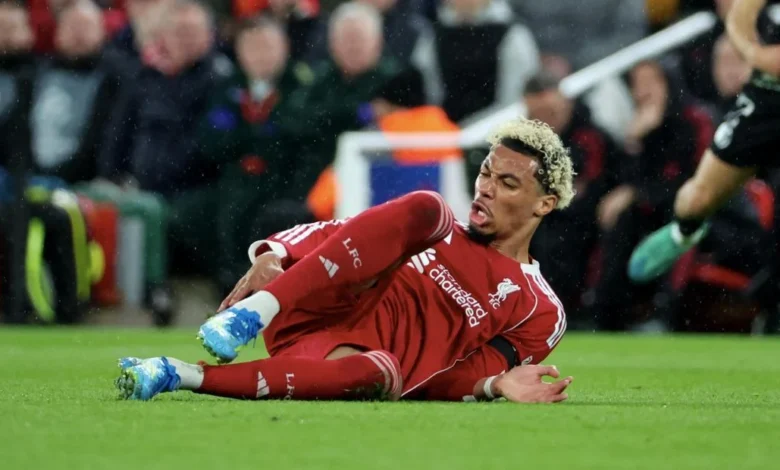
Liverpool’s promising striker, Hugo Ekitike, faces a devastating setback after sustaining a suspected Achilles tendon rupture during the club’s Champions League clash against Paris Saint-Germain. The injury, which occurred in the early stages of the match at Anfield on Wednesday, April 15th, has cast a dark shadow over Liverpool’s already challenging season and raises significant concerns about the French forward’s long-term availability, potentially extending his absence from the pitch until 2027. This catastrophic injury could derail not only Ekitike’s immediate impact at Liverpool but also his participation in major international tournaments.
The incident unfolded less than thirty minutes into the highly anticipated Champions League encounter. Ekitike, who had been a notable acquisition for Liverpool this season, was forced off the field and immediately replaced by Mohamed Salah after collapsing in evident pain. Eyewitness accounts and post-match reports suggest the severity of the injury became apparent quickly, with the striker reportedly feeling his Achilles tendon snap before his fall. This specific nature of the injury, a complete rupture, is notoriously difficult to recover from, typically demanding a rehabilitation period of nine to twelve months, if not longer, for professional athletes.
A Promising Season Cut Short
Ekitike’s arrival at Liverpool had been met with considerable optimism. The young French forward had quickly established himself as a vital component of the squad, demonstrating impressive form throughout his debut season. Prior to this unfortunate incident, Ekitike had amassed an impressive tally of 17 goals and 6 assists across all competitions, solidifying his reputation as a potent attacking threat and a valuable asset to the team’s offensive strategy. His ability to find the back of the net and create scoring opportunities had endeared him to the Anfield faithful and provided a much-needed boost to Liverpool’s attacking prowess.
The timing of this injury is particularly cruel for Ekitike, as it not only jeopardizes his club career but also casts a significant doubt over his international prospects. With the FIFA World Cup slated for 2026, Ekitike’s potential absence until 2027 means he would miss out on this prestigious global tournament, a dream for any aspiring footballer. This would be a profound personal disappointment for the player and a considerable loss for the French national team, who had been looking to him as a potential key player for the future.
The Wider Impact on Liverpool’s Campaign
The injury to Ekitike represents a substantial blow to Liverpool’s already precarious season. The club has been navigating a difficult period, marked by inconsistent performances and a string of disappointing results. The 2-0 defeat to Paris Saint-Germain in the Champions League, which effectively sealed their elimination from the quarter-finals, further compounded their woes. This loss, coupled with Ekitike’s debilitating injury, paints a grim picture for the remainder of Liverpool’s campaign.
Beyond the Champions League exit, Liverpool’s trophy aspirations have been significantly curtailed. They have already been eliminated from the FA Cup and the League Cup, leaving the Premier League as their sole remaining avenue for silverware. However, even this prospect appears increasingly remote. Liverpool currently sits in fifth place in the Premier League standings with 52 points. With only six matches remaining in the season, they find themselves a daunting 18 points adrift of league leaders Arsenal. This significant deficit makes a title challenge highly improbable, virtually guaranteeing that Liverpool will end the season without a major trophy, a stark contrast to their historically successful campaigns.
A Chronology of Misfortune
The recent period has been a cascade of setbacks for Liverpool, with Ekitike’s injury being the latest and perhaps most severe in a series of unfortunate events. The club’s European dreams were extinguished by PSG, a result that, while disappointing, was perhaps anticipated given the formidable opponent. However, the manner of their domestic exits from cup competitions and their struggles in the league have added to a growing sense of unease around Anfield.
- Early Season Promise: Hugo Ekitike’s integration into the Liverpool squad was initially successful, with his goal-scoring exploits providing a much-needed spark.
- League Cup Exit: Liverpool’s journey in the League Cup was cut short, marking an early departure from one of their domestic trophy ambitions.
- FA Cup Knockout: The club’s participation in the FA Cup also concluded prematurely, further diminishing their chances of silverware.
- Champions League Quarter-Final Defeat: The crucial match against Paris Saint-Germain at Anfield resulted in a 0-2 loss, confirming Liverpool’s exit from Europe’s elite club competition.
- Ekitike’s Injury: During the PSG match, Hugo Ekitike sustained a severe injury, later identified as a suspected Achilles tendon rupture, forcing his premature substitution.
This timeline highlights a season characterized by a gradual erosion of Liverpool’s competitive edge and a growing list of significant challenges.
Supporting Data and Precedents
The prognosis for an Achilles tendon rupture is always serious, and historical data provides a stark perspective on the recovery journey for athletes. Typically, a complete tear of the Achilles tendon requires surgical intervention followed by an extensive period of rehabilitation. This process involves immobilisation, gradual physiotherapy, and a slow reintroduction to physical activity. The return to competitive sport is often gradual, with many athletes not returning to their previous level of performance for at least a year.
For a player like Ekitike, who relies on explosive power, agility, and speed, the impact of such an injury can be profound. The Achilles tendon is crucial for these movements, and the psychological toll of recovering from such a significant injury can also be substantial. Players often face fears of re-injury, which can affect their confidence and performance upon their return.
Looking at similar cases in football, numerous high-profile players have faced lengthy spells on the sidelines due to Achilles tendon injuries. The recovery process is demanding, and the long-term effects can sometimes linger. The projection of Ekitike’s absence until 2027, while perhaps on the more pessimistic end of the spectrum, underscores the severity of the injury and the cautious approach required for his rehabilitation. It is not uncommon for players to require more than a year to fully recover and regain peak fitness after such an injury.
Inferred Reactions and Analysis
While official statements from Liverpool Football Club regarding Ekitike’s injury are likely to follow once further medical assessments are complete, it is reasonable to infer a significant level of concern and disappointment from the club’s management, coaching staff, and medical team. Manager Jurgen Klopp, known for his passionate engagement with his players, would undoubtedly be deeply affected by the news, particularly given Ekitike’s positive contribution to the team.
The club’s medical department will now be tasked with overseeing Ekitike’s treatment and rehabilitation, a process that will require meticulous planning and execution. The financial implications for the club are also noteworthy. While Ekitike’s transfer fee might have been a significant investment, the prolonged absence of such a key player will undoubtedly impact the team’s performance and, consequently, its revenue streams from match attendance, merchandise, and potential prize money.
From an analytical perspective, Ekitike’s injury exacerbates Liverpool’s existing squad depth issues. The team has already faced challenges with injuries to other key players throughout the season, and the loss of another impactful forward places additional pressure on the remaining attacking options. This could lead to a reassessment of transfer strategies in the upcoming windows, with a potential focus on reinforcing the attacking department to mitigate such risks in the future.
Broader Impact and Implications
The ramifications of Ekitike’s injury extend beyond the immediate sporting concerns. For the player, it represents a significant personal setback, a period of uncertainty and arduous recovery that could test his resilience. The dream of representing his country on the world stage, a goal he would have undoubtedly harbored, now seems distant.
For Liverpool Football Club, this injury underscores the inherent risks associated with professional football and the importance of robust player welfare strategies. It serves as a stark reminder that even highly talented and seemingly fit athletes can be sidelined by severe injuries. The club’s immediate focus will be on supporting Ekitike through his recovery, while also navigating the remainder of their current season with the challenges it presents.
In the long term, Liverpool will need to adapt to the absence of a player who had quickly become integral to their attacking setup. This may involve tactical adjustments, increased reliance on other players, and a potential shift in transfer market priorities. The club’s ability to manage this crisis effectively will be a true test of their organizational strength and their commitment to player development and well-being. The road to recovery for Hugo Ekitike will be long and arduous, but the support of his club and the dedication to his rehabilitation will be paramount in his quest to return to the pitch and recapture his formidable form.