Russia Reaffirms Support for Irans Right to Peaceful Uranium Enrichment and Pledges Technical Cooperation to Resolve Nuclear Standoff

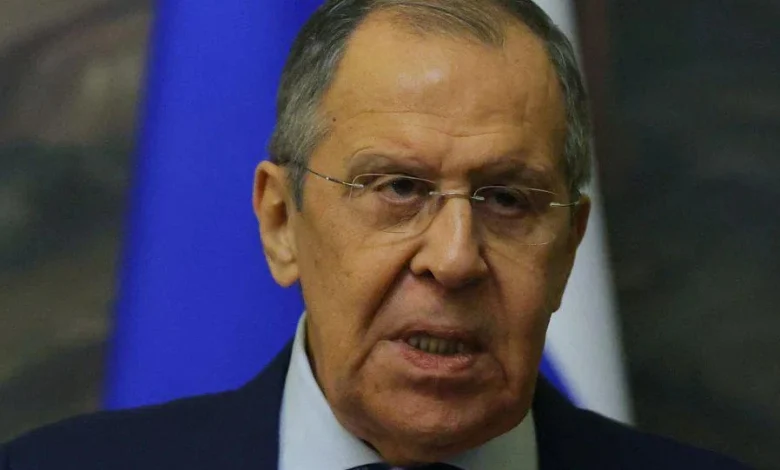
Russian Foreign Minister Sergei Lavrov has formally declared Moscow’s unwavering support for Iran’s sovereign right to enrich uranium for peaceful purposes, signaling a deepening of the strategic partnership between the two nations. Speaking at a high-profile press conference in Beijing on Wednesday following a series of diplomatic consultations with Chinese President Xi Jinping, Lavrov emphasized that the Russian Federation is prepared to accept any decision made by Tehran that aligns with international legal frameworks and Iran’s legitimate rights as a signatory to the Treaty on the Non-Proliferation of Nuclear Weapons (NPT). This statement comes at a critical juncture in global geopolitics, as the international community grapples with the stalled negotiations surrounding the Joint Comprehensive Plan of Action (JCPOA) and the shifting alliances within the Eurasian bloc.
During his address in the Chinese capital, Lavrov underscored that every nation maintains the inherent right to utilize nuclear technology for civilian advancement, including the enrichment of uranium, provided such activities remain strictly within the bounds of peaceful application. "Russia will accept any decision that suits the Iranian side within the framework of these legitimate rights," Lavrov stated, according to reports from Iranian state media. He further articulated Moscow’s readiness to play a proactive role in facilitating a comprehensive settlement regarding Iran’s stockpiles of enriched uranium, offering technical solutions that could bridge the gap between Tehran’s energy needs and the security concerns of the international community.
Technical Cooperation and the Path to De-escalation
A central component of Lavrov’s proposal involves Russia’s potential role as a technical intermediary. The Foreign Minister outlined several avenues through which Moscow could assist in managing Iran’s nuclear materials. These include the reprocessing of highly enriched uranium into fuel suitable for civilian nuclear power plants or the transportation of excess enriched material to Russia for secure storage. Such measures are designed to respect Iran’s right to civil nuclear energy while providing the "P5+1" nations with the assurances necessary to verify that the program remains non-militarized.
Lavrov revealed that these technical and diplomatic possibilities have been the subject of intensive discussions not only with Iranian Foreign Minister Abbas Araghchi but also through back-channel communications involving representatives from the United States and Israel. Furthermore, the Russian diplomat noted that President Vladimir Putin has frequently addressed these issues in his high-level contacts with global leaders, highlighting the priority the Kremlin places on the Iranian nuclear file as a pillar of regional stability.
The Russian position is predicated on the assertion that there is no credible evidence suggesting that Iran has ever sought to weaponize its nuclear program. Lavrov pointed to the findings of the International Atomic Energy Agency (IAEA), which, despite ongoing technical disputes and "questions of clarification," has not produced a definitive report confirming the diversion of nuclear material for military purposes. By reinforcing this narrative, Moscow aims to counter the "maximum pressure" rhetoric often championed by Western capitals, particularly Washington and Tel Aviv.
Historical Context: The JCPOA and the Erosion of Trust
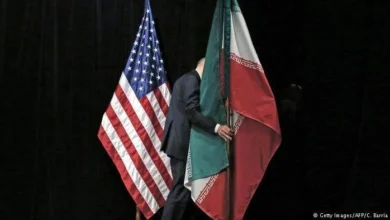
To understand the significance of Lavrov’s recent statements, one must look at the turbulent history of the Iranian nuclear deal. The JCPOA, signed in 2015 between Iran and the P5+1 (the US, UK, France, Russia, China, and Germany), was hailed as a landmark achievement in multilateral diplomacy. Under the agreement, Iran agreed to significant limits on its enrichment capacity and allowed for unprecedented IAEA inspections in exchange for the lifting of crippling economic sanctions.
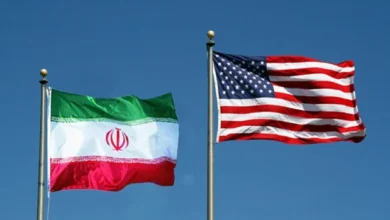
However, the architecture of the deal began to crumble in 2018 when the United States, under the Trump administration, unilaterally withdrew from the agreement and reimposed "snapback" sanctions. This move was characterized by Moscow and Beijing as a violation of international law and a breach of UN Security Council Resolution 2231. In response to the U.S. "maximum pressure" campaign and the perceived failure of European signatories to protect Iranian trade, Tehran gradually began to scale back its own commitments, increasing enrichment levels and expanding its centrifuge arrays.
By 2026, the landscape of the nuclear standoff has evolved significantly. Iran has moved beyond the 3.67% enrichment limit set in 2015, reaching levels that Western analysts claim are dangerously close to weapons-grade (90%). Russia, however, maintains that these steps are reversible and are a direct consequence of the West’s failure to uphold its end of the bargain. Lavrov’s comments in Beijing serve as a reminder that Russia views itself as the guarantor of the original spirit of the 2015 deal, even as the original framework remains on life support.
Chronology of Recent Nuclear Developments
The current diplomatic push by Russia follows a series of significant events over the past year that have heightened tensions in the Middle East and beyond:
- Early 2025: Iran announces the installation of advanced IR-6 centrifuges at the Fordow and Natanz facilities, significantly increasing its enrichment speed.
- Mid-2025: IAEA Director General Rafael Grossi visits Tehran to negotiate a "Joint Statement" on monitoring, resulting in limited success regarding the re-installation of surveillance cameras.
- Late 2025: The United States and its E3 allies (UK, France, Germany) consider "snapback" mechanisms at the UN, while Russia and China vow to veto any such move.
- March 2026: Reports emerge of clandestine talks in Oman between U.S. and Iranian intermediaries, though no formal breakthrough is announced.
- April 2026: Sergei Lavrov travels to Beijing to coordinate a "unified Eurasian response" to Western sanctions, leading to the current declaration of support for Iran’s nuclear rights.
International Reactions and Global Implications
The reaction to Lavrov’s statements has been polarized along traditional geopolitical fault lines. In Tehran, the government has welcomed the Russian stance as a validation of its "Resistance Economy" and its right to technological sovereignty. Iranian officials have reiterated that their nuclear program is essential for medical isotope production, agricultural research, and meeting the growing electricity demands of a nation of 85 million people.
In contrast, officials in Washington have expressed skepticism. A spokesperson for the U.S. State Department noted that while the U.S. acknowledges the right to peaceful energy, "the lack of transparency from Tehran and the continued enrichment to high levels remain a threat to global non-proliferation efforts." Israel has been more vocal, with intelligence officials warning that Russia’s "protective umbrella" over Iran’s nuclear program emboldens Tehran to continue its path toward "threshold state" status.
The implications of this Russo-Iranian alignment are profound. For Russia, supporting Iran is not merely about nuclear energy; it is about challenging the U.S.-led international order. By backing Iran in the heart of Beijing, Lavrov is signaling the emergence of a multipolar world where the "Global South" and Eurasian powers define their own security parameters. This partnership has also been bolstered by increased military and economic cooperation between Moscow and Tehran, a development that has caused significant concern in NATO capitals.
Strategic Analysis: Why Russia is Doubling Down
Analysts suggest that Russia’s firm stance is driven by three primary strategic objectives. First, Moscow seeks to maintain its influence in the Middle East as a power broker capable of talking to all sides—Iran, Israel, and the Arab states. Second, by facilitating the storage or reprocessing of Iranian uranium, Russia secures a lucrative and long-term role in Iran’s energy infrastructure, mirroring its previous success in building the Bushehr Nuclear Power Plant.
Third, and perhaps most importantly, the Ukraine conflict has fundamentally altered Russia’s foreign policy priorities. Facing Western isolation, the Kremlin has turned toward "limitless" partnerships with China and deep strategic ties with Iran. In this context, defending Iran’s nuclear rights is a way for Russia to demonstrate that Western sanctions and diplomatic pressure are ineffective when countered by a united front of Eurasian powers.
Conclusion and Future Outlook
As the world watches the developments in Beijing, the path forward remains fraught with complexity. The IAEA continues to call for "full and transparent cooperation" from Tehran, while the prospect of a revived JCPOA seems increasingly remote. However, Sergei Lavrov’s declaration provides a potential roadmap for a "Plan B"—a regionalized nuclear framework where Russia and China provide the technical and diplomatic safeguards that the West is currently unwilling to accept.
The coming months will be decisive. If Iran chooses to accept Russia’s offer of uranium reprocessing and storage, it could de-escalate the immediate threat of military conflict. However, if the diplomatic gap between the U.S. and the Russia-Iran-China bloc continues to widen, the nuclear issue will likely remain a volatile flashpoint in a rapidly changing global order. For now, Moscow has made its position clear: Iran’s right to the atom is a "red line" that Russia is prepared to defend on the international stage.