Global Tensions Escalate as Iran Defies United States Naval Blockade While North Korean Nuclear Capabilities Reach Critical Threshold

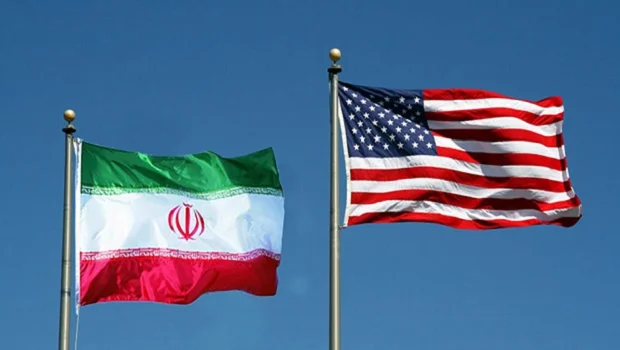
The geopolitical landscape of April 2026 has entered a period of unprecedented volatility as the United States intensifies its economic and military pressure on the Islamic Republic of Iran, while simultaneously grappling with a burgeoning nuclear crisis in the Korean Peninsula. On Wednesday, April 15, 2026, a series of diplomatic and military maneuvers highlighted the deepening chasm between Washington and its adversaries. Iranian Vice President Mohammad Reza Aref delivered a scathing critique of the United States’ foreign policy independence, labeling the White House a "reporting branch" for the Israeli government. This rhetorical escalation coincides with a high-stakes naval standoff in the Strait of Hormuz, where the U.S. Navy has begun enforcing a total maritime blockade, and a sobering warning from the International Atomic Energy Agency (IAEA) regarding North Korea’s rapid advancement in nuclear warhead production.
The Rhetorical War: Iran Mocks U.S. Sovereignty
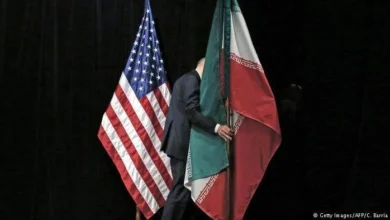
The diplomatic friction between Tehran and Washington reached a new nadir following comments made by Iranian Vice President Mohammad Reza Aref. In a public statement issued via social media, Aref asserted that the United States government has effectively forfeited its autonomy in Middle Eastern affairs. The Vice President’s remarks were triggered by a recent disclosure from Israeli Prime Minister Benjamin Netanyahu, who claimed that U.S. Vice President JD Vance provides him with daily briefings, including updates on sensitive diplomatic missions to regional capitals like Islamabad.
Aref’s critique centered on the perception that the Biden-Trump transition and the subsequent 2024 administration have created a hierarchy where U.S. officials appear accountable to the Israeli leadership. "For the first time in history, a senior government official is providing a ‘daily briefing’ to the head of another state," Aref wrote, referencing the reports of Vance’s communications with Netanyahu. This narrative of the White House acting as an extension of the Israeli Prime Minister’s office is being used by Tehran to frame the current U.S. blockade not as a matter of American national security, but as a directive from Tel Aviv.
The implications of such rhetoric are significant. By framing the U.S. as a "reporting branch" for Israel, Iran seeks to undermine the legitimacy of U.S. sanctions and military actions in the eyes of the Global South and regional partners who may be wary of Israeli influence. This diplomatic sparring serves as the backdrop for the physical confrontation currently unfolding in the waters of the Persian Gulf.
Naval Confrontation in the Strait of Hormuz
As of Wednesday, the United States Central Command (CENTCOM) has officially implemented a total blockade of Iranian economic trade via maritime routes. The blockade, which went into effect at 14:00 GMT on Monday, represents one of the most aggressive military-economic measures taken by Washington in decades. The goal, according to U.S. officials, is to completely halt the flow of Iranian oil and essential commodities to starve the regime of the resources necessary to fund its regional proxies and nuclear ambitions.
Despite the heavy presence of the U.S. Fifth Fleet, maritime tracking data suggests that the blockade is being tested. At least three vessels originating from Iranian ports successfully transited the Strait of Hormuz on Tuesday. Among these was the Christianna, a Liberia-flagged bulk carrier. According to data provided by Kpler, the Christianna had offloaded 74,000 tons of corn at the Iranian port of Bandar Imam Khomeini before making its outbound journey. The vessel reportedly passed the strategic Larak Island around 16:00 GMT on Monday, shortly after the blockade’s commencement.
However, the U.S. Navy has demonstrated its resolve to enforce the perimeter. Reports from the Wall Street Journal, citing senior defense officials, indicate that U.S. naval forces have intercepted and detained eight Iranian-linked oil tankers since the blockade began. These interceptions occurred both as vessels attempted to enter Iranian territorial waters and as they tried to exit into the Gulf of Oman. The interception of these tankers is a direct implementation of the White House’s policy to "zero out" Iranian maritime exports.
The Strait of Hormuz remains the world’s most important oil transit chokepoint. Approximately one-fifth of the world’s total oil consumption passes through this narrow waterway daily. A sustained blockade not only threatens the Iranian economy but also risks a massive spike in global energy prices, a factor that the U.S. administration is reportedly monitoring with concern as domestic inflationary pressures persist.
An Unlikely Alliance: Iran Defends the Papacy
In a surprising turn of diplomatic events, the Iranian leadership has positioned itself as a defender of the Vatican. President Masoud Pezeshkian and other high-ranking Iranian officials have issued statements of strong support for Pope Leo XIV, who has recently come under intense fire from U.S. President Donald Trump. The dispute between the White House and the Holy See stems from the Pope’s vocal opposition to the U.S. blockade and what he described as "warmongering policies" that disproportionately affect the most vulnerable populations.
President Trump’s criticism of the Pope—reportedly involving dismissive comments regarding the Pontiff’s understanding of global security—has been met with a formal condemnation from Tehran. President Pezeshkian sent a direct message to the head of the Catholic Church, condemning the "disrespect" shown toward the Pope and Jesus Christ, whom Muslims revere as a prophet of peace.
"The desecration of such holy figures is unacceptable to anyone who seeks freedom," Pezeshkian wrote. This strategic alignment between the Islamic Republic and the Vatican highlights Iran’s effort to build a broad moral coalition against U.S. foreign policy. By defending a Christian leader against an American president, Tehran is attempting to flip the traditional "clash of civilizations" narrative, presenting itself as a protector of global religious dignity against "Western secular aggression."
IAEA Issues Dire Warning on North Korean Nuclear Progress
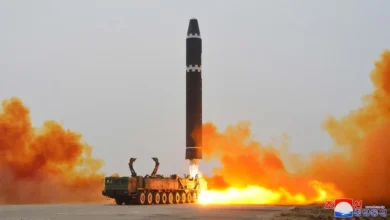
While the world’s attention is largely fixed on the Middle East, a more existential threat is brewing in East Asia. Rafael Grossi, Director General of the International Atomic Energy Agency (IAEA), issued a "very serious" warning on Wednesday regarding North Korea’s nuclear capabilities. According to Grossi, the rate at which Pyongyang is producing fissile material and manufacturing nuclear warheads has seen a "rapid and alarming increase."
Intelligence reports from South Korea and the United States suggest that North Korea has expanded its uranium enrichment facilities. Central to these concerns is the Yongbyon Nuclear Scientific Research Center. While Pyongyang had previously claimed to have decommissioned the 5-megawatt reactor at the site following past diplomatic negotiations, IAEA satellite imagery and thermal monitoring indicate that the reactor was fully reactivated in 2021 and has since been optimized for maximum plutonium production.
The IAEA’s report suggests that North Korea is no longer merely a "threshold" nuclear state but is rapidly building a sophisticated and diverse arsenal. This includes the development of tactical nuclear weapons intended for battlefield use and high-yield thermonuclear devices. The lack of international inspectors on the ground since 2009 has left the IAEA relying on remote sensing and intelligence sharing, which Grossi noted creates dangerous "blind spots" in the international community’s understanding of North Korea’s true breakout capacity.
Chronology of Recent Escalations
The current crisis did not emerge in a vacuum. A timeline of the last 72 hours illustrates the speed at which global stability is deteriorating:
- Monday, 14:00 GMT: The United States officially declares a total maritime blockade of Iran, authorizing the Navy to intercept any commercial vessel trading with Iranian ports.
- Monday, 16:00 GMT: The bulk carrier Christianna defies the blockade, passing through the Strait of Hormuz after offloading cargo in Iran.
- Tuesday Morning: President Donald Trump issues a series of statements criticizing Pope Leo XIV’s "interference" in U.S. national security matters regarding the Iran blockade.
- Tuesday Afternoon: Israeli PM Netanyahu publicly mentions the "daily briefings" he receives from U.S. VP JD Vance, sparking an outcry in Tehran.
- Wednesday Morning: Iranian VP Mohammad Reza Aref mocks the U.S. government on social media, calling it an Israeli "subsidiary."
- Wednesday Midday: The IAEA releases its report on North Korea, and the Wall Street Journal confirms the interception of eight Iranian tankers by the U.S. Navy.
Strategic Implications and Global Outlook
The simultaneous crises in the Middle East and East Asia present a monumental challenge to the international order. The U.S. blockade of Iran is a "maximalist" strategy that leaves little room for diplomatic off-ramps. If Iran continues to successfully sneak vessels through the blockade, the U.S. may be forced to use kinetic force, which could lead to a direct military conflict involving the Islamic Revolutionary Guard Corps (IRGC) Navy and the U.S. Fifth Fleet.
Furthermore, the domestic political situation in the United States, characterized by a president who is willing to openly feud with the Papacy and a vice president who maintains an unprecedentedly close reporting line to a foreign leader, has created a volatile diplomatic environment. Allies in Europe and Asia are reportedly concerned about the predictability of U.S. actions and the potential for a regional war that could engulf the entire Middle East.
In East Asia, the IAEA’s warning serves as a reminder that the North Korean nuclear issue remains an unsolved and growing threat. With Washington’s military resources heavily committed to the Middle East and supporting Ukraine in its ongoing conflict with Russia, Pyongyang may see a "window of opportunity" to further solidify its status as a permanent nuclear power, perhaps even conducting a seventh nuclear test to demonstrate its new capabilities.
As of the evening of April 15, 2026, the world remains on edge. The combination of economic warfare, religious-political rifts, and nuclear proliferation has created a perfect storm of instability. The international community now looks to the United Nations Security Council, though veto-wielding members remain deeply divided on how to proceed with either the Iranian blockade or the North Korean nuclear surge. For now, the "briefings" continue, the tankers remain in custody, and the centrifuges in Yongbyon continue to spin.