PT LOTTE Indonesia Launches Advanced Manufacturing Facility in Cikarang to Bolster Soft Cake Market Leadership and Economic Growth

The landscape of Indonesia’s food and beverage industry has reached a significant milestone with the official inauguration of PT LOTTE Indonesia’s latest high-tech manufacturing facility in Cikarang, West Java. This strategic expansion is specifically dedicated to the production of the company’s flagship product, LOTTE CHOCO PIE, and represents a multi-million dollar commitment to the Indonesian market. By integrating cutting-edge manufacturing technologies and smart production systems, the new plant is poised to meet the rapidly escalating domestic demand for premium snacks while solidifying LOTTE’s position as a dominant force in the Southeast Asian confectionery sector.
The facility’s opening comes at a pivotal moment for the Indonesian consumer goods market. As the largest economy in Southeast Asia, Indonesia continues to show resilient growth in the fast-moving consumer goods (FMCG) sector, driven by a burgeoning middle class and shifting consumer preferences toward convenient, high-quality packaged snacks. The Cikarang plant is not merely an increase in floor space but a sophisticated leap in industrial capability, featuring advanced automation and digital monitoring systems designed to ensure peak efficiency and uncompromising food safety standards.
Technological Integration and Global Safety Standards
At the heart of the new Cikarang facility is a commitment to Industry 4.0 principles. PT LOTTE Indonesia has implemented a smart production ecosystem that utilizes real-time digital monitoring to oversee every stage of the manufacturing process. This digital transformation allows for precise control over ingredient mixing, baking temperatures, and packaging speeds, ensuring that every LOTTE CHOCO PIE leaving the line meets the exact specifications dictated by the brand’s global quality benchmarks.
One of the most critical aspects of this new facility is its adherence to international food safety protocols. The plant has been designed to meet the rigorous requirements of the Food Safety System Certification (FSSC) 22000. This globally recognized standard provides a comprehensive framework for effectively managing food safety responsibilities, which is essential for a brand that exports its reputation across borders. By maintaining a closed production system, the facility significantly mitigates the risk of external contamination, ensuring a hygienic environment that exceeds local regulatory requirements.
The integration of automation also plays a dual role in both quality and safety. By reducing the need for manual handling during the most sensitive stages of production, LOTTE minimizes human-error risks and enhances the shelf-life stability of its products. This technological infusion is a direct response to the increasing consumer demand for transparency and safety in food production, particularly in a post-pandemic market where health and hygiene are paramount.
Market Dynamics and the Soft Cake Revolution
The decision to expand production capacity is rooted in robust market data. According to research from NielsenIQ, the soft cake category in Indonesia experienced a remarkable growth rate of 16% in 2024 compared to the previous year. This growth significantly outpaces many other sub-sectors within the snack food industry, signaling a shift in Indonesian snacking habits. LOTTE CHOCO PIE has emerged as the clear market leader in this category, capturing a substantial share of a market that values both taste and texture.
Industry analysts attribute this growth to several factors. First, the "snackification" of meals has become a prevalent trend among urban professionals and busy families in Indonesia. Soft cakes, which offer a more substantial and indulgent experience than traditional biscuits or chips, are increasingly seen as a convenient meal replacement or a high-quality treat for children. Second, the expansion of modern trade channels—such as minimarkets and supermarkets—into second and third-tier cities has made premium products like LOTTE CHOCO PIE more accessible to a wider demographic.
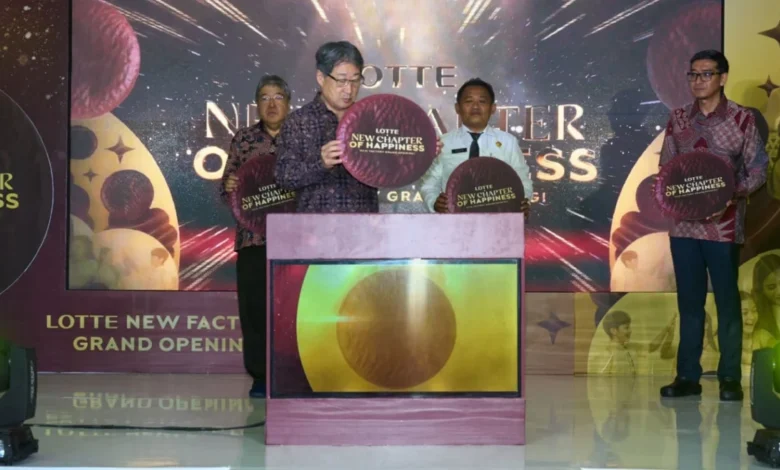
Badai S. Kristanto, the President Director of PT LOTTE Indonesia, emphasized the strategic importance of this investment during the plant’s opening ceremony. He noted that the company’s leadership in the soft cake category is a result of consistent innovation and a deep understanding of the local palate. "Through strategic investment combined with cutting-edge technology and a spirit of innovation, we believe LOTTE is capable of playing an active role in driving the progress of the snack food industry in Indonesia," Kristanto stated. He further explained that the increased capacity would allow the company to broaden its distribution network, ensuring that the "New Chapter of Happiness"—the brand’s current marketing philosophy—reaches every corner of the archipelago.
Historical Context and Evolution in Indonesia
PT LOTTE Indonesia’s journey in the country is a testament to long-term industrial commitment. While the Lotte Group was founded in Japan in 1948 by Shin Kyuk-ho, its Indonesian chapter began in 1993. Initially, the company focused on the production and distribution of chewing gum, a product that established LOTTE as a household name among Indonesian consumers. Over the decades, the company diversified its portfolio, recognizing the potential of the broader confectionery and snack market.
The local production of LOTTE CHOCO PIE began in 2013, marking a shift from an import-heavy model to a localized manufacturing strategy. This move was crucial for navigating Indonesia’s regulatory landscape and for optimizing the supply chain to provide fresher products at competitive price points. Today, the Indonesian operations are closely monitored by teams from LOTTE Japan, ensuring that the "Lotte Standard" of quality remains consistent regardless of where the product is manufactured.
The brand’s philosophy rests on three core pillars: user-oriented development, originality, and quality. These values have guided the company through various economic cycles in Indonesia, from the 1997 financial crisis to the rapid digital acceleration of the 2020s. By staying true to these principles, LOTTE has managed to maintain consumer trust while evolving its product line to include various pack sizes and flavor profiles that cater specifically to Indonesian tastes.
Economic Impact and Local Empowerment
Beyond the production of snacks, the new Cikarang factory serves as a significant economic engine for the West Java region. The establishment of such a high-tech facility creates a ripple effect throughout the local economy. Firstly, it generates direct employment opportunities for hundreds of skilled workers, ranging from industrial engineers and food scientists to logistics specialists and administrative staff.
Secondly, the expansion strengthens the domestic supply chain. LOTTE Indonesia prioritizes local sourcing for raw materials whenever possible, provided they meet the company’s stringent quality standards. This support for local farmers and ingredient suppliers helps stabilize the domestic agricultural sector and reduces the carbon footprint associated with long-distance shipping.
Furthermore, the presence of a global player like LOTTE in Cikarang reinforces the region’s reputation as a premier industrial hub in Southeast Asia. This attracts further foreign direct investment (FDI) and encourages the development of supporting industries, such as packaging manufacturing and specialized logistics services. The government of Indonesia, through its "Making Indonesia 4.0" roadmap, has actively encouraged such investments, viewing the food and beverage sector as a priority industry for achieving national economic targets.
Compliance, Certification, and Consumer Trust
In the Indonesian market, consumer trust is inextricably linked to religious and health certifications. PT LOTTE Indonesia has been meticulous in ensuring that all its products are fully compliant with local regulations. The new facility continues the company’s tradition of maintaining strict Halal certification, which is a mandatory requirement for the majority of the Indonesian population. The production processes are designed to be entirely Sharia-compliant, from the sourcing of raw materials to the final packaging stages.
Additionally, the products are rigorously tested and certified by the Indonesian Food and Drug Authority (BPOM). The oversight provided by LOTTE Japan adds an extra layer of quality assurance, blending Japanese precision with Indonesian market expertise. This dual-layered supervision ensures that the LOTTE CHOCO PIE produced in Cikarang is identical in quality to those sold in Tokyo or Seoul.
The use of a "closed production system" mentioned by the company is particularly relevant in the context of BPOM standards. By utilizing automated piping and sealed baking environments, the risk of physical, chemical, or biological hazards is virtually eliminated. This level of technical sophistication is what allows LOTTE to maintain its market leadership despite the entry of numerous domestic and international competitors.
Future Outlook and Strategic Vision
Looking ahead, PT LOTTE Indonesia shows no signs of slowing down. The increased capacity provided by the Cikarang plant will serve as a launchpad for future product innovations. Badai S. Kristanto hinted at the development of new variants tailored to the evolving preferences of Indonesian consumers, who are increasingly looking for diversity in flavors and functional benefits in their snacks.
"The technology we have implemented ensures that every Choco Pie we produce is not only delicious but also safe and of high quality. In the future, we will continue to present various new variants for the Indonesian people," Kristanto added. This suggests a strategy of continuous product renewal, possibly including seasonal flavors or healthier alternatives that incorporate local ingredients.
The broader implications for the industry are clear: the bar for snack manufacturing in Indonesia has been raised. Competitors will likely need to accelerate their own digital transformations to keep pace with LOTTE’s efficiency and quality standards. For the Indonesian consumer, this competition is beneficial, as it leads to higher quality products, better food safety, and more diverse choices on the shelf.
As LOTTE Indonesia embarks on this "New Chapter of Happiness," the Cikarang facility stands as a symbol of the company’s confidence in Indonesia’s future. It is a fusion of heritage and high technology, a bridge between a storied Japanese legacy and a dynamic Indonesian market. With the soft cake category continuing its upward trajectory, LOTTE’s strategic investment appears well-timed to capture the next wave of growth in one of the world’s most promising consumer markets.