Bappebti Unveils Plans to Regulate Silver Futures Trading Amidst Surging Investor Interest in Precious Metals Beyond Gold.


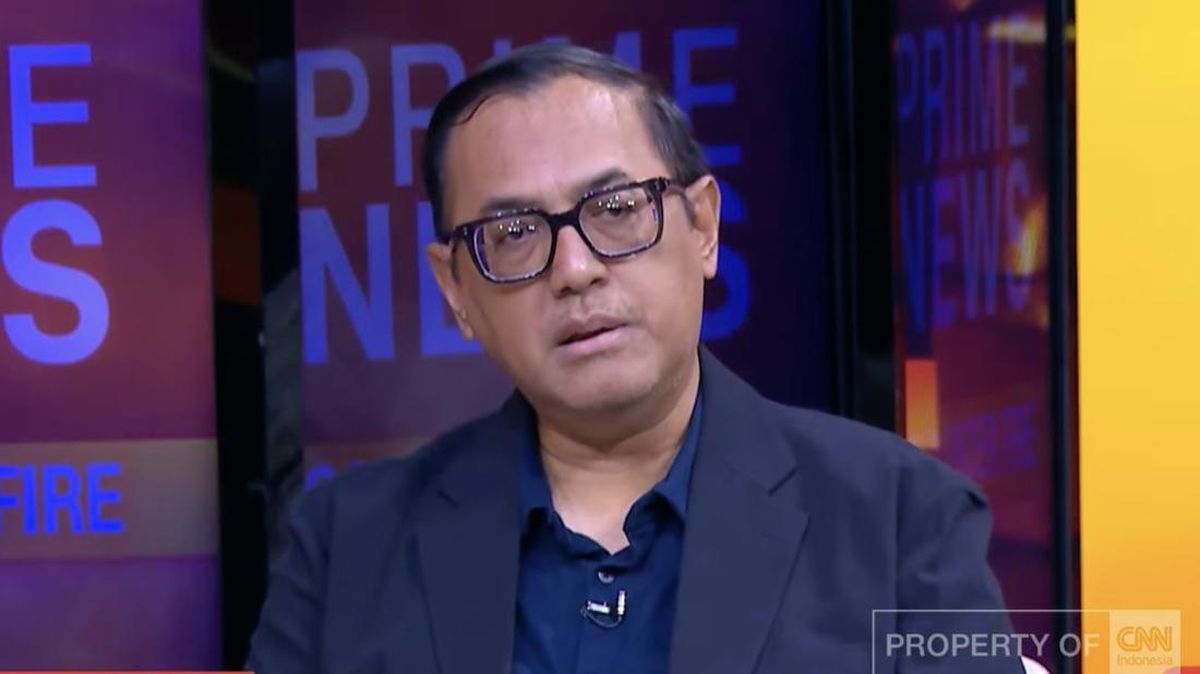
Jakarta, Indonesia’s Commodity Futures Trading Regulatory Agency (Bappebti) has announced its strategic intent to regulate silver futures trading, a move necessitated by the escalating public interest in precious metal investments extending beyond the traditional allure of gold. This proactive measure, articulated by Tirta Karma Senjaya, the Head of Bappebti, during an appearance on CNN Indonesia Prime News titled "Gold Under The Fire" on Wednesday, April 15, underscores the regulator’s commitment to aligning its frameworks with dynamic market developments and emerging investment product innovations. The initiative aims to create a more robust and secure environment for investors exploring diversified portfolios in the digital age.
Indonesia’s Evolving Investment Landscape Fuels Regulatory Drive
The Indonesian financial landscape has witnessed a significant transformation in recent years, marked by a burgeoning retail investor base and a heightened appetite for diverse investment instruments. While gold has long been a staple in Indonesian households as a store of value and an inflation hedge, Bappebti’s observation points to a broadening fascination with other precious metals, particularly silver. This shift is not merely anecdotal; it reflects a global trend where investors, seeking refuge from economic uncertainties, inflationary pressures, and geopolitical volatilities, are increasingly turning to tangible assets. For Indonesia, a country with a vast and digitally-savvy young population, the accessibility of investment platforms has further democratized participation in commodity markets, necessitating a responsive regulatory posture.
Bappebti, operating under the Ministry of Trade, holds the critical mandate of overseeing and regulating commodity futures trading activities across the archipelago. Its responsibilities encompass ensuring fair trading practices, maintaining market integrity, and, most importantly, safeguarding the interests of investors. The decision to extend its regulatory purview to silver futures is a testament to the agency’s vigilance in monitoring market trends and its dedication to fostering a safe and transparent investment ecosystem. Tirta Karma Senjaya emphasized this point, stating, "We will begin to regulate this again in the future, so that if a platform sells gold, it can also add silver." This statement signals a clear intent to facilitate product diversification while simultaneously strengthening oversight.
Bappebti’s Mandate: Adapting to Market Dynamics and Ensuring Consumer Protection
The core of Bappebti’s regulatory philosophy, as reiterated by Tirta, revolves around consumer protection. In an increasingly complex and digitalized trading environment, the potential for market manipulation, fraudulent schemes, and financial instability grows without adequate regulatory frameworks. The agency’s commitment to placing consumer welfare at the forefront aligns with the broader vision of the Ministry of Trade, which seeks to create an equitable and trustworthy marketplace for all participants. This emphasis is particularly crucial in nascent or rapidly expanding market segments, where investor knowledge might be uneven, and the allure of quick returns can sometimes overshadow prudent risk assessment.
The regulatory agency’s move is informed by a recognition that the upward trend in precious metal prices is not exclusive to gold. Silver, often referred to as ‘poor man’s gold,’ has also experienced significant price appreciation, attracting a new wave of investors and traders. Tirta elucidated this, noting, "There are other precious metals that are also rising, one of them is silver. Although it is needed by industry, now many people are also starting to invest and trade in silver." This dual demand, stemming from both its industrial applications (e.g., electronics, solar panels, medical devices) and its role as an investment vehicle, adds layers of complexity and dynamism to the silver market, making robust regulation imperative.
The Rise of Silver as an Investment Asset: Global and Local Trends
Globally, silver has historically exhibited a strong correlation with gold, often following its price movements but with higher volatility due to its smaller market size and significant industrial demand component. In times of economic expansion, silver benefits from industrial consumption, while during periods of uncertainty, its status as a safe-haven asset, albeit secondary to gold, tends to boost investment demand. Recent years have seen a confluence of factors, including supply chain disruptions, increased demand for green technologies (which rely heavily on silver), and persistent inflationary concerns, contributing to silver’s enhanced appeal.
In Indonesia, the increasing availability of digital trading platforms has made investing in precious metals more accessible than ever before. These platforms allow retail investors to trade fractional ownership or derivatives, significantly lowering the entry barrier. Data from various financial market reports indicates a steady rise in the number of retail investors engaging in capital markets, including commodity derivatives. While precise figures for silver investment specifically are often subsumed under broader ‘precious metals’ categories, the anecdotal evidence and Bappebti’s observations suggest a clear diversification trend away from an exclusive focus on gold. This growth underscores the need for clear guidelines and oversight to ensure that these new avenues of investment are conducted transparently and fairly.
A Proactive Stance: Risk-Based Supervision and Regulatory Framework
To effectively manage the burgeoning market, Bappebti employs a sophisticated risk-based supervision approach for all business entities operating within the digital physical trading ecosystem. This method allows the regulator to allocate resources efficiently, focusing on areas with higher potential risks while maintaining a broad overview of the entire market. Under this framework, every licensed entity is mandated to submit comprehensive financial and transactional reports at regular intervals – daily, monthly, and annually. Furthermore, these entities are subjected to a minimum of one annual audit to verify the accuracy of their reported data and assess their operational integrity.
The systematic collection and analysis of this data are crucial for Bappebti’s proactive oversight. "From those reports, they come to us, and we conduct a risk-based approach. If there’s anything unusual, for example, equity decreasing or gold stock falling below the minimum limit, then a warning will be issued," Tirta explained. This early warning system is designed to detect potential solvency issues, liquidity mismatches, or other operational irregularities before they escalate into significant problems that could jeopardize investor funds. By closely monitoring key financial indicators and inventory levels, Bappebti aims to prevent the kind of asset imbalances and weak oversight that have led to financial crises and investor losses in other jurisdictions.
Preventing Market Misconduct: Lessons from Global Precedents
Bappebti’s emphasis on strengthening regulation is also a direct response to lessons learned from international incidents where inadequate oversight led to significant market disruptions and investor detriment. While Tirta Karma Senjaya did not specify particular cases, global financial history is replete with examples of unregulated or poorly regulated markets succumbing to speculative bubbles, fraudulent schemes, and systemic risks. These often involve platforms operating with insufficient capital, misrepresenting assets, or engaging in practices that expose clients to undue risk. The collapse of certain crypto exchanges or commodity trading firms in various parts of the world due to a lack of transparent reporting and robust asset backing serves as a stark reminder of the consequences of regulatory vacuums.
By establishing clear rules for capital requirements, asset segregation, and transparent reporting for silver futures platforms, Bappebti seeks to build a resilient market infrastructure in Indonesia. This preemptive approach aims to instill confidence among investors, knowing that their funds are held by financially sound and regularly scrutinized entities. It also provides a clear framework for dispute resolution and legal recourse, which is often absent in unregulated markets.
The Path Forward: Stakeholder Engagement and Regulatory Implementation
The announcement by Bappebti is the initial step in a multi-stage process toward full regulatory implementation. While a precise timeline for the introduction of silver futures regulations was not detailed, the typical process for such initiatives involves several key phases. Following the initial public announcement, Bappebti will likely engage in extensive consultations with various stakeholders. This would include commodity exchanges, futures brokers, digital trading platforms, technology providers, legal experts, and investor advocacy groups. These consultations are vital to gather diverse perspectives, understand potential operational challenges, and ensure that the drafted regulations are practical, comprehensive, and equitable.
Subsequently, Bappebti would proceed with drafting the specific regulatory instruments, which could take the form of new agency decrees, amendments to existing regulations, or entirely new legal frameworks. These regulations would likely address aspects such as licensing requirements for silver futures brokers and platforms, capital adequacy standards, rules for transparent pricing and execution, mechanisms for client fund segregation, dispute resolution protocols, and penalties for non-compliance. The implementation phase would then involve educating market participants on the new rules, facilitating the licensing process, and establishing the necessary monitoring and enforcement mechanisms. This iterative approach ensures that the regulatory framework is robust yet flexible enough to adapt to future market evolutions.
Industry and Investor Perspectives: Anticipated Reactions and Benefits
The proposed regulation of silver futures trading is expected to elicit generally positive reactions from various market participants. For licensed futures brokers and digital trading platforms, the introduction of clear regulatory guidelines will provide a legitimate framework within which to operate and expand their product offerings. This could lead to increased market share and investor trust, as regulated platforms are often preferred over unregulated ones. While compliance with new regulations may entail initial costs and operational adjustments, the long-term benefits of a stable and trustworthy market environment are likely to outweigh these challenges.
Investors, both retail and institutional, stand to gain significantly from this regulatory development. The existence of a clear regulatory framework fosters greater confidence, reducing the risks associated with opaque practices and financial instability. With Bappebti’s oversight, investors can be assured of standardized trading practices, greater transparency in pricing, and enhanced protection of their assets. This increased security is likely to attract more participants to the silver futures market, contributing to greater liquidity and potentially more efficient price discovery. For those looking to diversify their portfolios beyond traditional gold investments, regulated silver futures offer a new, secure, and accessible avenue.
Broader Economic Implications: Deepening Indonesia’s Financial Markets
The regulation of silver futures trading holds broader economic implications for Indonesia, contributing to the deepening and sophistication of its financial markets. By expanding the range of regulated commodity derivatives, Bappebti helps to position Indonesia as a more mature and diverse financial hub within the ASEAN region. A well-regulated commodity futures market can attract both domestic and international capital, stimulate economic activity, and provide crucial risk management tools for industries that rely on silver, such as electronics manufacturing and renewable energy.
Furthermore, the initiative aligns with Indonesia’s broader agenda of fostering a robust digital economy. By providing a regulatory sandbox for digital platforms to offer silver trading, Bappebti is encouraging innovation while simultaneously mitigating the inherent risks of digital finance. This balancing act is critical for ensuring sustainable growth in the fintech sector. The move could also serve as a precedent for the regulation of other emerging digital assets or commodities, paving the way for a more comprehensive and forward-looking regulatory ecosystem in Indonesia. The increased market activity and investor participation could also generate additional tax revenues for the government, contributing to national development.
Conclusion: A Step Towards a Robust and Diversified Commodity Futures Ecosystem
Bappebti’s plan to regulate silver futures trading represents a crucial step in Indonesia’s journey towards a more robust, diversified, and investor-friendly commodity futures ecosystem. By proactively addressing the rising interest in silver as an investment instrument and leveraging its risk-based supervision methodology, the agency aims to ensure market integrity and, most importantly, provide unwavering protection for consumers. This strategic move, driven by market evolution and a commitment to preventing past pitfalls observed globally, underscores Bappebti’s adaptive regulatory philosophy. As the implementation unfolds, it is poised to not only legitimize and expand silver trading within Indonesia but also to enhance investor confidence, deepen financial markets, and solidify Indonesia’s position as a dynamic player in the global commodity derivatives landscape.