Revolutionizing Mobility: Solar-Powered Vehicles Poised for Mass Production by Late 2026

The automotive world stands on the cusp of a transformative era as solar-powered vehicles prepare to transition from ambitious concepts and prototypes to the reality of mass production. This monumental shift, spearheaded by pioneering companies like Aptera Motors, promises to redefine personal transportation, offering a potent solution to the escalating global energy crisis and the urgent imperative to significantly reduce carbon emissions. The confluence of advancements in photovoltaic technology, battery storage, and aerodynamic design has made this long-held vision finally attainable, heralding a future where vehicles harness the sun’s abundant energy to drive sustainable mobility.
For decades, the idea of a car powered primarily by the sun remained largely within the realm of scientific competitions, academic research, and niche experimental projects. Early attempts often struggled with prohibitive costs, limited efficiency, impractical designs, and insufficient range, relegating them to footnotes in automotive history. However, the dawn of the 21st century has brought about a rapid acceleration in renewable energy technologies. Modern solar panels, for instance, have seen their efficiency rates climb dramatically, with cutting-edge photovoltaic (PV) cells capable of converting a greater percentage of sunlight into usable electricity, even under less-than-ideal weather conditions. Concurrently, battery technology has undergone its own revolution, yielding lighter, more energy-dense, and faster-charging units that can store substantial amounts of power, extending vehicle range and ensuring operation during periods of limited sunlight or at night. These twin advancements are the bedrock upon which the mass production of solar electric vehicles (SEVs) is now becoming economically and practically viable.
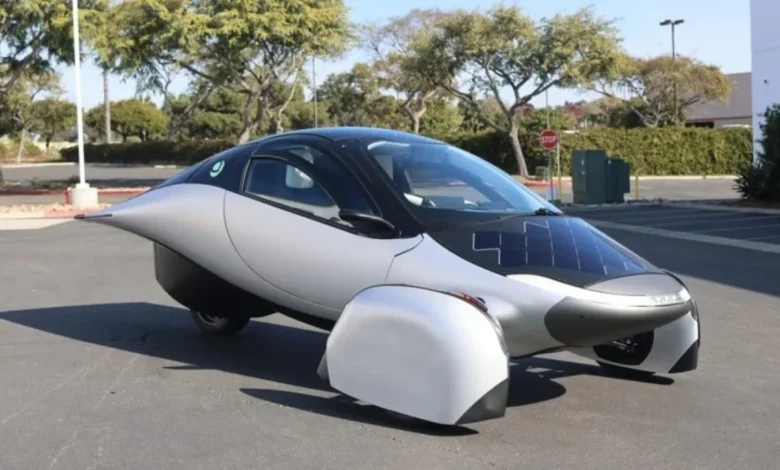
Leading this charge is Aptera Motors, a California-based startup with a distinctive vision and an equally distinctive vehicle design. The company, initially founded in 2005 but re-established in 2019, has consistently pursued the goal of creating the most efficient transportation possible. Their flagship vehicle, aptly named Aptera, deviates sharply from conventional automotive aesthetics, adopting a sleek, three-wheeled, aerodynamic teardrop shape optimized for minimal drag. This design philosophy is not merely aesthetic; it is fundamental to the vehicle’s unparalleled efficiency, allowing it to achieve remarkable ranges with relatively small battery packs.
Aptera’s Journey: From Vision to Validation
The path to mass production for Aptera has been a carefully orchestrated journey, marked by key developmental milestones and strategic financial maneuvers. The company first opened pre-orders for its innovative solar electric vehicle in 2020, immediately tapping into a strong undercurrent of public interest in sustainable and efficient transportation. This initial offering quickly garnered significant attention, accumulating approximately 50,000 reservations to date—a clear indicator of robust market demand for their unique proposition.
A critical turning point for Aptera arrived in 2025 when the company successfully listed its shares on the NASDAQ stock exchange. This move provided a substantial influx of capital, crucial for funding the extensive research, development, and manufacturing scale-up required for mass production. The public listing not only injected necessary funds but also significantly boosted investor confidence and attracted a network of key suppliers, strengthening Aptera’s production chain. Access to public markets allowed Aptera to secure the resources needed to transition from hand-built prototypes to a streamlined, automated manufacturing process. This financial stability has been instrumental in accelerating their operational capabilities and solidifying their ambition to begin mass production by late 2026, with the highly anticipated first edition models destined for early adopters.
Currently, Aptera’s manufacturing facility in Carlsbad, California, is bustling with activity. The company is in an advanced stage of producing test units, which are undergoing rigorous road testing and validation to ensure they meet stringent safety, performance, and reliability standards. This phase is critical for identifying and resolving any potential issues before consumer vehicles roll off the assembly line. Furthermore, Aptera has made significant strides in establishing its validation assembly line. This crucial stage marks the transition from manual, prototype-based fabrication to a more structured and automated production system. It allows the company to refine manufacturing processes, optimize workflows, and establish quality control protocols that are essential for high-volume production. The manufacturing process itself is designed in several phases, with an ultimate target production rate of approximately 40 units per shift once the system is fully operational and optimized.
Technological Prowess: The Heart of Aptera’s Innovation
At the core of Aptera’s revolutionary offering is its integrated technological ecosystem, harmonizing advanced solar power generation, cutting-edge battery storage, and unparalleled aerodynamic efficiency.
Solar Integration: Unlike traditional electric vehicles that rely solely on grid charging, the Aptera features extensive solar panels seamlessly integrated into its bodywork, covering significant portions of its roof, hood, and rear hatch. These are not merely auxiliary chargers; they are designed to be a primary energy source for daily commuting. The company claims that, under ideal sunny conditions, the solar panels can generate enough electricity to power the vehicle for dozens of kilometers each day—potentially allowing many users to meet their daily driving needs without ever needing to plug into an external power source. This "never charge" philosophy for everyday use is a game-changer, offering unprecedented energy independence and convenience. The efficiency of these integrated panels is paramount, leveraging the latest advancements in thin-film photovoltaics to maximize energy capture even in varying light conditions.
Battery Technology: The energy harvested from the sun is stored in an advanced battery pack, designed for high capacity and longevity. While specific chemistries may evolve, Aptera typically utilizes high-density lithium-ion cells, which provide a substantial electric range. Combined with the solar charging capabilities, the vehicle is projected to achieve hundreds of kilometers of range on a full battery charge, making it suitable for longer journeys beyond daily commuting. The synergy between solar charging and battery storage means less reliance on public charging infrastructure and lower electricity bills for owners.
Aerodynamic Efficiency and Lightweight Construction: The Aptera’s striking three-wheeled, teardrop shape is a masterpiece of aerodynamic engineering. Its extremely low drag coefficient (Cd), reported to be as low as 0.13, is significantly better than even the most aerodynamically optimized production cars today (e.g., Mercedes-Benz EQS at 0.20 Cd). This exceptional slipperiness through the air drastically reduces the energy required to move the vehicle, directly translating into extended range and higher efficiency. Furthermore, the vehicle’s construction heavily utilizes lightweight composite materials, contributing to a lower overall vehicle mass. This reduction in weight further enhances efficiency, allowing for smaller battery packs to achieve impressive ranges, thereby reducing both cost and environmental footprint associated with battery production. The combination of minimal drag and lightweight construction is arguably the most significant factor enabling Aptera’s industry-leading efficiency metrics.
Market Positioning and Broader Implications
The market reception for Aptera’s innovative vehicle has been overwhelmingly positive, as evidenced by the substantial pre-order numbers. The target demographic includes environmentally conscious consumers, early technology adopters, and individuals seeking to minimize their carbon footprint and reduce their dependence on traditional energy sources. While the unique design may initially appeal to a niche segment, the compelling economic and environmental benefits—including potentially zero fuel costs for daily driving and significantly reduced emissions—are likely to attract a much broader audience over time.
Aptera differentiates itself from other electric vehicle manufacturers by prioritizing extreme efficiency and integrated solar charging. While companies like Lightyear and Sono Motors have also explored solar integration into EVs, Aptera’s holistic approach to design, focusing on ultra-low drag and lightweight materials alongside solar power, positions it uniquely at the forefront of this nascent segment.
The implications of Aptera’s successful mass production extend far beyond the automotive industry. Economically, it represents a surge in green manufacturing, creating jobs in design, engineering, production, and renewable energy integration. It also signals a potential shift in consumer behavior, fostering greater energy independence and awareness of personal energy consumption. Environmentally, the widespread adoption of solar electric vehicles could play a crucial role in mitigating climate change. By reducing reliance on fossil fuels for transportation and decentralizing energy generation, SEVs contribute directly to lower greenhouse gas emissions and improved air quality. The "never charge" concept, if widely adopted, could also alleviate strain on electrical grids, especially during peak demand periods, by allowing vehicles to generate their own power.
However, challenges remain. Public perception of the three-wheeled design and its categorization for regulatory purposes in different regions will need careful navigation. Scaling up production from thousands to hundreds of thousands of units is a complex undertaking, even for established automakers, and will test Aptera’s manufacturing prowess and supply chain resilience. Initial costs, while potentially offset by long-term savings, may also be a barrier for some consumers.
Nevertheless, Aptera’s imminent entry into mass production represents a pivotal moment in the history of sustainable transportation. It is a testament to human ingenuity and the relentless pursuit of cleaner, more efficient ways to move. As the world grapples with climate change and energy insecurity, the advent of mass-produced solar electric vehicles offers a tangible and optimistic vision for the future of mobility—a future powered by the sun. The late 2026 target for Aptera’s full-scale production launch is not merely a corporate milestone; it is a beacon signalling the beginning of a new chapter for the entire automotive industry, promising a cleaner, more sustainable, and energy-independent driving experience for generations to come.