Jakarta, CNN Indonesia – In a significant declaration following what his administration hailed as the successful conclusion of the Artemis II mission, NASA Administrator Jared Isaacman has outlined a transformative vision for American space exploration, emphasizing that the recent lunar orbital flight is merely the genesis of a much grander endeavor. Isaacman, who assumed leadership of the space agency in late 2025, described Artemis II as the inaugural leg of a new "relay race" to the Moon, a crucial step towards re-establishing a sustained human presence on Earth’s natural satellite after more than half a century. This ambitious agenda includes crewed landings and the phased construction of a permanent lunar base within the coming years, signaling a profound shift in NASA’s long-term strategy.
Isaacman’s Vision: From Orbit to Sustainable Presence
The Artemis II mission, which saw astronauts successfully orbit the Moon before a planned splashdown on Friday, April 10, marks a pivotal moment in NASA’s trajectory under Isaacman’s leadership. Speaking after the mission’s conclusion, Isaacman, a billionaire and former astronaut with two spaceflights and a private SpaceX mission under his belt, articulated a renewed sense of purpose for the agency. "This is the initial stride in America’s return to the Moon, and this mission was a resounding success," Isaacman stated in a speech, as reported by Space on Wednesday, April 15. He added, "This mission will be remembered as the moment people began to believe again, to believe that America is still capable of confronting the near impossible and delivering extraordinary results." This statement underscores a broader objective: to rekindle public and political confidence in NASA’s capacity for groundbreaking achievements, reminiscent of the Apollo era but with a distinctly forward-looking ethos focused on sustainability.
Strategic Reshaping of the Artemis Program
Since his appointment, Isaacman has initiated a series of sweeping reforms within NASA, fundamentally altering the existing roadmap for the Artemis program. A primary change involves the rescheduling of the crewed lunar landing, originally slated for an earlier Artemis mission, now postponed to Artemis VI in 2028. This adjustment aims to ensure the comprehensive development and testing of critical systems. The mission previously designated as Artemis III, which was intended to be the first crewed landing, will now serve as a crucial test flight for the human landing system in Earth orbit, projected for 2027. This recalibration prioritizes safety and methodical progression over rapid deployment, reflecting a more pragmatic approach to complex deep-space endeavors.
Furthermore, the development of the Lunar Gateway, a planned small space station orbiting the Moon designed to support long-term lunar missions, has also been deferred. This delay keeps negotiations open with the international consortium of partners, many of whom had previously agreed to contribute components under the Artemis Accords – a NASA-led initiative for peaceful space exploration cooperation. These partners were set to receive crew quotas and scientific research opportunities in return for their contributions. Isaacman, however, maintains that this new structural approach will preserve U.S. leadership while aligning with the broader foreign policy objectives of the current administration, emphasizing collaborative yet strategically controlled progress.
Building a Permanent Lunar Presence: The Moon Base Concept
A cornerstone of Isaacman’s vision is the establishment of a long-term human presence on the Moon, beginning with the construction of a lunar base. He described the initial phase of this base as resembling "more of a construction site, or even a junkyard, and that’s perfectly fine." This incremental approach acknowledges the immense logistical and engineering challenges involved in setting up an extraterrestrial outpost. The plan includes extensive preparatory work, notably through a series of robotic landings in the lunar south polar region, scheduled to commence at least once a month starting in 2027. The south pole is of particular scientific and strategic interest due to the potential presence of water ice in permanently shadowed craters, a vital resource for life support, rocket fuel, and future lunar industries.
These robotic precursor missions will not only scout potential landing sites and resource locations but also lay the groundwork for infrastructure development, including communication relays, power generation systems, and habitats. The iterative nature of these robotic deployments, coupled with an acceptance of potential failures as learning opportunities, reflects a philosophy of agile development adapted for space exploration. Isaacman acknowledged, "We want to land a lot of things, and it’s okay if some of them break. We will learn from it." This pragmatic stance on risk management is crucial for accelerating technological advancements and validating operational procedures in the harsh lunar environment.
Technological Imperatives: Powering Mars Missions
Beyond the Moon, Isaacman’s gaze is firmly fixed on Mars. He articulated that a sustainable lunar presence is not an end in itself but a critical stepping stone for crewed missions to the Red Planet. Achieving this monumental feat, however, necessitates significant technological breakthroughs, particularly in propulsion and power generation. Isaacman emphasized the indispensable role of nuclear power and advanced propulsion systems for enabling safe and efficient travel to Mars. "How do we bring them [the astronauts] back safely, so they can tell us about that incredible vista or that incredible journey? You will need nuclear power and propulsion systems to be able to do that," he stated.
The development of nuclear thermal or nuclear electric propulsion systems, which offer significantly higher efficiency and thrust compared to conventional chemical rockets, is deemed essential for reducing transit times to Mars, thereby minimizing astronaut exposure to deep-space radiation and psychological stresses. Isaacman expressed confidence in the imminent availability of these technologies, noting, "I would say that technology will be available to us in the not-too-distant future, almost certainly, when you see the astronauts return to land on the Moon." This suggests that the advancements made for lunar operations will directly feed into the capabilities required for interplanetary travel, establishing a synergistic relationship between the Moon and Mars programs.
Accelerating the Pace: Challenges and Opportunities
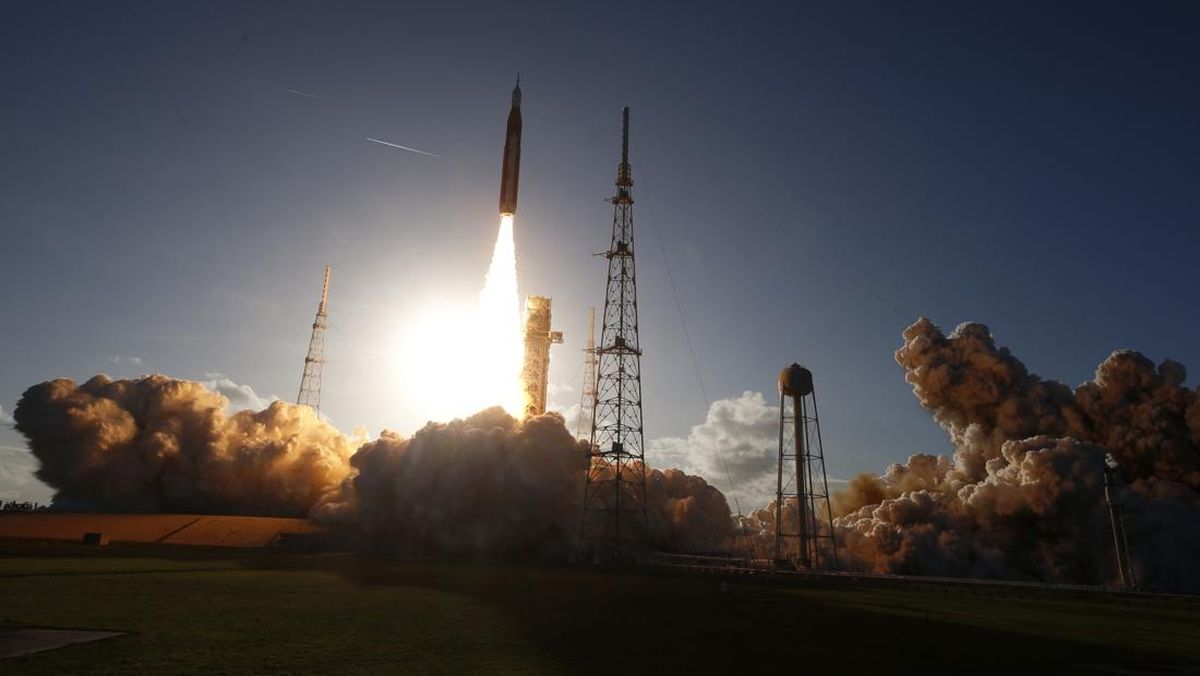
One of the most formidable challenges identified by Isaacman is maintaining the rhythm and tempo of missions. The gap between Artemis I (uncrewed test flight) and Artemis II was approximately 3.5 years. However, under the revised schedule, Artemis III is slated for a much quicker launch, if all proceeds as planned. Astronauts are expected to test the human landing system in Earth orbit as early as 2027, demonstrating an accelerated development cycle. This ambitious timeline, encompassing monthly robotic landings and plans for a nuclear-powered lunar base, is designed to expedite the development of technologies and operational procedures for the government’s long-term initiative to explore from the Moon to Mars.
The successful execution of this accelerated schedule hinges on robust supply chains, efficient manufacturing processes, and seamless integration of various components from both government and private sector partners. Isaacman’s background as a private space entrepreneur likely influences this emphasis on agility and rapid iteration, drawing parallels with the fast-paced development cycles seen in commercial aerospace ventures.
The Geopolitical Context: A Renewed Space Race
Underlying NASA’s renewed drive is the palpable tension of a burgeoning space race with China. With China openly declaring its intentions to send its own astronauts to the lunar surface, the competitive landscape in space exploration has intensified significantly. Isaacman explicitly acknowledged this rivalry, stating that NASA’s success would be measured in months, not years. "We clearly do not want to lose," he concluded, highlighting the strategic imperative behind accelerating American efforts.
China’s rapid advancements, including its successful Chang’e lunar sample return missions and plans for a permanent lunar base and crewed landings, have added a new dimension of urgency to NASA’s programs. The competition extends beyond prestige to include geopolitical influence, access to vital resources, and the setting of future norms for space governance. This geopolitical backdrop serves as a powerful catalyst for Isaacman’s ambitious agenda, pushing NASA to innovate faster and execute more efficiently to maintain its leadership in the ultimate frontier.
Background of NASA and the Artemis Program
NASA’s Artemis program represents the agency’s current endeavor to return humans to the Moon, building on the legacy of the Apollo missions that first put humans on the lunar surface between 1969 and 1972. Unlike Apollo’s "flag and footprints" approach, Artemis aims for a sustainable presence, establishing a long-term base and utilizing lunar resources to prepare for future missions to Mars. The program’s name, Artemis, is the twin sister of Apollo in Greek mythology, symbolizing a new era that will include the first woman and the first person of color to walk on the Moon.
The program consists of several key elements: the Space Launch System (SLS) rocket, the Orion spacecraft for crew transport, commercial human landing systems (HLS) for descent to the lunar surface, and the Lunar Gateway for orbital support. Artemis I, an uncrewed test flight of SLS and Orion, successfully orbited the Moon in late 2022, proving the capabilities of the core hardware. Artemis II, as described by Isaacman’s administration, was the first crewed mission to orbit the Moon, paving the way for the complex operations of future lunar landings.
Jared Isaacman’s Leadership: A New Kind of Administrator
The appointment of Jared Isaacman as NASA Administrator marks a departure from traditional leadership choices. His background as a billionaire entrepreneur and experienced astronaut from the commercial space sector (notably commanding SpaceX’s Inspiration4 and Polaris Dawn missions) brings a unique blend of business acumen, technological insight, and direct operational experience to the agency’s helm. His leadership style, as evidenced by the immediate and significant restructuring of the Artemis program, suggests a focus on aggressive timelines, pragmatic problem-solving, and a willingness to embrace risk for accelerated progress. This perspective is expected to foster closer collaboration with private aerospace companies, leveraging their innovative capabilities and potentially streamlining development processes that have historically been characterized by lengthy government contracts.
Implications and Future Outlook
Isaacman’s bold strategy carries profound implications for the future of space exploration. By prioritizing a sustainable lunar presence and leveraging the Moon as a proving ground for Mars missions, NASA is setting a course for long-term human expansion beyond Earth. The reshuffling of Artemis missions, while potentially causing short-term delays for some objectives, aims to create a more robust and resilient program capable of achieving its ambitious goals. The emphasis on nuclear propulsion and regular robotic precursors demonstrates a commitment to foundational technological advancements.
However, the accelerated pace and acceptance of risk also introduce challenges, including the need for continuous funding, managing complex international partnerships, and mitigating the inherent dangers of spaceflight. The renewed space race with China adds another layer of complexity, demanding strategic foresight and unwavering national commitment. Ultimately, Isaacman’s vision positions NASA at the forefront of a new era of exploration, one defined by sustainable presence, technological innovation, and a competitive drive to push the boundaries of human endeavor further into the cosmos.