Intel Launches Core Ultra Series 3 Processors in Indonesia, Ushering in a New Era of AI PCs

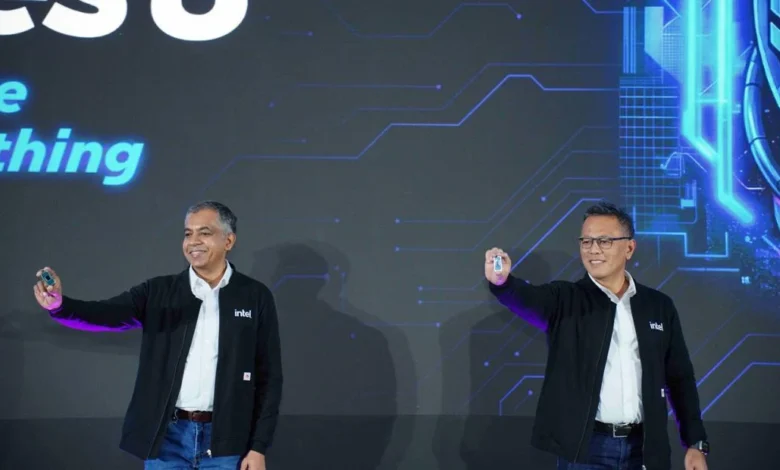
Jakarta, Indonesia – Intel has officially announced the availability of its latest lineup of laptops powered by the Intel Core Ultra Series 3 processors in the Indonesian market. This advanced chipset, previously known by its codename "Panther Lake," is being introduced through a strong collaboration with leading global hardware manufacturers. This strategic launch signifies a pivotal moment for the Indonesian technology landscape, as it ushers in a new generation of personal computing designed from the ground up to leverage artificial intelligence (AI) directly on the device.
The new generation of AI-powered personal computers promises substantial breakthroughs in performance, graphics processing capabilities, and power efficiency. Intel has engineered these processors specifically to support the burgeoning demands of intelligent computing, addressing the increasing integration of AI into daily workflows and consumer applications. With immediate effect, consumers and businesses across Indonesia can acquire these cutting-edge laptops from major retail networks nationwide. A formidable roster of industry giants, including ASUS, Acer, Dell, HP, Lenovo, and MSI, have already unveiled their flagship products featuring the Core Ultra Series 3, ensuring a wide array of choices to meet diverse user needs.
The Dawn of the AI PC Era in Indonesia
The introduction of the Core Ultra Series 3 in Indonesia marks a significant milestone in Intel’s "AI Everywhere" strategy, a comprehensive vision aimed at embedding AI capabilities across its entire product portfolio. For the Indonesian market, a rapidly digitizing economy with a growing appetite for advanced technology, the arrival of dedicated AI PCs is particularly timely. As businesses increasingly adopt AI-driven solutions for efficiency and innovation, and consumers seek more intuitive and powerful devices, the demand for hardware capable of handling complex AI workloads locally is set to skyrocket. This launch positions Indonesia at the forefront of the global AI PC revolution, providing users with tools that are not just faster, but fundamentally smarter.
These next-generation processors are built upon Intel’s highly advanced Intel 18A processing technology. This groundbreaking architecture represents Intel’s commitment to pushing the boundaries of silicon manufacturing, leveraging innovations like RibbonFET gate-all-around transistors and PowerVia backside power delivery. These advancements are crucial for achieving unprecedented levels of performance and power efficiency, particularly when tackling the increasingly demanding workloads associated with artificial intelligence. The 18A process node is designed to optimize transistor density and efficiency, laying the foundation for chips that can execute more operations per watt, a critical factor for mobile computing where battery life and thermal management are paramount.
Technological Marvel: Unpacking the Core Ultra Series 3
At the heart of the Core Ultra Series 3 is an innovative architectural design that integrates a powerful CPU (Central Processing Unit), a robust GPU (Graphics Processing Unit), and a dedicated NPU (Neural Processing Unit) into a single, cohesive package. This triad of processing power is specifically engineered to accelerate AI workloads directly on the device, significantly reducing reliance on cloud–based AI services and constant internet connectivity. This on-device AI processing brings several advantages, including enhanced privacy (as data remains local), reduced latency, improved power efficiency, and the ability to perform AI tasks even offline.
Intel highlights that the integrated NPU alone is capable of delivering up to 50 TOPS (Tera Operations Per Second) for local AI processing. To put this into perspective, 50 TOPS represents 50 trillion operations per second, a monumental capability that enables real-time execution of sophisticated AI models directly on the laptop. This allows for a myriad of AI-powered features, such as advanced video conferencing enhancements (background blur, eye contact correction, noise suppression), real-time language translation, intelligent content creation tools, and even the local execution of smaller large language models (LLMs) for personalized digital assistant experiences.
Furthermore, the Core Ultra Series 3 incorporates the latest Xe3 graphics architecture, which is expected to dramatically boost visual quality and gaming performance. This integrated graphics solution is not merely for casual use; it’s designed to handle modern gaming titles and demanding creative applications with greater fluidity and detail than previous integrated solutions. The Xe3 architecture leverages Intel’s long-standing expertise in graphics processing, offering improved ray tracing capabilities, enhanced media encoding/decoding, and a more immersive visual experience across the board. This dual focus on AI and graphics underscores Intel’s aim to deliver a holistic computing experience that caters to both productivity and entertainment.
The integration of these highly efficient chip components also empowers manufacturers to design and produce significantly thinner and lighter laptops. Despite their compact form factors, these devices are guaranteed to remain exceptionally responsive and powerful, even when handling intensive computational tasks. This means consumers no longer have to compromise between portability and performance, as the Core Ultra Series 3 facilitates a new generation of sleek, ultraportable machines that do not skimp on processing prowess.
Strategic Vision: Intel’s IDM 2.0 and AI Everywhere
The launch of Core Ultra Series 3 processors is a direct manifestation of Intel’s broader corporate strategy, known as IDM 2.0 (Integrated Device Manufacturer 2.0). This strategy involves a commitment to both internal manufacturing capabilities and external foundry partnerships, alongside a renewed focus on innovation across all product segments. The "AI Everywhere" initiative, which underpins the Core Ultra series, is Intel’s response to the paradigm shift brought about by artificial intelligence. It recognizes that AI is not just a feature but a fundamental transformation that will redefine computing.
Through "AI Everywhere," Intel aims to infuse AI capabilities into every piece of silicon it produces, from the data center to the edge, and crucially, to the client PC. The Core Ultra series, with its dedicated NPU, is a cornerstone of this strategy for client devices, ensuring that PCs are not just passive consumption devices but active participants in the AI ecosystem. This proactive approach allows Intel to stay competitive in a rapidly evolving market, where rivals are also heavily investing in AI-centric silicon.
A Chronology of Innovation: From Core to Ultra
The journey to the Core Ultra Series 3 is built on decades of Intel’s pioneering work in processor development. From the foundational Pentium series that brought powerful computing to the mainstream, through the groundbreaking Core architecture that redefined performance and efficiency in the mid-2000s, Intel has consistently driven the evolution of the personal computer. The Core series itself saw numerous generations, each bringing incremental improvements in speed, power efficiency, and integrated graphics.
The true shift towards the "Ultra" designation began with the introduction of the first generation Core Ultra processors (codename "Meteor Lake") in late 2023. This marked Intel’s first client processor to feature a dedicated NPU and a disaggregated tile architecture, allowing for greater flexibility and efficiency in chip design. "Panther Lake," now officially launched as the Core Ultra Series 3, represents the next significant step in this evolution, refining the architecture, enhancing performance, and further optimizing the AI capabilities first introduced with Meteor Lake. This systematic progression highlights Intel’s long-term roadmap for AI PCs, where each generation builds upon the last to deliver increasingly sophisticated and powerful on-device AI experiences.
OEM Collaboration: A United Front for Innovation
Globally, Intel anticipates that more than 200 distinct laptop designs will be powered by the Intel Core Ultra Series 3 processors. This vast array of products will span various market segments, including premium ultrabooks, high-performance productivity machines, dedicated gaming laptops, and robust corporate devices. The strong collaboration with leading original equipment manufacturers (OEMs) like ASUS, Acer, Dell, HP, Lenovo, and MSI is crucial for the successful market penetration of this new technology.
These OEM partners are not just integrating Intel’s chips; they are innovating around them. ASUS, for instance, is likely to feature Core Ultra Series 3 in its Zenbook and Vivobook lineups, offering sleek designs and powerful performance for creative professionals and mainstream users. Acer may incorporate these processors into its Swift series for portability and its Predator series for enhanced gaming. Dell’s XPS and Latitude lines will benefit from improved AI capabilities for both consumers and enterprise users, while HP’s Spectre and EliteBook series will leverage the NPU for premium experiences and business security. Lenovo’s Yoga and ThinkPad lines will continue to offer versatility and robust performance, and MSI’s Creator and gaming laptops will push the boundaries of visual and computational power. This broad ecosystem support ensures that the benefits of the Core Ultra Series 3 are accessible across a wide spectrum of user preferences and budgets.
Market Impact and Projections
The launch of the Core Ultra Series 3 in Indonesia is poised to have a substantial impact on the local PC market. Market research firms project significant growth in the AI PC segment globally, with some estimates suggesting that AI PCs could account for a substantial portion of total PC shipments within the next few years. For Indonesia, a nation with a large and tech-savvy youth population and a rapidly expanding digital economy, the adoption rate of AI PCs is expected to be particularly robust. The availability of diverse models from multiple reputable brands will accelerate this adoption, making advanced AI capabilities more mainstream.
This new category of PCs also creates a competitive dynamic within the industry. While Intel is a major player, it faces competition from other chipmakers like Qualcomm, with its Snapdragon X Elite and X Plus platforms designed for AI PCs, and AMD, which has also integrated NPUs into its Ryzen AI processors. This healthy competition is ultimately beneficial for consumers, driving innovation and leading to more refined, powerful, and efficient devices. The focus on AI processing is also likely to stimulate software developers to create more AI-native applications and features, further enhancing the utility and value proposition of these new laptops.
Statements and Industry Reception
Harry K. Nugraha, Intel Indonesia Country Head, underscored the transformative nature of this launch. "Intel Core Ultra Series 3 represents a significant leap forward in our client computing roadmap," Harry stated during the launch event in Jakarta on a recent Wednesday. His remarks highlighted Intel’s long-term vision and commitment to innovation.
He further elaborated on Intel’s dedication to the Indonesian market: "As digital adoption and AI-based innovation accelerate rapidly in Indonesia, we are committed to empowering local users with technology that is ready to face future challenges. With the strong support of our leading OEM partners, consumers and businesses in Indonesia can now experience a new generation of AI-based computing." This statement not only emphasizes Intel’s strategic focus on Indonesia but also acknowledges the crucial role of its partners in bringing these technologies to market. The overall industry reception is expected to be positive, with analysts recognizing the necessity of on-device AI for the next phase of computing and commending Intel’s robust execution of its AI strategy.
User Experience: The Practical Benefits of On-Device AI
For the end-user, whether a student, a professional, a content creator, or a gamer, the practical benefits of a laptop powered by the Core Ultra Series 3 are manifold. The dedicated NPU offloads AI tasks from the CPU and GPU, freeing up these components for other demanding applications. This results in smoother multitasking, faster application performance, and a more responsive overall user experience.
Imagine a video editor who can apply AI-powered effects or intelligent upscaling in real-time without slowdowns, or a student who can leverage AI assistants for research and writing with instant, localized responses. Business professionals will benefit from enhanced security features (e.g., AI-powered threat detection), improved virtual meeting quality, and accelerated data analysis. The ability to run AI models locally means greater privacy for sensitive data, as information doesn’t need to be sent to the cloud for processing. Furthermore, with AI-driven features becoming increasingly prevalent in popular software suites, having an NPU-equipped laptop becomes a smart investment, ensuring future-proof compatibility and optimal performance for years to come.
Sustainability and Efficiency
Beyond raw performance, a critical advantage of the Core Ultra Series 3 is its enhanced power efficiency. The Intel 18A process technology, combined with the NPU’s specialized architecture, allows AI workloads to be processed with significantly less power compared to running them on a general-purpose CPU or GPU. This translates directly into longer battery life for laptops, a crucial factor for mobile users who need to stay productive on the go. Improved power efficiency also contributes to a smaller carbon footprint, aligning with global efforts towards more sustainable technology. Manufacturers can design thinner and lighter devices without compromising on battery longevity, making these laptops more environmentally friendly and convenient for travel.
Challenges and Future Outlook
While the launch of the Core Ultra Series 3 is a significant step forward, the AI PC market is still in its nascent stages. One of the main challenges will be educating consumers and businesses about the tangible benefits of a dedicated NPU and on-device AI, differentiating it from cloud-based AI. The software ecosystem also needs to fully evolve to take complete advantage of these new hardware capabilities, requiring developers to optimize their applications for NPU acceleration.
However, the future outlook for AI PCs in Indonesia and globally is exceptionally bright. As AI continues to permeate every aspect of life, the demand for hardware capable of intelligently assisting users will only grow. Intel, with its Core Ultra Series 3, is well-positioned to lead this charge, offering a compelling blend of performance, efficiency, and integrated AI capabilities that redefine what a personal computer can do. The ongoing innovation from Intel and its OEM partners promises a continuous stream of more powerful, smarter, and intuitive devices that will shape the future of computing for years to come.
Conclusion
The official launch of Intel Core Ultra Series 3 processors in Indonesia marks a profound shift in the personal computing paradigm. By integrating dedicated AI acceleration, advanced graphics, and superior power efficiency into a single chip, Intel is not just offering faster laptops; it is delivering a foundation for a new generation of intelligent, responsive, and secure AI PCs. With strong support from global hardware partners and a clear vision for an "AI Everywhere" future, Intel is empowering Indonesian consumers and businesses to harness the full potential of artificial intelligence directly from their devices, paving the way for unprecedented productivity and innovation in the digital era.