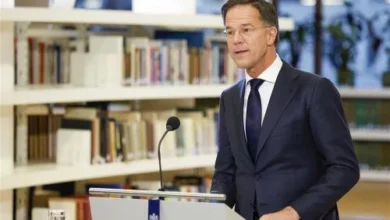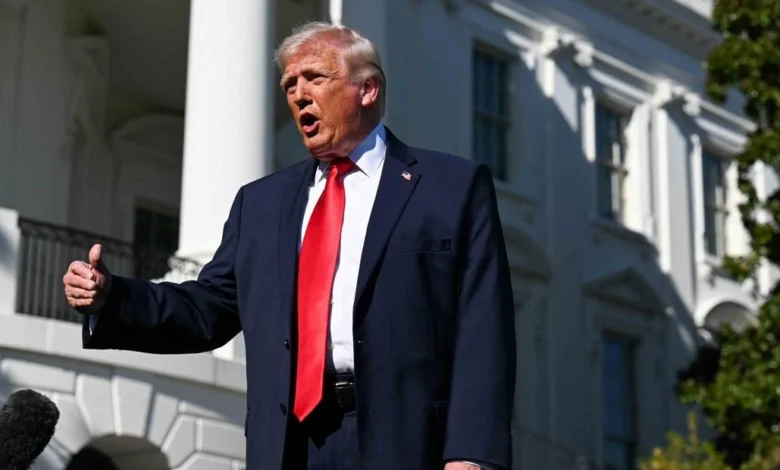
The geopolitical landscape has been further complicated as United States President Donald Trump intensified his public criticism of Pope Leo XIV, the head of the Roman Catholic Church, over the Holy See’s stance on the escalating conflict in the Middle East. In a series of pointed statements released on Wednesday, April 15, 2026, President Trump reiterated his position that the Islamic Republic of Iran must be permanently barred from obtaining nuclear weapons, while simultaneously labeling the Pope’s calls for de-escalation as "weak" and misguided.
The dispute highlights a deepening rift between the White House and the Vatican, two of the world’s most influential entities, as they clash over the moral and strategic implications of military intervention. The friction comes in the wake of significant military action taken by a joint U.S.-Israeli coalition against Iranian targets earlier this year, an event that has sent shockwaves through international diplomatic circles and sparked widespread civil unrest within Iran.
Escalating Rhetoric: The Truth Social Statements
President Trump took to his social media platform, Truth Social, to deliver his latest rebuke of the Pontiff. The President’s comments were prompted by recent homilies and diplomatic statements from Pope Leo XIV, who has consistently advocated for a ceasefire and a return to the negotiating table following the joint U.S.-Israeli strikes in late February.
"Can someone please tell Pope Leo that Iran has killed at least 42,000 innocent, unarmed protesters in the last two months, and that having a nuclear bomb for Iran is absolutely unacceptable," Trump wrote in a post that was quickly picked up by international news agencies, including Al Arabiya and Reuters. The figure of 42,000 casualties, while not independently verified by international human rights organizations at this scale, reflects the administration’s narrative regarding the severity of the internal crackdown by Tehran’s security forces.
Trump’s critique did not stop at policy differences. He moved into a personal critique of the Pope’s leadership style and his understanding of global security. "Pope Leo is saying the wrong things," Trump asserted in a follow-up statement. "He is very much against what I am doing regarding Iran, and you simply cannot have an Iran that possesses nuclear weapons. To suggest otherwise, or to hamper the efforts to prevent it, is a position of weakness."
The Geopolitical Context: The February Offensive and Its Aftermath
To understand the gravity of this verbal exchange, one must look back at the events of late February 2026. Following intelligence reports suggesting that Iran had reached a "breakout" capacity—meaning it possessed enough highly enriched uranium to produce multiple nuclear warheads within weeks—the United States and Israel launched a coordinated series of precision airstrikes. These strikes targeted enrichment facilities in Natanz and Fordow, as well as several key military research installations.
While the Pentagon declared the mission a success in terms of degrading Iran’s nuclear infrastructure, the secondary effects were immediate and chaotic. Within Iran, the strikes triggered a wave of anti-government protests, as citizens already burdened by economic sanctions took to the streets. The Iranian government’s response was a brutal "iron fist" policy, leading to the mass casualties referenced by President Trump.
Internationally, the military action divided the global community. While some Western allies offered quiet support, others, alongside the Holy See, expressed grave concerns that the strikes would ignite a regional conflagration. Pope Leo XIV emerged as one of the most vocal critics of the military approach, arguing that "violence only begets more violence" and calling for a humanitarian corridor to assist those caught in the crossfire of the resulting civil unrest.
A Timeline of Diverging Paths
The friction between Trump and Leo XIV has been building for months. Below is a chronology of the key events leading to the current impasse:
- January 2026: Intelligence reports emerge regarding Iran’s accelerated uranium enrichment. The U.S. issues a "final warning" to Tehran.
- February 24, 2026: The U.S. and Israel launch "Operation Guardian Shield," striking multiple Iranian nuclear sites.
- March 2026: Pope Leo XIV issues his first major encyclical on "Peace in the Atomic Age," indirectly criticizing preemptive military strikes as a failure of diplomacy.
- Early April 2026: During an Easter address, the Pope specifically mentions the suffering of the Iranian people and calls for an immediate end to hostilities.
- April 13, 2026: President Trump delivers his first direct public criticism of the Pope, calling his foreign policy views "out of touch with the reality of modern evil."
- April 15, 2026: Trump doubles down on Truth Social, citing the 42,000 deaths in Iran and reiterating the "unacceptable" nature of an Iranian nuclear bomb.
The Holy See’s Stance: Peace as a Moral Imperative
Responding to the President’s criticisms, Pope Leo XIV addressed reporters aboard the papal plane en route to Aljazair (Algeria). His tone was measured, yet firm, as he sought to clarify the role of the Church in global affairs.
"I am not a politician," the Pope stated, according to transcripts of the inflight press conference. "I have no intention of arguing or debating with the President. We are not politicians; we do not seek to create foreign policy with the same perspective or the same tools that a head of state might use."
The Pope emphasized that his mandate is derived from religious scripture rather than political strategy. "The mission of the Church is very clear. The Gospel says, ‘Blessed are the peacemakers.’ I believe the Church has a moral obligation to speak very clearly against war and in favor of peace and reconciliation. This is not a matter of political alignment, but of moral consistency."
In a direct response to being called "weak" by the American leader, the Pontiff added: "I am not afraid. I am not afraid of the Trump administration, nor am I afraid to speak loudly about the message of the Gospel, even when it is inconvenient for those in power."
Iran’s Domestic Turmoil and the Nuclear Question
Central to the dispute is the actual status of Iran’s nuclear program and the internal stability of the regime. While the U.S. administration maintains that military pressure is the only way to prevent a nuclear-armed Tehran, humanitarian groups have raised alarms about the cost of this policy.
According to data compiled by various NGOs (though difficult to confirm due to Iran’s internet blackouts), the death toll from internal crackdowns has indeed skyrocketed since February. While the "42,000" figure cited by Trump is at the high end of estimates, there is a consensus that thousands have been detained or killed.
From a strategic standpoint, the U.S. Department of Defense argues that an Iranian nuclear weapon would trigger a nuclear arms race in the Middle East, potentially leading to Saudi Arabia and Turkey seeking their own deterrents. This "proliferation cascade" is what the Trump administration claims it is trying to prevent, justifying the friction with religious leaders who prioritize immediate pacifism.
International Reactions and Diplomatic Fallout
The public spat has placed Catholic leaders in the United States in a difficult position. With an estimated 70 million Catholics in the U.S., the voting bloc is crucial for any administration. Some conservative Catholic groups have signaled support for Trump’s "security-first" approach, while the U.S. Conference of Catholic Bishops (USCCB) has largely echoed the Pope’s call for a peaceful resolution.
European leaders have largely remained cautious. A spokesperson for the European Union’s foreign policy wing stated, "We respect the moral authority of the Holy See and continue to believe that a diplomatic framework, however difficult, is the only long-term solution to the Iranian nuclear issue."
Meanwhile, in Tehran, state-run media has used the division between the U.S. and the Vatican to portray the Trump administration as "isolated" and "anti-religious," despite the regime’s own history of suppressing religious minorities.
Analysis: The Intersection of Faith and Foreign Policy
The confrontation between President Trump and Pope Leo XIV represents a classic clash between "Realpolitik" and "Moral Idealism." For Trump, the primary duty of a leader is the physical security of his nation and its allies, which in his view necessitates the use of force to prevent a nuclear threat. From this perspective, any call for peace that does not account for the "evil" of the adversary is seen as a strategic liability.
For Pope Leo XIV, the calculus is different. The Vatican views its role as a "soft power" mediator that must look beyond immediate tactical gains toward the long-term preservation of human life and dignity. By speaking out against the war, the Pope is maintaining a centuries-old tradition of the Church acting as a conscience for the international community, regardless of the political cost.
As the conflict in the Middle East continues to simmer, the relationship between Washington and the Vatican is likely to remain strained. With the U.S. maintaining a heavy military presence in the region and the Pope continuing his global "peace tour," the world is witnessing a rare and public struggle over who defines the "moral high ground" in the 21st century.
The coming months will be critical. If the internal situation in Iran worsens or if there is further military escalation, the pressure on both leaders to reconcile their positions—or further entrench them—will only grow. For now, the "unacceptable" reality of a nuclear Iran and the "moral obligation" of peace remain two irreconcilable pillars of a global crisis with no easy end in sight.