Alvaro Arbeloa Criticizes Referee’s Decision to Red Card Eduardo Camavinga, Citing Lack of Awareness in Real Madrid’s Champions League Exit

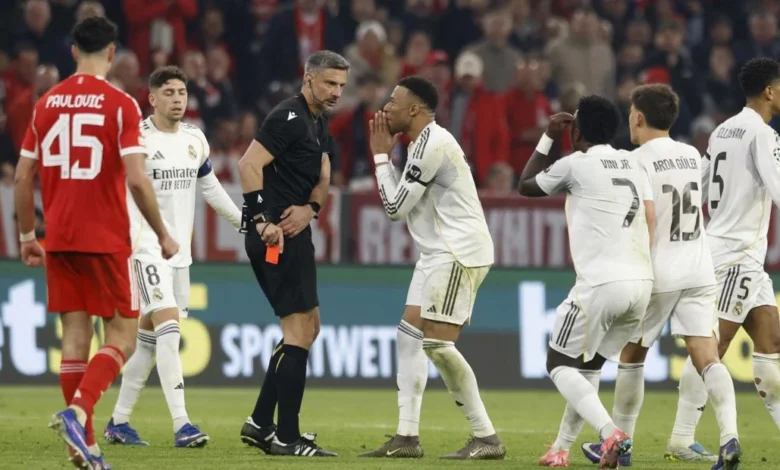
Real Madrid assistant coach Alvaro Arbeloa has voiced strong criticism towards the officiating during their UEFA Champions League quarter-final second leg clash against Bayern Munich, specifically targeting the referee’s decision to send off midfielder Eduardo Camavinga. Arbeloa suggested that the match official, Slavko Vincic, appeared unaware of Camavinga’s prior yellow card, a lapse in judgment he believes significantly impacted the match and marred an otherwise compelling contest. The incident occurred in the crucial late stages of the game at the Allianz Arena, ultimately contributing to Real Madrid’s 3-4 defeat on the night and a 4-6 aggregate loss, ending their pursuit of a record-extending Champions League title.
A Dramatic Encounter and a Turning Point
The highly anticipated second leg, held on Thursday, April 16, 2026, at the iconic Allianz Arena in Munich, was a captivating spectacle that lived up to its billing as a clash between two European giants. Real Madrid, holding a slender advantage from the first leg, found themselves in a precarious but potentially winning position, leading 3-2 deep into the second half. However, the complexion of the match dramatically shifted in the 86th minute when Eduardo Camavinga received his marching orders, reducing Madrid to ten men. This numerical disadvantage proved costly, as Bayern Munich capitalized on the opening, netting two late goals to secure their progression to the semi-finals.
The red card stemmed from a foul committed by Camavinga on Bayern’s star striker, Harry Kane. Following the initial infraction, replays indicated that Camavinga, in his attempt to recover or perhaps continue playing, made a subsequent motion that drew the attention of referee Slavko Vincic. Vincic then issued a second yellow card to the French international, which, by the rules of the game, resulted in an immediate red card.
Arbeloa’s Accusations: A Referee’s Unawareness
Alvaro Arbeloa, speaking after the match, did not shy away from expressing his dismay at the referee’s decision-making process. He emphatically stated that the referee seemed oblivious to the fact that Camavinga had already been cautioned earlier in the game. "I think he got the card precisely because of that, because the Bayern players had to remind him that it was the second yellow card," Arbeloa stated, as reported by Football Espana. This assertion suggests a lack of attentiveness on the part of the referee, who, according to Arbeloa, should have been fully aware of the disciplinary record of players on the pitch.
The assistant coach further elaborated on his frustration, questioning the referee’s understanding of the game. "But that wasn’t a yellow card. I don’t know, or he has never played football… or I don’t know." His rhetorical questions underscored his disbelief and disappointment. Arbeloa believes this oversight was not merely a minor error but a significant misjudgment that fundamentally altered the course of the match. "I think it gets worse because he didn’t know that he (Camavinga) had already received a yellow card, because it’s a double mistake. He ruined a beautiful game," he concluded, emphasizing the detrimental effect of the referee’s actions on what had been a high-quality footballing encounter.
Context of the Match and Real Madrid’s Champions League Campaign
The quarter-final tie between Bayern Munich and Real Madrid is a fixture steeped in Champions League history, with both clubs boasting an impressive record in the competition. Real Madrid, the record 14-time winners of the European Cup/Champions League, were aiming to extend their dominance. Bayern Munich, six-time champions, were equally determined to lift the coveted trophy on home soil in a potential final.
The first leg, played at the Santiago Bernabéu, had concluded with a 2-2 draw, setting the stage for a winner-takes-all second leg. In the first encounter, Real Madrid had twice come from behind, showcasing their resilience and never-say-die attitude that has become a hallmark of their Champions League campaigns. Vinícius Júnior scored both goals for Los Blancos, while Jamal Musiala and a Leroy Sané strike had put Bayern ahead.
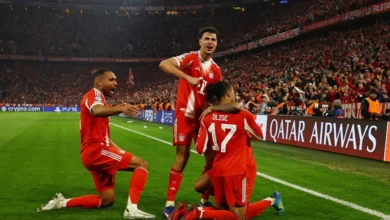
In the second leg at the Allianz Arena, the narrative continued with an intense back-and-forth affair. Goals from Harry Kane and Serge Gnabry had given Bayern a 2-0 lead on the night, putting them 4-2 ahead on aggregate. However, Real Madrid mounted a remarkable comeback in the second half, with Rodrygo scoring twice to level the aggregate score at 4-4 and momentarily put Madrid ahead on away goals before the contentious red card incident. The subsequent goals from Bayern, scored by Joshua Kimmich and another from Kane, sealed their victory and progression.
The Significance of Camavinga’s Red Card
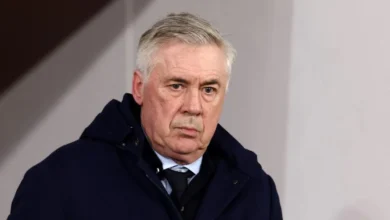
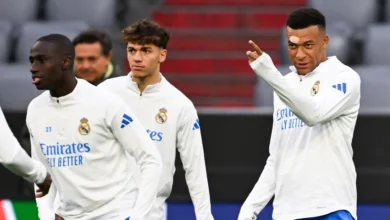
Eduardo Camavinga has emerged as a vital component of Carlo Ancelotti’s midfield, known for his tenacity, ball-winning ability, and composure. At just 23 years old, he has already established himself as a key player for both Real Madrid and the French national team. His expulsion in such a critical juncture of a Champions League quarter-final carries significant weight.
The tactical implications of losing a player of Camavinga’s caliber are substantial. His presence in midfield provides defensive solidity and helps to transition play from defense to attack. With him off the field, Real Madrid’s midfield structure was disrupted, making them more vulnerable to Bayern’s attacks. The subsequent two goals conceded highlight this vulnerability. This loss of a player in a high-stakes match is often cited as a major factor in determining the outcome, and Arbeloa’s assessment points directly to the referee’s decision as the catalyst for this disruption.
Broader Implications and Refereeing Scrutiny
The incident inevitably brings to the forefront the intense scrutiny that referees face in major footballing events. The stakes in the Champions League are astronomically high, and decisions made by match officials can have profound consequences for clubs, players, and fans. While referees are human and prone to errors, the nature of Arbeloa’s accusation – that the referee was unaware of a prior yellow card – suggests a fundamental lapse in concentration or preparedness.
UEFA, the governing body for European football, typically reviews referee performances after major matches. While official statements regarding specific incidents are rare, the pressure to maintain high standards of officiating is constant. Decisions like these can lead to discussions about the implementation of technology, such as VAR (Video Assistant Referee), and how effectively it is utilized to prevent such critical errors. In this instance, VAR would have likely confirmed the existence of Camavinga’s first yellow card, potentially averting the second yellow and subsequent red.
Post-Match Reactions and Future Considerations
While the immediate aftermath of such a defeat is often dominated by player and coach reactions, the broader implications extend to the reputation of the referee and the integrity of the competition. Arbeloa’s candid remarks, though critical, reflect the frustration felt by the Real Madrid camp. The club, known for its stoic demeanor in defeat, will likely accept the result, but the controversy surrounding the red card will undoubtedly linger.
For Bayern Munich, this victory represents a significant step towards their European aspirations. Their ability to capitalize on a late-game advantage speaks volumes about their mental fortitude and tactical discipline. For Real Madrid, the focus will now shift to domestic competitions and reflecting on what went wrong in a campaign that promised so much.
The incident involving Camavinga serves as a stark reminder of the fine margins in elite football. A single decision, whether perceived as correct or incorrect, can irrevocably alter the narrative of a game and a season. The debate over refereeing accuracy and the impact of human error in high-pressure environments will continue, fueled by events like the one witnessed at the Allianz Arena. Moving forward, the emphasis will remain on ensuring that officiating standards are consistently high, thereby preserving the fairness and excitement of the UEFA Champions League.