Bayern Munich’s Resilient Comeback Secures Champions League Semi-Final Berth Against Real Madrid

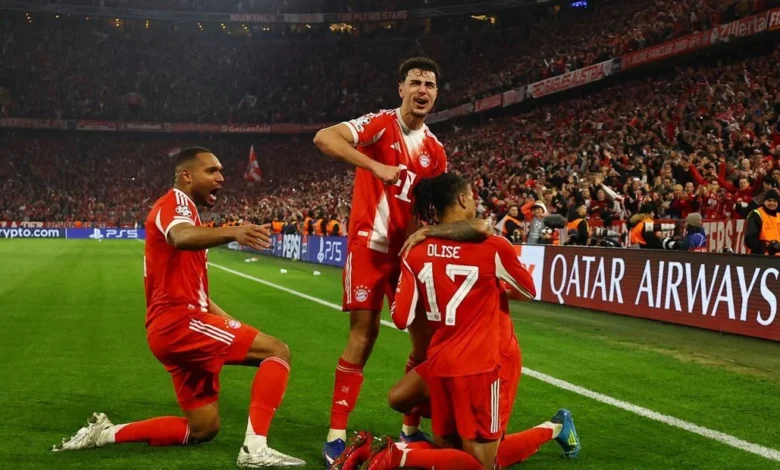
Bayern Munich staged a dramatic turnaround to defeat Real Madrid 4-3 in a pulsating second leg of their UEFA Champions League quarter-final tie at the Allianz Arena on April 16, 2026, securing their passage to the semi-finals with a 6-4 aggregate victory. The Bavarian giants, after a torrid start that saw them trailing significantly, demonstrated remarkable composure and tactical discipline to overcome a formidable Real Madrid side, particularly in their lethal transition play. This victory not only extends Bayern’s European campaign but also serves as a testament to their resilience and adaptability under pressure.
The match, held under the imposing roof of the Allianz Arena, was a spectacle of European football’s elite. Real Madrid, known for their clinical efficiency and ability to exploit spaces, initially imposed their authority. Within the opening ten minutes, the Spanish giants had stunned the home crowd with two quickfire goals from the emerging talent Arda Güler. The Turkish prodigy, demonstrating composure beyond his years, netted his brace in rapid succession, leaving Bayern facing an uphill battle. Kylian Mbappé, the perennial threat, further compounded Bayern’s woes with another goal before halftime, giving Real Madrid a commanding 3-2 lead in the first leg and a precarious 5-4 advantage on aggregate. Bayern managed to pull one back through Aleixs Pavlovic and secured a penalty converted by their talisman Harry Kane, but the deficit remained significant.
The first half was a stark illustration of Real Madrid’s transitional prowess. Their ability to swiftly move the ball from defense to attack, particularly through the electrifying pace of their forwards, proved exceptionally difficult for Bayern to contain. As Harry Kane later articulated, "The first half was a bit chaotic, we clearly started with the worst possible start, but we managed to get back into the game and looked like the more dangerous team, but their players in transition were really able to hurt us, and that’s what punished us." This sentiment underscored the tactical challenge Bayern faced; their defensive structure was tested repeatedly by Madrid’s swift counter-attacks.
The turning point in the second half arrived in the dying minutes of the match, not through a moment of attacking brilliance, but through a disciplinary lapse from Real Madrid. Eduardo Camavinga, who had been a vital cog in Madrid’s midfield, received his second yellow card in the 86th minute, reducing Los Blancos to ten men. This numerical advantage provided Bayern with the psychological and tactical impetus they needed. Seizing the opportunity, Bayern launched a late surge, with goals from Luis Díaz and Michael Olise completing the sensational comeback. These late strikes not only secured the victory on the night but also sealed their aggregate triumph, building upon their hard-fought 2-1 away win in the first leg at the Santiago Bernabéu.
Tactical Masterclass: Patience as the Key to Bayern’s Comeback
Bayern Munich’s ability to navigate the early storm and ultimately secure victory can be attributed to a significant tactical adjustment in the second half. Manager Thomas Tuchel, known for his meticulous tactical planning, seemingly implored his players to adopt a more patient approach when in possession. This strategy was designed to starve Real Madrid of the transitional opportunities that had proven so damaging in the first half.
"In the second half, we decided to be a bit more patient," Kane revealed in his post-match comments, as quoted by UEFA. "We knew as the game went on, we would get stronger, and we were able to take our chances towards the end of the game." This patience manifested in slower build-up play, more controlled possession, and a greater emphasis on defensive solidity to prevent Madrid from exploiting gaps. By keeping the ball longer and avoiding rushed clearances or speculative passes, Bayern limited Madrid’s chances to break with speed and numbers.
This patient approach also allowed Bayern to gradually assert their own attacking pressure. As the match wore on and Real Madrid’s defensive shape potentially fatigued, Bayern’s sustained pressure began to yield results. The introduction of fresh legs and the psychological advantage of a level scoreline at key moments fueled their late onslaught. The goals from Díaz and Olise were not mere moments of individual brilliance but the culmination of sustained pressure and tactical execution.
A Glimpse into the Historical Context of Champions League Clashes
The rivalry between Bayern Munich and Real Madrid is one of the most storied in European football history. These two giants have met on numerous occasions in the Champions League knockout stages, often in dramatic and closely contested encounters. Their histories are intertwined with iconic moments, controversial decisions, and unforgettable comebacks. This latest chapter adds another layer to their epic saga.
Both clubs boast an unparalleled pedigree in the competition. Real Madrid holds the record for the most Champions League titles, with an astounding 14 triumphs. Bayern Munich is not far behind, having lifted the coveted trophy six times. This constant pursuit of European supremacy inherently fuels the intensity and stakes whenever these two titans lock horns.
The Allianz Arena has historically been a fortress for Bayern, and their ability to overturn a deficit in such a crucial tie underscores their formidable home advantage. However, Real Madrid has also proven to be a resilient force on the road, capable of securing results in the most hostile environments. This quarter-final clash was a microcosm of their historical encounters: fiercely competitive, tactically nuanced, and ultimately decided by fine margins.
Chronology of a Thrilling Encounter
The match unfolded with a dramatic intensity that kept spectators on the edge of their seats:
- Early Blitz (Minutes 1-10): Real Madrid explodes out of the blocks. Arda Güler scores his first goal within the opening minutes, followed swiftly by his second. Kylian Mbappé adds a third, putting Madrid in a commanding position.
- Bayern’s Response (Minutes 10-45): Bayern Munich, initially stunned, begins to find their footing. Aleixs Pavlovic pulls one back, and Harry Kane converts a penalty to level the score at 3-3 on the night, though Real Madrid still leads on aggregate.
- Second Half Stalemate (Minutes 45-85): The second half sees a more measured approach from Bayern. They focus on possession and defensive stability, limiting Real Madrid’s transition opportunities. The score remains level at 3-3 for a significant portion of the half.
- The Turning Point (Minute 86): Eduardo Camavinga of Real Madrid receives his second yellow card, leading to his expulsion from the match. This creates a crucial numerical advantage for Bayern.
- Late Surge and Comeback (Minutes 87-90+): Capitalizing on their advantage, Bayern Munich launches a decisive offensive. Luis Díaz scores the go-ahead goal, and Michael Olise seals the victory with a late strike.
- Final Whistle: Bayern Munich secures a 4-3 victory on the night, progressing to the semi-finals with a 6-4 aggregate scoreline.
Data and Statistics: A Snapshot of the Performance
While the scoreline tells a dramatic tale, underlying statistics offer further insight into the match’s dynamics. Real Madrid’s early dominance was reflected in their high conversion rate of early chances. Their ability to score three goals in the first half, despite Bayern’s eventual comeback, highlights their clinical finishing.
Bayern Munich, conversely, demonstrated superior possession statistics in the second half, a direct consequence of their adopted patient approach. Their ability to create and convert chances in the final ten minutes, especially with a man advantage, showcases their resilience and tactical discipline. The number of shots on target and key passes would likely reflect Bayern’s increased pressure in the latter stages, while Real Madrid’s statistics might show a dip in offensive output after Camavinga’s dismissal.
The disciplinary aspect of the game, with Camavinga’s red card, proved to be a significant factor. Historically, teams playing with ten men in the latter stages of a crucial Champions League tie often struggle to maintain their defensive shape and offensive threat. This was clearly evident in the final minutes of this encounter.
Reactions and Implications
The victory at the Allianz Arena is a significant morale booster for Bayern Munich. It reaffirms their status as genuine contenders for the Champions League title and provides a much-needed injection of confidence after a challenging period. Manager Thomas Tuchel will likely be lauded for his tactical acumen in making the necessary adjustments at halftime, while the players will be commended for their mental fortitude.
For Real Madrid, the defeat will be a bitter pill to swallow. The manner of their elimination, conceding late goals after holding a strong position, will undoubtedly lead to introspection. Manager Carlo Ancelotti will face questions regarding his team’s defensive organization in the closing stages and their inability to manage the game with a man advantage. However, their performance in the first half showcased the immense attacking talent they possess, and they will undoubtedly remain a formidable force in future competitions.
The implications of this result extend beyond the immediate semi-final berth. For Bayern, this comeback victory could ignite their season and provide the momentum needed to challenge for further silverware. For Real Madrid, it serves as a stark reminder of the fine margins in elite European football and the importance of maintaining concentration and discipline throughout 90 minutes.
Looking Ahead: The Semi-Final Stage
With Bayern Munich now advancing to the semi-finals, their focus will shift to their next opponent. The draw for the semi-finals will present another significant challenge, with other European giants vying for a place in the final. The resilience shown against Real Madrid will undoubtedly instill belief that they can overcome any adversary. The journey to European glory is arduous, and Bayern Munich has just navigated one of its most perilous chapters with a display of character and tactical intelligence that will be remembered for years to come. The dream of lifting the Champions League trophy remains alive, fueled by a hard-fought victory built on the bedrock of patience and unwavering determination.