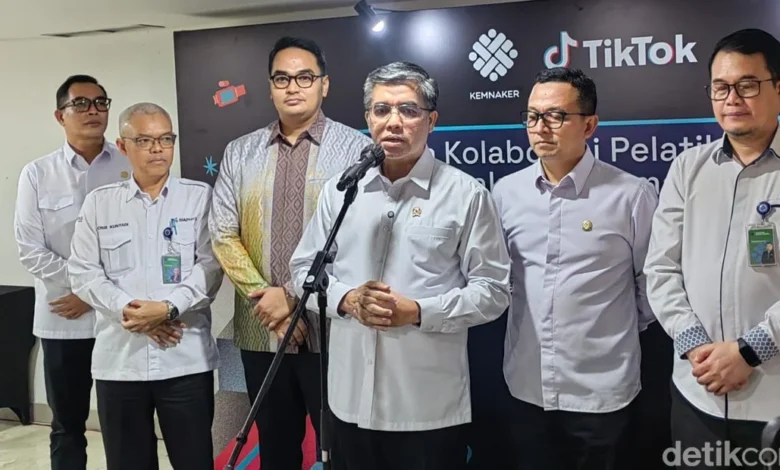
The Indonesian Ministry of Manpower (Kemenaker) has officially partnered with the global digital entertainment platform TikTok to launch a groundbreaking vocational training initiative titled "Belajar Implementasi & Skill Adaptif Bareng TikTok" (BISA), which translates to "Learning Implementation & Adaptive Skills with TikTok." This strategic collaboration, announced on Wednesday, April 15, 2026, from the Kemenaker Vocational Building in South Jakarta, aims to proactively support and expand economic opportunities within Indonesia’s burgeoning creative and digital economy sectors, equipping the national workforce with skills critical for the future. The program underscores a pivotal shift in government strategy towards dynamic public-private partnerships to address the rapidly evolving demands of the modern labor market.
The Dawn of a New Workforce: Addressing the Skills Gap
Manpower Minister Yassierli articulated a stark vision for the coming decade, projecting that approximately 50% of current business processes across various industries are poised to become irrelevant, supplanted by entirely new models and operational paradigms. This transformation, he noted, is already evident in the proliferation of job roles that were virtually nonexistent just five to twenty years ago. Professions such as content creators, affiliate marketers, online resellers, and live commerce hosts have not only emerged but are rapidly gaining prominence as vital components of the digital economy.
Minister Yassierli highlighted the critical challenge posed by these new roles: "Now we have content creators, affiliate marketers, resellers—what did we call resellers before? Maybe someone who sold used goods. Then there’s live commerce hosts, and so on. All these are new job titles. If you ask if there’s a specific university curriculum teaching these, not necessarily. Perhaps now some are starting to emerge. Therefore, we see this as a crucial part of vocational training that we can fill." This observation underscores a fundamental disconnect between traditional educational frameworks and the agile, demand-driven requirements of the digital marketplace. Vocational training, therefore, emerges as a pragmatic and responsive solution to bridge this widening skills gap, providing targeted, practical knowledge that formal education systems often struggle to integrate swiftly.
BISA: A Strategic Partnership for Digital Empowerment
The BISA program is designed as a direct response to this predicted industrial transformation, aiming to cultivate a skilled workforce capable of thriving in the digital creative economy. By partnering with TikTok, a platform deeply embedded in the creative and commercial activities of millions globally, Kemenaker intends to provide participants with direct access to industry-relevant tools, insights, and best practices. The curriculum is expected to encompass a range of digital skills, including content creation strategies, digital marketing techniques, e-commerce operations, and live streaming engagement, all tailored to the dynamic environment of social media platforms.
This initiative is not an isolated effort but rather a significant component of the Indonesian government’s broader commitment to strengthening vocational training. The government has consistently emphasized the importance of adapting the national workforce to new patterns of work, particularly within the digital commerce sector. Collaborations with leading digital platforms such as TikTok and Shopee are viewed as essential mechanisms to broaden access to new job opportunities and accelerate the upskilling of a significant portion of the population. These partnerships leverage the platforms’ extensive user bases, technological expertise, and deep understanding of digital trends to deliver highly relevant and impactful training.
Indonesia’s Digital Economy Landscape: A Fertile Ground for Growth
Indonesia, with its vast archipelago and a rapidly expanding digital native population, presents an exceptionally fertile ground for the growth of the digital economy. As the largest economy in Southeast Asia, the nation has witnessed an explosive growth in internet penetration and smartphone adoption over the past decade. According to various reports, Indonesia’s digital economy is projected to reach significant valuations, driven primarily by e-commerce, ride-hailing, online travel, and digital payments. This robust digital ecosystem offers immense potential for job creation and economic diversification, but only if the workforce possesses the necessary digital competencies.
The government’s "Making Indonesia 4.0" roadmap, launched in 2018, explicitly outlines a vision for the country to become one of the top ten global economies by 2030, with a strong emphasis on leveraging industrial revolution 4.0 technologies. A core pillar of this strategy involves enhancing human capital through comprehensive vocational education and training programs. The BISA initiative aligns perfectly with this national agenda, serving as a concrete step towards preparing a future-ready workforce that can capitalize on the opportunities presented by digital transformation. The program’s focus on the creative economy also taps into Indonesia’s rich cultural heritage and its vibrant youth demographic, fostering innovation and entrepreneurship.
Bridging the Gap: The Urgency of Vocational Training
The urgency for robust vocational training programs in Indonesia is underscored by several factors, including the challenge of youth unemployment and underemployment, coupled with a persistent skills mismatch. While the Indonesian economy has shown resilience, a significant portion of the youth labor force still struggles to find suitable employment that aligns with their educational backgrounds. Traditional education systems, often characterized by slower curriculum updates, frequently lag behind the rapid technological advancements and market demands. This creates a gap where graduates may possess theoretical knowledge but lack the practical, adaptive skills required by modern employers, especially in fast-evolving sectors like the digital creative economy.
Existing government initiatives, such as the network of Vocational Training Centers (Balai Latihan Kerja – BLK) and the innovative ‘Kartu Prakerja’ (Pre-Employment Card) program, have already laid foundational groundwork for upskilling and reskilling the workforce. Kartu Prakerja, for instance, provides financial assistance for online and offline training courses, targeting job seekers, furloughed workers, and small business owners. The BISA program builds upon these foundations, offering specialized training in niche but high-demand digital skills, thereby complementing broader vocational efforts. It represents a more targeted approach, focusing on specific platform-driven opportunities that have immediate economic relevance.
Ambitious Targets: Scaling Up Vocational Output
Minister Yassierli revealed ambitious targets for the national vocational training output. Currently, national vocational programs aim to produce between 60,000 to 70,000 graduates annually. However, with the integration of partnerships like BISA, the government intends to dramatically increase this number, setting a new goal of achieving up to 500,000 vocational training graduates per year. This tenfold increase signifies a monumental commitment to mass-scale skills development, recognizing that a broad base of digitally proficient individuals is essential for sustained economic growth and social equity.
Achieving such an ambitious target necessitates leveraging the extensive reach and operational capabilities of major digital platforms. TikTok, with its massive user base in Indonesia (one of its largest markets globally), offers an unparalleled channel for disseminating training and fostering a community of digital entrepreneurs. Similarly, potential collaborations with e-commerce giants like Shopee would unlock further opportunities in areas such as online store management, digital merchandising, and supply chain logistics for small and medium-sized enterprises (SMEs). These platforms possess the infrastructure and user engagement models that can scale training initiatives far more efficiently than traditional government-led programs alone.
The Evolving Nature of Work: Flexibility and the Gig Economy
Minister Yassierli elaborated on the evolving landscape of work, noting a significant shift towards more flexible and often informal employment arrangements. While these roles may not always entail formal employer-employee relationships, they represent viable avenues for income generation and can serve as crucial temporary solutions for individuals seeking more stable employment. The global rise of the "gig economy," characterized by short-term contracts, freelance work, and platform-based tasks, is particularly pronounced in Indonesia. Millions are engaged in ride-hailing, food delivery, and various online services, demonstrating the adaptability and entrepreneurial spirit of the Indonesian workforce.
The BISA program, by focusing on skills relevant to content creation and digital commerce, inherently prepares individuals for roles within this flexible economy. These skills empower individuals to become self-employed, build personal brands, or supplement existing incomes. While the flexibility offers advantages like autonomy and low barriers to entry, it also presents challenges, including a lack of social safety nets, irregular income, and limited career progression paths typical of formal employment. The government’s approach, therefore, must balance the immediate economic opportunities provided by the gig economy with long-term aspirations for decent work and social protection.
Beyond Vocational Training: A Holistic Approach to Job Creation
Crucially, Minister Yassierli emphasized that vocational training, while vital, is not the "ultimate goal" for the government. He clarified that Kemenaker remains committed to its constitutional mandate of creating decent and sustainable formal employment opportunities for its citizens. To this end, the government is simultaneously pursuing broader strategic programs aimed at massive job creation. These include initiatives in food security, which involve modernizing agriculture and strengthening supply chains, and industrial downstreaming, which focuses on adding value to raw materials domestically before export.
These large-scale programs are designed to generate a greater and more sustainable absorption of labor within formal sectors, offering stable incomes, benefits, and clearer career trajectories. For instance, robust downstreaming efforts in mineral processing or palm oil production can create thousands of jobs across the value chain, from engineering and manufacturing to logistics and services. The BISA program and other vocational training efforts are seen as complementary tools, offering immediate skills and income-generating opportunities while the government lays the groundwork for more extensive formal sector growth. "This [vocational training] can be a choice," Yassierli stated, highlighting its role as one pathway among several in the national employment strategy.
TikTok’s Role in National Development
From TikTok’s perspective, this partnership likely aligns with its broader corporate social responsibility initiatives and its commitment to fostering digital literacy and economic empowerment in its key markets. A representative from TikTok (hypothetically, the Head of Public Policy or CSR Director for Indonesia) could articulate the platform’s dedication to empowering local creators, SMEs, and young entrepreneurs. "TikTok is more than just an entertainment platform; it’s a launchpad for economic opportunity," such a representative might state. "Through BISA, we are proud to collaborate with the Ministry of Manpower to equip Indonesians with the skills to not only navigate but thrive in the digital creative economy. This partnership underscores our belief in the immense talent and potential of Indonesia’s youth and our commitment to contributing to the nation’s digital transformation agenda."
TikTok has already demonstrated its impact on local economies by enabling creators to monetize their content and small businesses to reach wider audiences through features like TikTok Shop and live commerce. The BISA program will formalize and expand this impact, providing structured learning paths that demystify the complexities of digital entrepreneurship and content creation. Such collaborations also serve to solidify TikTok’s position as a responsible corporate citizen, actively contributing to national development goals beyond its commercial operations.
Expert Perspectives and Broader Implications
Labor market analysts and economists largely view such public-private partnerships as crucial for addressing the dynamic challenges of modern employment. Dr. Indah Permata, a leading Indonesian economist specializing in labor studies (hypothetical expert), commented, "The collaboration between Kemenaker and TikTok is a pragmatic recognition of where jobs are being created today. Traditional sectors are transforming, and the digital economy is a powerful engine for new opportunities, especially for youth. However, the success of BISA will depend on the quality and adaptability of its curriculum, ensuring that the skills taught remain relevant as platforms and trends evolve."
The broader implications of the BISA program are significant. It has the potential to:
- Boost Youth Employment: By equipping young Indonesians with in-demand digital skills, the program can reduce unemployment and underemployment rates.
- Fuel the Creative Economy: It can foster a new generation of content creators, digital marketers, and online entrepreneurs, contributing to Indonesia’s vibrant creative industries.
- Enhance Digital Literacy: Beyond specific job skills, the program will generally improve digital literacy across a wider segment of the population, crucial for national competitiveness.
- Model for Future Partnerships: Its success could serve as a blueprint for similar collaborations with other tech companies and platforms, expanding the scope of vocational training into diverse digital fields.
- Address Social Equity: By making skills accessible, it can empower individuals from various socio-economic backgrounds, promoting inclusive growth.
However, challenges remain. Ensuring the consistent quality of training across a massive scale, providing adequate follow-up support for graduates, and addressing the long-term sustainability and social safety nets for those primarily engaged in informal digital work will be critical. The government must also continuously monitor the market to ensure the skills taught remain relevant and that the program adapts to emerging technologies and platform changes.
In conclusion, the BISA program represents a forward-thinking and adaptive approach by the Indonesian government to prepare its workforce for the future. By strategically partnering with a global digital giant like TikTok, the Ministry of Manpower is not just addressing current employment challenges but is proactively investing in the human capital necessary to secure Indonesia’s position as a leading digital economy in the decades to come. While vocational training offers immediate solutions and broad accessibility, it forms part of a larger, multifaceted national strategy to ensure sustainable economic growth and decent, fulfilling employment for all its citizens.