Indonesia Forges Strategic Partnership with French Football Federation, Opening Doors for National Team Friendlies

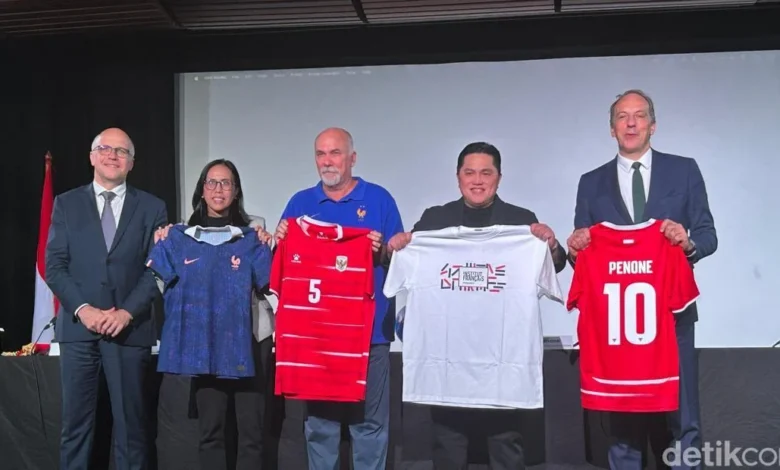
Jakarta – The Indonesian Football Association (PSSI) has officially entered into a significant partnership with the French Football Federation (FFF), a move that has ignited optimism regarding potential friendly matches between the Indonesian national teams and their French counterparts. This landmark agreement, solidified during a high-level meeting involving the Indonesian Ministry of Youth and Sports (Kemenpora), PSSI, the French Embassy in Indonesia, and the FFF, signifies a shared commitment to advancing football development, with a particular focus on women’s football and youth programs.
The collaboration, officially titled "Empowering the Next Generation of Women’s Football, From Development to Clairefontaine," was formalized at the Institut Français d’Indonésie in Jakarta on Wednesday, April 15, 2026. While the initial emphasis is on the growth of women’s football, the agreement also paves the way for broader cooperation in men’s football, creating a tangible possibility for friendly encounters between the Indonesian senior men’s national team, affectionately known as the Garuda, and the formidable French national team.
A New Era of Football Diplomacy and Development
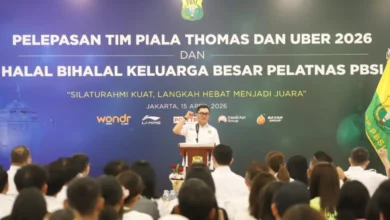
The announcement was met with enthusiastic endorsements from key figures. Minister of Youth and Sports, Erick Thohir, expressed his strong support for the initiative, stating, "The opportunity for friendly matches for the Indonesian national team against France, at both senior and youth levels, is certainly open." He further elaborated, "Essentially, if there are matches that we organize between French football and PSSI for our national teams, we will continue to push for them moving forward."
This partnership represents a significant step for Indonesian football, seeking to leverage the expertise and established infrastructure of one of Europe’s footballing powerhouses. France, a nation with a rich footballing history and a highly successful national team, including their status as FIFA World Cup champions in 1998 and 2018, and as runners-up in 2022, offers an unparalleled benchmark for Indonesian football to aspire to. The FFF is renowned for its comprehensive development pathways, epitomized by the prestigious Clairefontaine national football academy, a breeding ground for many of France’s most celebrated talents.
Strategic Focus on Youth and Women’s Football
Minister Thohir underscored that the current priority of the collaboration lies in the development of women’s football and youth programs. This strategic focus is intrinsically linked to Indonesia’s long-term ambitions for the sport. "We are preparing our youth teams for the 2030 and 2034 World Cups," Thohir revealed, highlighting the forward-thinking nature of PSSI’s development strategy.
The implication of this focus means that friendly matches against France are more likely to materialize initially at the youth levels. "We can start with younger generations like U-17 and U-20, so this is very possible," Thohir suggested. Such encounters are invaluable for young Indonesian players, offering them the chance to test their mettle against a nation that consistently produces world-class talent. Competing against elite European youth academies provides crucial exposure to different tactical approaches, physical demands, and mental fortitude required at the highest levels of the game.
The Clairefontaine Model: A Blueprint for Indonesian Talent
The inclusion of "Clairefontaine" in the partnership’s title is not coincidental. The French national football academy at Clairefontaine-en-Yvelines is globally recognized for its holistic approach to player development. It goes beyond technical and tactical training to encompass academic education, psychological support, and character building. The academy has produced legendary French players such as Thierry Henry, Kylian Mbappé, and N’Golo Kanté, demonstrating its effectiveness in nurturing future footballing stars.
Indonesia’s aspiration to emulate aspects of the Clairefontaine model signifies a commitment to a more structured and scientifically driven approach to talent identification and development. This could involve knowledge exchange programs for coaches, training methodologies, and scouting networks. The partnership aims to equip Indonesian coaches and administrators with the tools and insights necessary to build a sustainable football ecosystem that can consistently produce high-caliber players for both domestic and international competitions.
Background and Context: Indonesia’s Footballing Aspirations
Indonesia, the most populous nation in Southeast Asia, has a deep-seated passion for football. However, its national teams have historically faced challenges in achieving consistent success on the global stage. The men’s senior team has never qualified for the FIFA World Cup, and while their performances have shown gradual improvement in recent years, particularly within the Asian Football Confederation (AFC), a significant leap is still required to compete with top-tier nations.
The women’s game in Indonesia, while growing, has also faced considerable developmental hurdles. The partnership with the FFF, with its proven track record in advancing women’s football, presents a unique opportunity to accelerate progress. France’s women’s national team, "Les Bleues," has achieved significant success, including reaching the quarter-finals of the FIFA Women’s World Cup multiple times and consistently ranking among the top teams in Europe. This expertise can be instrumental in bolstering Indonesia’s women’s league, national team performance, and grassroots development.
Chronology of the Partnership Formation
While the precise timeline of the negotiations leading to this agreement is not detailed in the initial report, the formalization on April 15, 2026, at the Institut Français d’Indonésie marks a pivotal moment. This event likely followed a series of preparatory meetings and discussions between representatives of PSSI, Kemenpora, the French Embassy, and the FFF. Such high-level collaborations typically involve extensive planning, including defining the scope of cooperation, identifying specific areas of focus, and outlining mutual benefits. The choice of the Institut Français d’Indonésie as the venue suggests a deliberate effort to symbolize the cultural and diplomatic ties being strengthened through this sporting initiative.
Supporting Data and Future Projections
The potential for friendly matches against France, while exciting, is part of a broader strategy. PSSI, under the leadership of Erick Thohir, has been actively seeking to elevate the standards of Indonesian football through various initiatives, including international collaborations and improved domestic league structures.
- FIFA Rankings: As of early 2026, the French men’s national team consistently ranks within the top 10 of the FIFA World Rankings. The Indonesian men’s national team, while improving, typically resides outside the top 100. The gap in rankings highlights the significant challenge but also the immense learning opportunity that a friendly match would present.
- Youth Development Investments: France invests heavily in its youth academies, with a significant portion of its football federation’s budget allocated to talent development. This contrasts with historical underinvestment in similar areas in many developing football nations, including Indonesia. The partnership could facilitate knowledge transfer regarding efficient resource allocation and effective youth development models.
- Women’s Football Growth: Globally, women’s football is experiencing unprecedented growth in viewership and investment. The FIFA Women’s World Cup has seen record-breaking attendance and media coverage. Indonesia’s commitment to this sector aligns with global trends and presents an opportunity to build a strong national team capable of competing at the AFC Women’s Asian Cup and potentially qualifying for future Women’s World Cups.
Broader Implications and Analysis
The implications of this partnership extend beyond the prospect of friendly matches. It signifies a strategic shift in Indonesia’s approach to football development, moving towards a more collaborative and internationally integrated model.
- Enhanced Player Development: Exposure to French coaching methodologies, tactical approaches, and high-intensity training regimes at the youth level could significantly accelerate the development of Indonesian players. This can lead to a more technically proficient, tactically astute, and mentally resilient generation of footballers.
- Boost for Women’s Football: The dedicated focus on women’s football has the potential to transform the landscape of the sport in Indonesia. This could involve developing professional women’s leagues, improving coaching standards, and increasing participation at the grassroots level, ultimately leading to a more competitive national women’s team.
- Inspiration and National Pride: The possibility of the Indonesian national team playing against a footballing superpower like France, even at the youth level, can serve as a powerful source of inspiration for young athletes and foster a greater sense of national pride in the sport.
- Diplomatic Ties: Football diplomacy is a growing phenomenon, where sporting collaborations can strengthen broader bilateral relations. This partnership between PSSI and the FFF can serve as a bridge between Indonesia and France, fostering cultural exchange and mutual understanding.
- Long-Term Vision: The emphasis on youth development for the 2030 and 2034 World Cups demonstrates a long-term vision for Indonesian football. This partnership provides a crucial component of that vision, offering access to world-class expertise and development pathways.
Official Responses and Expectations
While Minister Erick Thohir’s statements have set a positive tone, further details on the implementation of the partnership are anticipated. PSSI officials are expected to outline specific programs, timelines, and measurable objectives in the coming months. The FFF, through its engagement, signals its commitment to supporting football development beyond its borders, recognizing the potential of emerging football markets.
The involvement of the French Embassy in Indonesia underscores the diplomatic significance of this agreement, reinforcing the cultural exchange aspect of the collaboration. This partnership is not merely about on-field competition; it is about building capacity, sharing knowledge, and fostering a lasting relationship between two footballing nations.
Conclusion
The partnership between PSSI and the French Football Federation marks a pivotal moment for Indonesian football. By focusing on the development of women’s football and youth programs, and opening the door for potential friendly matches against one of the world’s elite footballing nations, Indonesia is demonstrating a clear commitment to elevating its standing in the global footballing community. The "Empowering the Next Generation of Women’s Football, From Development to Clairefontaine" initiative, while ambitious, holds the promise of transforming Indonesian football for years to come, fostering a new generation of talented players and a more robust and competitive sporting landscape. The journey ahead will require sustained effort, strategic investment, and unwavering dedication, but the foundation for a brighter future has undoubtedly been laid.