Socio Today
The international community has turned its collective gaze toward South America following reports of the dramatic apprehension of Venezuelan President Nicolas Maduro by the United States government under the administration of Donald Trump. While the geopolitical ramifications of such an event sent shockwaves through global diplomatic circles, the situation has also prompted a renewed interest in the nation itself—a country that remains one of the most complex and naturally gifted territories on the planet. Beyond the immediate headlines of political instability and international friction, Venezuela, officially known as the Bolivarian Republic of Venezuela, stands as a land of staggering contrasts, possessing the world’s largest oil reserves alongside some of the most unique ecological and cultural treasures found in the Western Hemisphere.
A Turning Point in International Relations: The Chronology of Escalation
The recent events involving the detention of Nicolas Maduro do not exist in a vacuum but are the culmination of decades of deteriorating relations between Washington and Caracas. The tension reached a fever pitch following years of economic sanctions, disputed elections, and a dual-presidency crisis that began in 2019.
The chronology of this recent escalation can be traced back to a series of federal indictments issued by the U.S. Department of Justice, which accused the Venezuelan leadership of "narcoterrorism" and corruption. Following a period of intense surveillance and diplomatic maneuvering, the reported apprehension has triggered a massive wave of reactions. In Caracas, thousands of citizens have taken to the streets, some in protest of what they term a violation of national sovereignty, while others view it as a potential path toward economic restructuring.
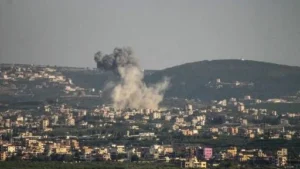
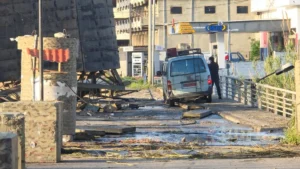
Internationally, the reaction has been polarized. The Chinese government has issued formal protests, particularly concerning the potential for the U.S. to seize control or influence over Venezuela’s massive energy output, which totals approximately 50 million barrels of oil targeted for international markets. Simultaneously, reports from the Venezuelan Ministry of Interior have suggested that military frictions surrounding the political shift have resulted in casualties, further complicating the humanitarian landscape.
The Historical Foundations: From Indigenous Roots to Sovereign Statehood
To understand the modern Venezuelan psyche, one must look back over 10,000 years. Long before the arrival of European explorers, the territory was inhabited by diverse indigenous groups, most notably the Carib, Arawak, and Chibcha peoples. These tribes established complex social structures and trade routes that utilized the region’s vast river systems.
European contact began in 1498 when Christopher Columbus arrived during his third voyage, famously describing the Orinoco Delta as a "Paradise on Earth." However, it was Amerigo Vespucci who, in 1499, gave the nation its enduring name. Upon seeing the indigenous stilt houses (palafitos) built over the waters of Lake Maracaibo, he was reminded of the canals of Venice. He dubbed the region "Veneziola," or "Little Venice," which eventually evolved into the name Venezuela.
The path to sovereignty was paved by the "Liberator," Simon Bolivar. After centuries of Spanish colonial rule, Venezuela became a central part of the Republic of Gran Colombia. Following the dissolution of that union in 1830, Venezuela emerged as a fully independent sovereign state. This history of revolution and the pursuit of autonomy remains a core component of the national identity, often invoked in modern political discourse under the banner of "Bolivarianism."
A Megadiverse Territory: The Natural Paradox
Geographically, Venezuela is a titan of biodiversity. Spanning approximately 912,050 square kilometers, it is bordered by Brazil to the south, Guyana to the east, and Colombia to the west, with a sprawling northern coastline along the Caribbean Sea. It is recognized as one of only 17 "megadiverse" countries in the world, a designation reserved for nations that harbor a majority of Earth’s species and high numbers of endemic species.
Remarkably, approximately 57 percent of Venezuela’s territory is classified as protected land, including national parks and biosphere reserves. This environmental commitment protects a landscape that varies from the snow-capped peaks of the Andes Mountains to the humid depths of the Amazon rainforest.
One of the country’s most iconic landmarks is Mount Roraima, a massive tabletop mountain (tepui) that marks the border between Venezuela, Brazil, and Guyana. This ancient geological formation is so otherworldly that it served as the primary inspiration for Sir Arthur Conan Doyle’s classic novel, The Lost World.
Natural Wonders and Atmospheric Phenomena
Venezuela is home to several world-record-breaking natural features. Deep within the UNESCO-listed Canaima National Park lies Angel Falls (Salto Ángel). Dropping from the Auyán-tepui mountain, the water falls a staggering 979 meters (3,212 feet), making it the highest uninterrupted waterfall on Earth.
Equally fascinating is a meteorological phenomenon known as the "Catatumbo Lightning." At the mouth of the Catatumbo River where it meets Lake Maracaibo, a unique combination of topography and wind currents creates a perpetual thunderstorm. For up to 160 nights a year, lightning flashes nearly constantly—up to 28 times per minute—for hours at a time. This "eternal storm" is so consistent that it has historically been used by sailors as a natural lighthouse.
The nation’s fauna is equally remarkable. The Orinoco River is the habitat of the rare pink river dolphin, while the vast plains (Los Llanos) are home to the capybara, the world’s largest rodent, and the Orinoco crocodile, one of the rarest reptiles on the planet.
The Oil Factor: Economic Wealth and Social Struggle
It is impossible to discuss Venezuela without addressing its subsoil wealth. The country sits atop the world’s largest proven oil reserves, estimated at over 300 billion barrels—surpassing even Saudi Arabia. This vast wealth is concentrated largely in the Orinoco Belt.
For decades, this resource allowed Venezuela to maintain the lowest fuel prices in the world and funded extensive social programs. However, the heavy reliance on oil exports created a "resource curse," making the economy highly vulnerable to fluctuations in global oil prices. The current socio-political crisis is inextricably linked to this economic structure, as the nation struggles with hyperinflation and a lack of industrial diversification despite its immense natural capital.
Cultural Identity: From Baseball to Beauty Queens
Despite the prevailing narrative of crisis, Venezuelan culture remains vibrant and influential. Unlike most of its South American neighbors where football (soccer) reigns supreme, Venezuela’s national sport is baseball. The country has produced a consistent stream of Major League Baseball talent, and the sport serves as a significant point of national pride and social cohesion.
Furthermore, Venezuela is a global powerhouse in the "beauty industry." The nation has won more major international beauty pageant titles—including Miss Universe and Miss World—than almost any other country. This success has fostered a domestic culture that places a high value on aesthetics and fashion, even in the face of economic hardship.
Unique traditions also persist, particularly in the capital of Caracas. One of the most charming local customs occurs during the Christmas season, when the city’s streets are closed to motorized traffic so that residents can roller-skate to early morning mass. This tradition, known as "Patinatas," reflects the communal and resilient spirit of the Venezuelan people.
Architectural Anomalies: The Tower of David and El Helicoide
The urban landscape of Caracas offers a stark visual representation of the country’s recent history through two specific structures. The first is the "Tower of David," a 45-story skyscraper that was intended to be a financial center but was abandoned following an economic crash in the 1990s. It eventually became the world’s tallest informal vertical settlement, housing thousands of squatters in a self-organized community before a government relocation program began.
The second is El Helicoide, a massive, spiral-shaped futuristic building designed in the 1950s as a drive-in shopping mall where customers could park directly in front of shops. Today, however, it serves a much grimmer purpose as the headquarters for the national intelligence service and a high-security prison. These buildings stand as monuments to the shifting tides of Venezuelan ambition and political reality.
Implications and Future Outlook
The arrest of a sitting president, regardless of the international recognition of his legitimacy, marks a volatile new chapter for the 30.5 million people living in Venezuela. As the United States, China, and regional neighbors like Brazil and Colombia recalibrate their strategies, the primary concern remains the welfare of the Venezuelan population.
The nation’s future hinges on whether its immense resources—both natural and human—can be harnessed in a stable political environment. For now, Venezuela remains a land of profound beauty and deep tragedy, a place where the world’s tallest waterfall and largest oil reserves exist alongside a population navigating one of the most significant geopolitical transitions of the 21st century. The global community continues to watch closely, not just for the next political headline, but for the potential rebirth of a nation that has long been the "Little Venice" of the Americas.