Socio Today
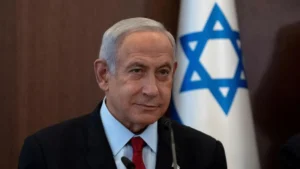
In a move that has sent shockwaves through the global diplomatic community, United States President Donald Trump announced on Thursday, April 16, 2026, that the governments of Israel and Lebanon have formally agreed to a ten-day ceasefire. The agreement, which is set to take effect at 5:00 PM Eastern Standard Time (EST), marks a significant de-escalation in a region that has been plagued by intensifying cross-border hostilities over the past several years. President Trump made the announcement via his social media platform, Truth Social, detailing high-level discussions with Lebanese President Joseph Aoun and Israeli Prime Minister Benjamin Netanyahu. This breakthrough comes after a series of clandestine and public negotiations facilitated by the White House, signaling a shift in the administration’s Middle East policy and its approach to regional stabilization.
According to the President’s statement, the agreement is intended to serve as a cooling-off period and a foundation for a more permanent peace treaty. Trump characterized the dialogue with the two leaders as "very good," emphasizing that both Aoun and Netanyahu recognized the necessity of a cessation of hostilities to ensure the long-term prosperity of their respective nations. The timing of the ceasefire is particularly noteworthy, as it follows a week of intense diplomatic activity in Washington D.C., where representatives from both Beirut and Jerusalem met on American soil for the first time in over three decades.
The Washington Summit and the Diplomatic Framework
The catalyst for this ceasefire was a historic meeting held in Washington earlier this week. President Trump noted that this summit represented the first time in 34 years that high-ranking officials from Israel and Lebanon had engaged in direct, face-to-face negotiations on U.S. soil. The last such significant engagement occurred during the post-Cold War era, highlighting the depth of the diplomatic vacuum that the current administration has sought to fill.
To ensure the success of the negotiations and the subsequent implementation of the ceasefire, President Trump has mobilized a high-powered diplomatic and military task force. This team is led by Vice President JD Vance and Secretary of State Marco Rubio, both of whom have been instrumental in the administration’s "peace through strength" doctrine. Joining them is the Chairman of the Joint Chiefs of Staff, General Dan "Razin" Caine, whose role will be to coordinate the technical and military aspects of the truce with the Israel Defense Forces (IDF) and the Lebanese Armed Forces (LAF).
The inclusion of General Caine suggests that the ceasefire is not merely a political gesture but a structured military agreement designed to prevent accidental skirmishes or provocations from non-state actors. The administration has indicated that the U.S. will provide intelligence and monitoring support to ensure that both parties adhere to the terms of the agreement.
Historical Context and the Path to 2026
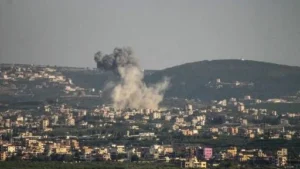
The conflict between Israel and Lebanon is rooted in decades of territorial disputes, ideological clashes, and the presence of powerful non-state armed groups within Lebanese territory. Since the 2006 Lebanon War, the border—often referred to as the "Blue Line"—has been a flashpoint for periodic violence. However, the period leading up to 2026 saw a marked increase in tensions, driven by disputes over maritime borders, offshore natural gas reserves, and the shifting geopolitical landscape of the Levant.
By late 2025, the situation had deteriorated into a cycle of rocket attacks and retaliatory airstrikes that displaced tens of thousands of civilians on both sides of the border. International observers had warned of a "total war" scenario that could involve regional powers and disrupt global energy markets. The Trump administration’s intervention appears to have been timed to preempt a full-scale ground invasion, leveraging personal relationships and economic incentives to bring both parties to the table.
The Ten Wars Doctrine
One of the most striking aspects of President Trump’s announcement was his framing of the Israel-Lebanon ceasefire within his broader foreign policy legacy. In his statement, Trump asserted that this agreement marks the tenth major conflict he has successfully resolved or de-escalated since his return to the presidency. "It is my honor to have finished 9 wars around the world, and this will be the 10th," Trump stated, emphasizing his role as a "closer" in international disputes.
While the specific list of the "9 wars" was not detailed in the Truth Social post, analysts suggest the President is referring to a series of diplomatic interventions across Eastern Europe, Central Asia, and sub-Saharan Africa. This "Ten Wars Doctrine" reflects the administration’s focus on rapid, high-stakes mediation over long-term institutional diplomacy. By setting a ten-day window for the ceasefire, the administration is creating a sense of urgency, forcing both sides to negotiate the parameters of a permanent settlement under a strict deadline.
Chronology of the Negotiation Process
The road to the April 16 announcement was characterized by a series of rapid-fire diplomatic maneuvers:
- January 2026: Secretary of State Marco Rubio conducts a "shuttle diplomacy" tour, visiting Tel Aviv and Beirut to gauge the appetite for a formal truce.
- February 2026: Economic sanctions are subtly adjusted, and aid packages are proposed as "peace dividends" for both nations, contingent on a reduction in border violence.
- March 15, 2026: A back-channel communication line is established between the office of PM Netanyahu and President Aoun, facilitated by U.S. intelligence officials.
- April 12, 2026: Representatives from the Israeli Ministry of Defense and the Lebanese Ministry of Interior arrive in Washington for a three-day "closed-door" summit at an undisclosed location.
- April 14, 2026: President Trump meets with the delegations, reportedly telling them that "the world is tired of watching the Middle East burn."
- April 16, 2026: The official announcement of the 10-day ceasefire is made, set to begin at 5:00 PM EST.
Technical Aspects and Military Oversight
The ceasefire is not merely a cessation of fire; it involves several technical layers designed to maintain stability. General Dan "Razin" Caine has been tasked with overseeing a "De-confliction Zone" along the Blue Line. This involves:
- Aerial Surveillance: Increased U.S. drone and satellite monitoring to detect unauthorized troop movements or rocket battery deployments.
- Communication Channels: A 24-hour "hotline" between the IDF and LAF headquarters, mediated by U.S. military personnel in Cyprus.
- Humanitarian Corridors: The agreement allows for the safe passage of humanitarian aid into Southern Lebanon and the return of displaced Israeli citizens to northern border towns during the 10-day window.
The success of these measures will depend heavily on the cooperation of the Lebanese Armed Forces and their ability to exercise sovereignty in regions where non-state actors have historically held sway.
Regional and International Reactions
The announcement has garnered a mix of cautious optimism and skepticism from the international community. In Lebanon, the news was met with a sense of relief by a population weary of economic collapse and the threat of war. However, political factions within the country remain divided on the long-term implications of a formal peace with Israel.
In Israel, Prime Minister Netanyahu faces domestic pressure from both the right and the left. Security hawks have expressed concern that a 10-day ceasefire might allow hostile groups to regroup and rearm, while peace advocates see it as a long-overdue step toward regional integration.
International bodies, including the United Nations, have welcomed the move. A spokesperson for the UN Secretary-General stated, "Any pause in hostilities that protects civilian lives is a positive step. We urge all parties to use these ten days to move toward a permanent and sustainable political solution."
Regional powers like Saudi Arabia and Egypt have also signaled their support, viewing the stability of the Levant as crucial to their own economic and security interests. Analysts suggest that a successful Israel-Lebanon peace could pave the way for a broader regional security architecture that includes other Arab nations.
Fact-Based Analysis of Implications
The 10-day ceasefire carries significant implications for global geopolitics and the domestic politics of the involved nations.
For the United States: This event serves as a centerpiece for the Trump administration’s foreign policy narrative. It reinforces the image of the U.S. as the indispensable mediator, capable of achieving results that have eluded previous administrations for decades. If the ceasefire holds, it will likely be used as a primary example of the effectiveness of personalist diplomacy.
For the Global Economy: The Levant is increasingly important due to its proximity to Eastern Mediterranean gas fields. Stability in this region is essential for the secure extraction and transport of energy resources to Europe. Following the announcement, global oil and gas futures showed a slight downward trend, reflecting market confidence in a reduction of regional risk.
For Regional Security: The primary challenge remains the influence of non-state actors and their sponsors. A 10-day ceasefire is a fragile instrument. If a rogue element launches a provocation, the entire diplomatic effort could collapse. The role of General Caine and the U.S. military in monitoring the truce is therefore the most critical component of the plan.
Conclusion and Future Outlook
As the 5:00 PM EST deadline approaches, the eyes of the world are fixed on the border between Israel and Lebanon. The ten-day window represents a high-stakes experiment in diplomatic speed. If successful, it could lead to a permanent demarcation of borders, a formal end to the state of war that has technically existed since 1948, and a new era of economic cooperation in the Eastern Mediterranean.
President Trump has made it clear that he expects results. With Vice President Vance and Secretary Rubio on the ground and General Caine managing the military interface, the administration has committed significant political capital to this endeavor. Whether this "10th war" will truly be settled remains to be seen, but for the next ten days, the guns are scheduled to fall silent, providing a rare and vital opportunity for peace to take root in a historically volatile region.